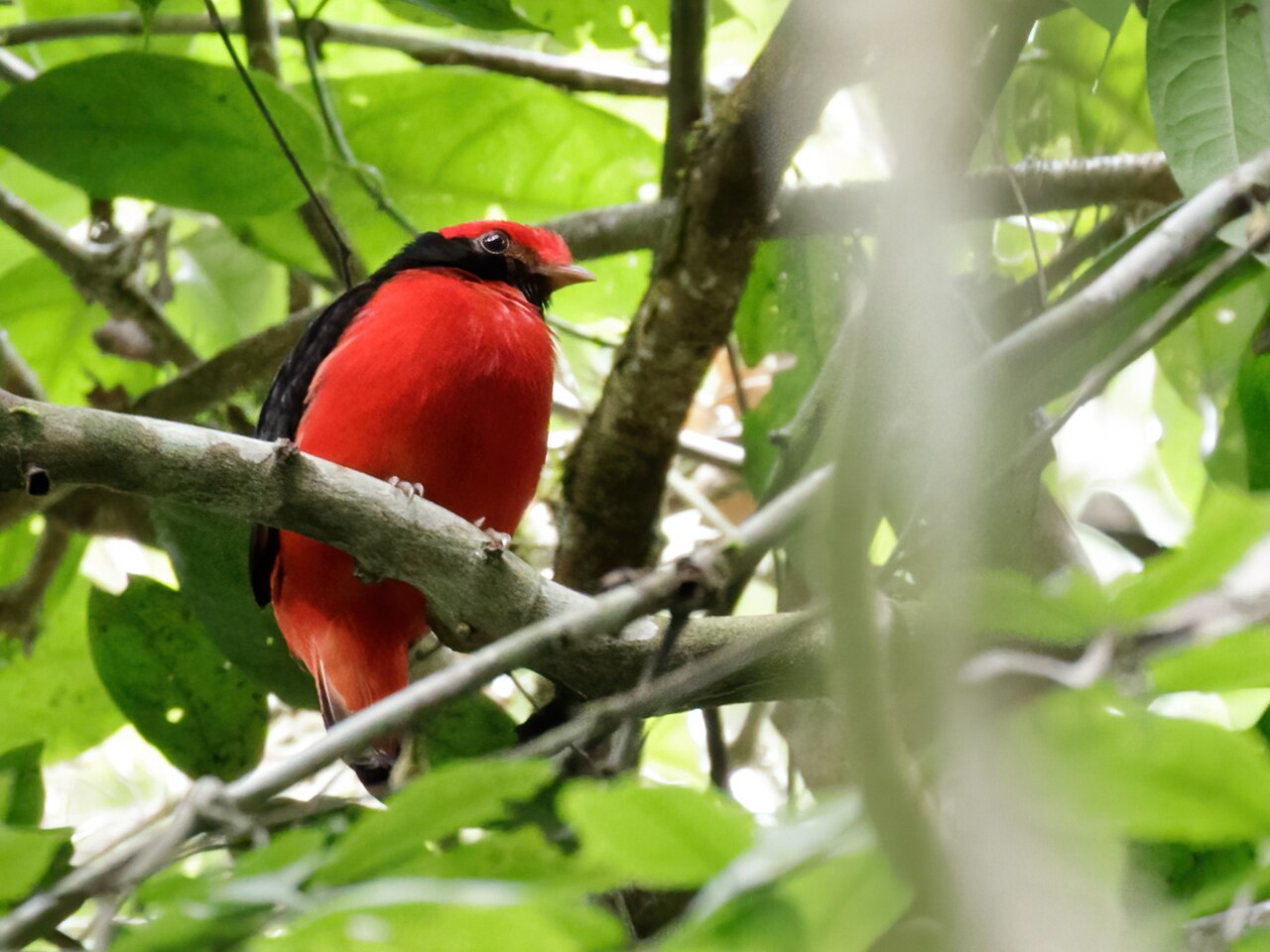
The black-necked aracari or black-necked araçari is a near-passerine bird in the toucan family Ramphastidae. It is found in Brazil, French Guiana, Guyana, Suriname, and Venezuela.
Region
Northern South America (Guianas and northern Amazon Basin)
Typical Environment
Occupies humid lowland rainforest across Brazil north of the Amazon, French Guiana, Guyana, Suriname, and parts of Venezuela. Favors forest edges, riverine and gallery forests, and tall secondary growth where fruiting trees are abundant. Often visits forest clearings and plantations (e.g., cacao and mixed orchards). Typically forages in the mid- to upper canopy but may descend to lower levels at fruiting shrubs.
Altitude Range
0–1200 m
Climate Zone
Tropical
Ease of Keeping
Beginner friendly: 2/5
The black-necked aracari is a small toucan of the Guiana Shield and northern Amazon Basin, often seen in small, noisy groups moving between fruiting trees. Its oversized, patterned bill helps it reach and manipulate fruit, and it plays an important role in seed dispersal. It nests in tree cavities and commonly roosts communally, with several birds squeezing into a single hole.


Temperament
social and active
Flight Pattern
short, bounding flights with rapid wingbeats between trees
Social Behavior
Usually found in pairs or small groups of 3–6 birds that travel together between fruiting trees. Nests in natural cavities or old woodpecker holes; both parents incubate and feed young. Groups often roost communally in tree cavities.
Migratory Pattern
Resident
Song Description
Gives sharp, high-pitched squeals and yelps, often in repeated series. Also produces rattling calls and bill clacks during social interactions.
Plumage
Glossy black head and neck with dark green upperparts; underparts are yellow with a broad red belly band and red rump.
Diet
Primarily eats soft fruits such as figs and berries, plucking them with its long bill and swallowing them whole. Also takes insects and other small invertebrates, and occasionally eggs or nestlings. Plays a significant role in seed dispersal by regurgitating or defecating intact seeds away from parent trees.
Preferred Environment
Forages mostly in the mid- and upper canopy at fruiting trees along forest edges and river corridors. Frequently visits second-growth habitats and agroforestry systems with fruiting plants.