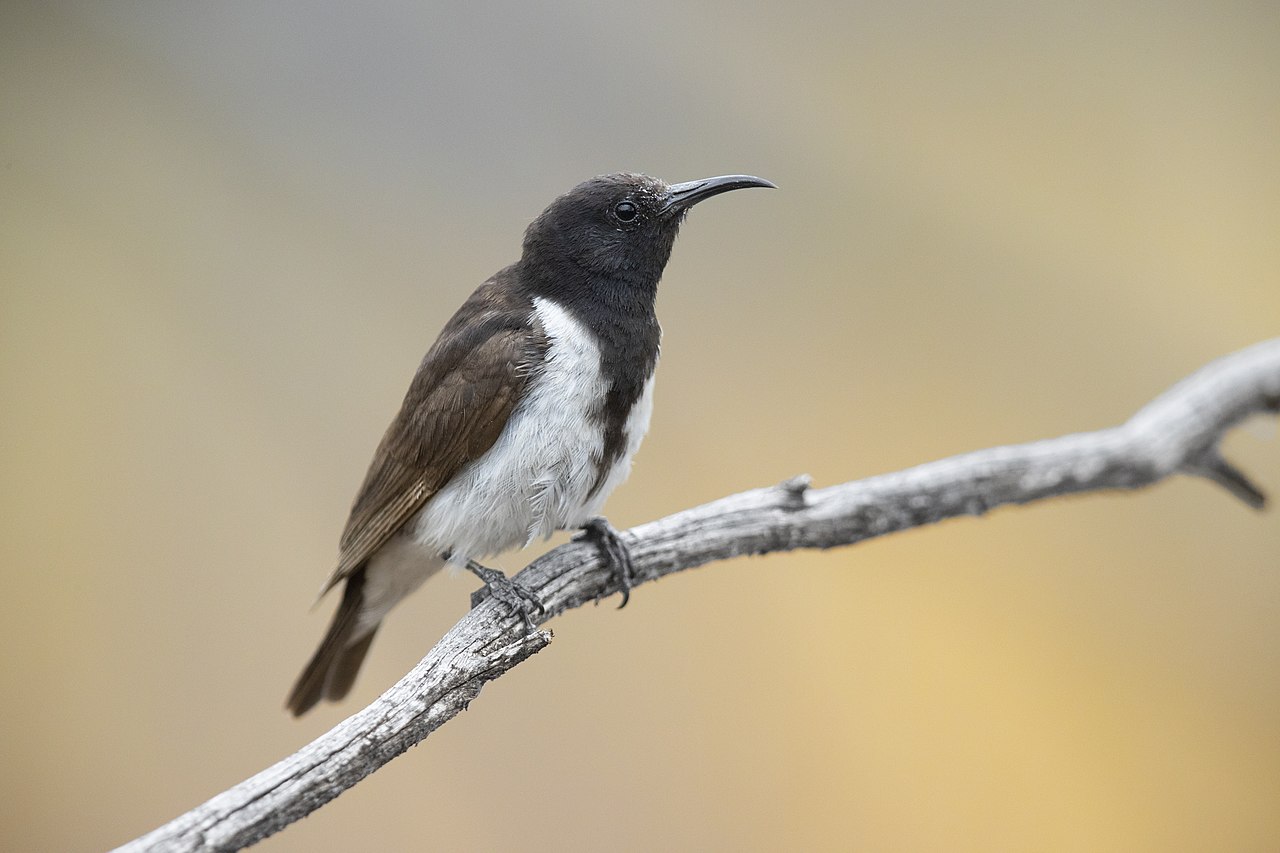
The black guinea fowl (Agelastes niger) is a terrestrial bird of the Numididae (guinea fowl) family found in humid forests in West-Central Africa. It is a medium-sized, black galliforme bird with a bare, orange-pink head and upper neck. As it inhabits dense, potentially inaccessible, regions of equatorial African jungle, little is known of black guinea fowl behaviour or habits.
Region
Congo Basin and West-Central Africa
Typical Environment
Occurs in lowland evergreen rainforest from southeastern Nigeria and southwestern Cameroon through Equatorial Guinea (mainland), Gabon, the Republic of the Congo, western Central African Republic, and northern Democratic Republic of the Congo. It inhabits primary and well-developed secondary forests with dense understory. Birds are most often encountered along quiet forest tracks, near streams, and in swampy or seasonally flooded forest where cover is thick. They avoid open habitats and venture into small clearings mainly to feed. Roosting is typically in trees within intact forest.
Altitude Range
Sea level to 1500 m
Climate Zone
Tropical
Ease of Keeping
Beginner friendly: 1/5
The black guineafowl is one of two species in the genus Agelastes and is confined to the humid forests of West‑Central Africa. It is secretive, spending most of its time on the forest floor and slipping through dense undergrowth. Like other guineafowl, it roosts up in trees at night and plays a role in seed dispersal and insect control. Hunting and forest degradation can affect local populations.

Temperament
shy and secretive
Flight Pattern
short rapid wingbeats; reluctant flier that prefers to run
Social Behavior
Usually in pairs or small family parties that keep close contact while moving through leaf litter. Nests are shallow scrapes on the forest floor, well concealed under vegetation. Roosting is communal at times, with birds ascending to low branches at dusk.
Migratory Pattern
Resident
Song Description
Vocalizations include low booming notes and clucking or rattling calls, often given at dawn and dusk. Alarm calls are harsh and rapidly repeated as birds retreat into cover.
Plumage
Mostly uniform sooty to glossy black plumage with short, rounded wings and a short tail.
Diet
Feeds on a mix of invertebrates such as ants, termites, beetles, and other arthropods, as well as fallen fruits and seeds. It scratches and probes in the leaf litter and along muddy edges for prey. Opportunistically takes small snails or other soft-bodied animals. Seasonal availability of fruit can influence foraging routes.
Preferred Environment
Forages on the shaded forest floor, especially along trails, stream margins, and in dense thickets that provide quick cover. It also exploits edges of secondary growth and small clearings beneath fruiting trees.