
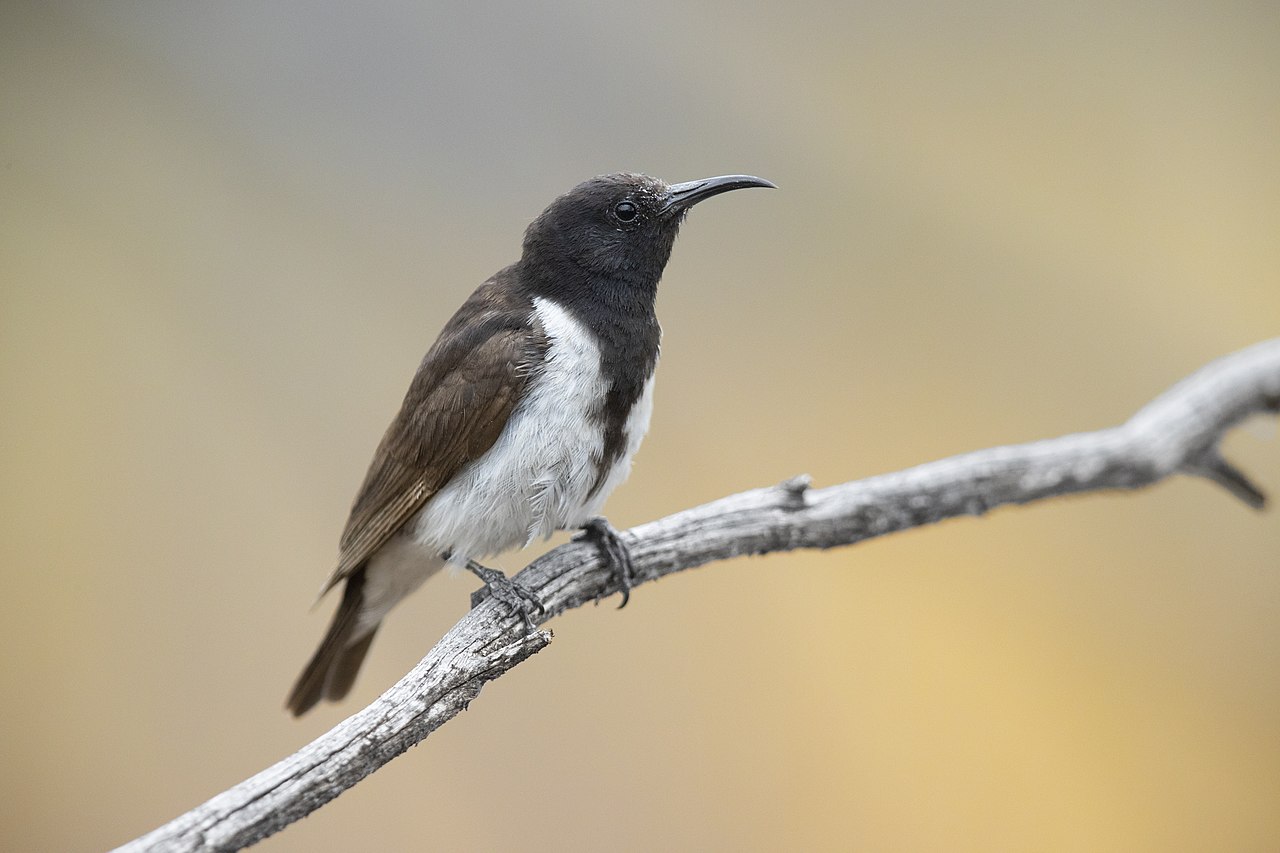
The black honeyeater is a species of bird in the honeyeater family Meliphagidae. The black honeyeater exhibits sexual dimorphism, with the male being black and white while the female is a speckled grey-brown; immature birds look like the female. The species is endemic to Australia, and ranges widely across the arid areas of the continent, through open woodland and shrubland, particularly in areas where the emu bush and related species occur.
Region
Interior Australia
Typical Environment
Occurs widely but patchily across Australia’s arid and semi-arid zones, especially in open woodland, mallee, mulga, and chenopod shrublands. It is closely associated with flowering shrubs such as emu-bush and grevilleas, and also visits flowering eucalypts. The species is highly nomadic, shifting range in response to rainfall and mass flowering events. It uses sheltering shrubs for nesting and perches but spends much time visiting nectar sources.
Altitude Range
Sea level to 1200 m
Climate Zone
Arid
Ease of Keeping
Beginner friendly: 1/5
This small honeyeater tracks flowering events across Australia’s arid interior, often appearing suddenly where emu-bush (Eremophila) blooms. Males are strikingly black-and-white, while females are brown and finely streaked, aiding camouflage. Its long, slightly decurved bill is adapted for nectar feeding, and birds often get pollen-dusted foreheads while foraging.


John and Elizabeth Gould's illustration of a female and male drawn from nature

A female on a Jacaranda
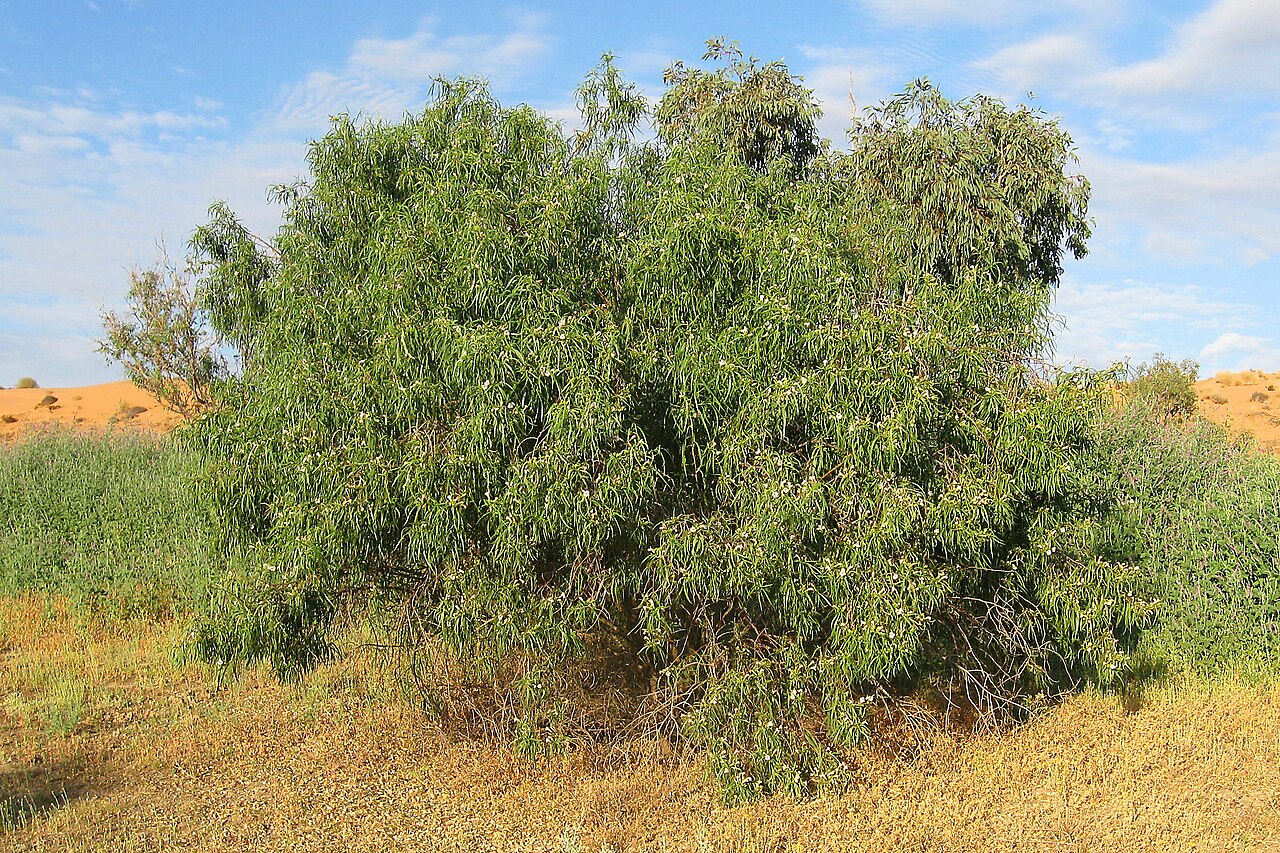
An emu bush, Eremophila, in the Simpson Desert

A male feeding in a Jacaranda
Temperament
active and mobile
Flight Pattern
short rapid wingbeats with swift, direct flights between flowering shrubs
Social Behavior
Usually seen singly, in pairs, or small loose groups, concentrating where flowers are abundant. Breeding is opportunistic after rains; the nest is a small cup placed low in shrubs. Males perform display flights and may defend rich nectar sources.
Migratory Pattern
Partial migrant
Song Description
Voice is a thin, high-pitched series of tsee and twittering notes, often delivered from exposed perches. Calls can be rapid and buzzy when birds interact around nectar sources.
Plumage
Male is glossy black above with clean white underparts and contrasting black markings; female is grey-brown above with finely streaked buffy-white underparts.
Diet
Primarily takes nectar from Eremophila, Grevillea, and flowering eucalypts, supplementing with small insects and spiders for protein. It probes blossoms with its decurved bill and may glean arthropods from foliage. Pollen is incidentally consumed, and the species acts as a pollinator for several arid-zone shrubs.
Preferred Environment
Feeds in open shrublands and woodlands where flowering shrubs and small trees are scattered. Often forages at mid to low heights, making repeated visits to the same blooming plants and occasionally sallying for flying insects.


