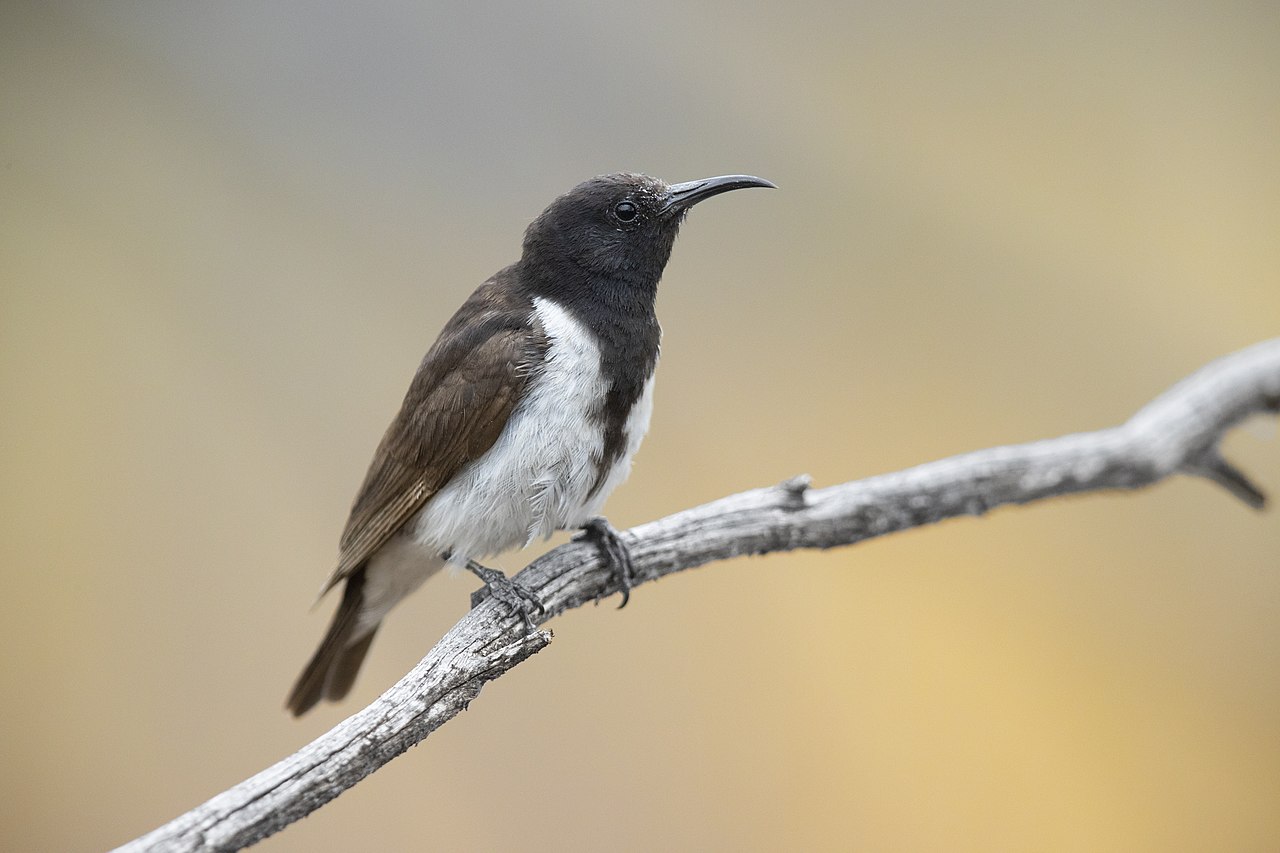
The black harrier is a medium-sized African harrier whose range extends from South Africa to Botswana and Namibia. It has a wingspan of 105–115 cm (41–45 in) and a body length of 44–50 cm (17–20 in). When perched, this bird appears all black. However, in flight, a white rump and flight feathers becomes visible. Its morphology is comparable to that of other harriers, with narrow wings, a slim body, and a long tail. Male and female plumages are similar. Juveniles have buff under-parts and heavily spotted breasts.
Region
Southern Africa
Typical Environment
Occurs mainly in South Africa (especially the Western and Eastern Cape) with smaller numbers in Namibia and occasional records in Botswana and Lesotho. It favors low shrubby habitats such as fynbos and renosterveld, as well as coastal shrublands and mosaics of pasture and fields. Foraging often takes place along wetland edges, fallow fields, and recently burned areas where prey is exposed. Nests are placed on the ground in dense vegetation, usually away from human disturbance. Outside the breeding season it may disperse into drier Karoo scrub and agricultural landscapes.
Altitude Range
Sea level to 1800 m
Climate Zone
Temperate
Ease of Keeping
Beginner friendly: 1/5
The black harrier is one of the most range-restricted harriers, largely confined to southwestern parts of southern Africa. It quarters low over shrublands and grasslands, showing a striking white rump in flight. Habitat loss from agriculture and urban expansion has caused significant declines, making it globally Endangered. It nests on the ground in dense vegetation, which makes it vulnerable to disturbance and predation.


Temperament
solitary and territorial
Flight Pattern
low quartering with buoyant, tilting flight
Social Behavior
Typically hunts alone and forms monogamous pairs during the breeding season. Nests are ground scrapes lined with vegetation, placed in dense shrubs or tall fynbos. Clutches are moderate in size, and both parents contribute to provisioning young. Outside breeding, individuals may range widely but usually do not form large flocks.
Migratory Pattern
Partial migrant
Song Description
Generally quiet away from nests. Near breeding sites it gives sharp kek-kek calls and chattering alarm notes. Display flights may be accompanied by thin, piping notes.
Plumage
Appears mostly black when perched; in flight shows a bold white rump and pale, barred flight feathers contrasted against dark coverts. Long tail and narrow wings typical of harriers, with a slim, buoyant profile. Juveniles are dark brown to sooty with buffy underparts and heavy spotting.
Diet
Feeds mainly on small birds and rodents, including larks, cisticolas, and mice taken from low vegetation. It also captures reptiles and large insects when available. Hunting involves slow, low quartering over open shrubland and grassland, dropping suddenly onto prey. Recently burned areas and field margins are often exploited where prey is more exposed.
Preferred Environment
Most often hunts over fynbos, renosterveld, coastal shrublands, and lightly grazed grasslands. It also uses edges of wetlands, fallow fields, and agricultural mosaics where cover and prey are patchy.