

The black-chested buzzard-eagle is a bird of prey of the hawk and eagle family (Accipitridae). It lives in open regions of South America. This species is also known as the black buzzard-eagle, the gray buzzard-eagle, or analogously with "eagle" or "eagle-buzzard" replacing "buzzard-eagle", or as the Chilean blue eagle. It is sometimes placed in the genus Buteo.
Region
Andes and Southern Cone
Typical Environment
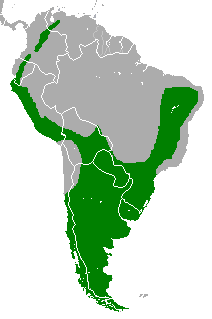
Occurs along the Andes from Colombia and Ecuador south through Peru and Bolivia into Chile and Argentina, extending into Patagonia and adjacent lowlands. It favors open habitats such as high Andean puna, Patagonian steppe, arid scrub, and coastal or inland cliffs. The species also utilizes agricultural mosaics where open ground and rocky outcrops are available. Nests are typically placed on cliff ledges or steep crags with commanding views.
Altitude Range
Sea level to 4500 m
Climate Zone
Highland
Ease of Keeping
Beginner friendly: 1/5
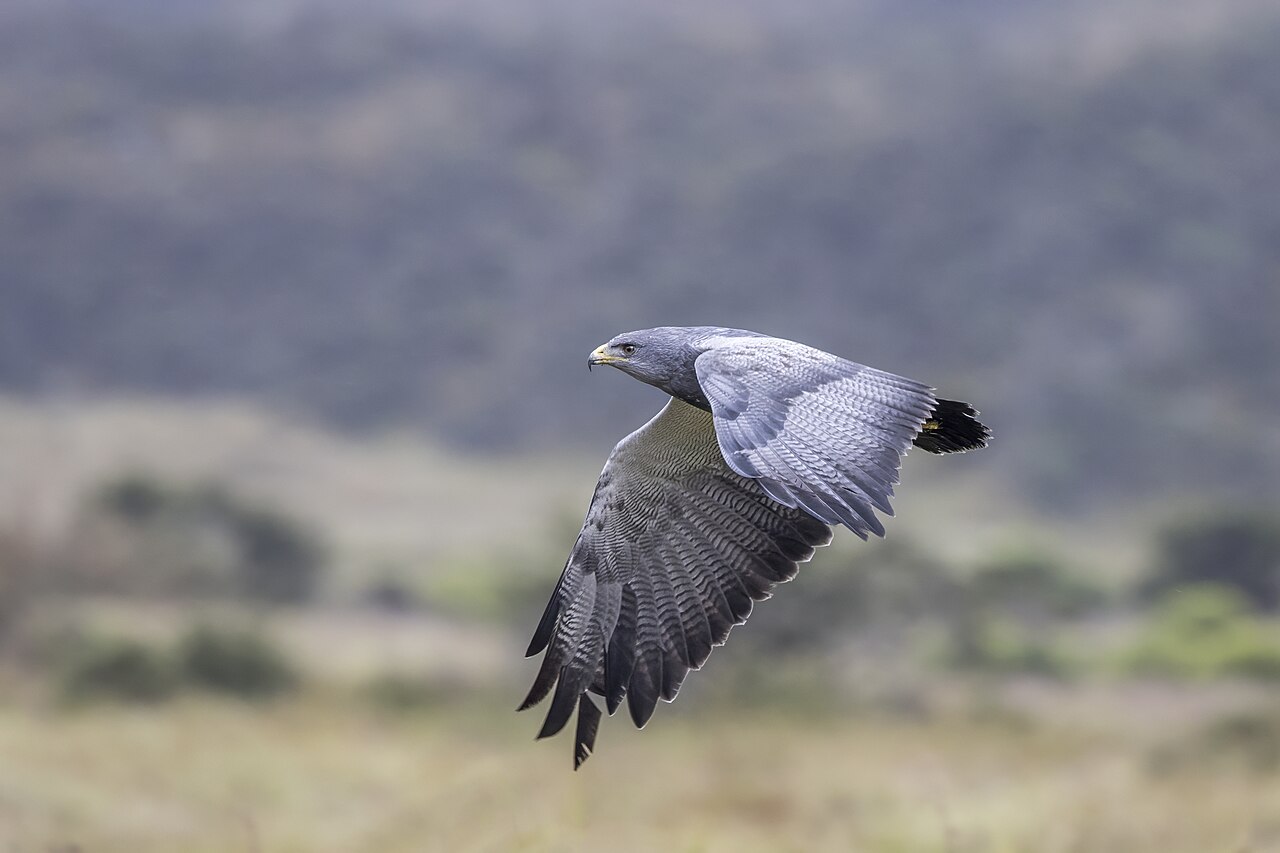
This powerful raptor of the Andes is often seen soaring on thermals over cliffs and open steppe, using broad wings and a short tail to maneuver in strong winds. It preys largely on medium-sized mammals and birds, and in parts of Patagonia its numbers benefit from abundant introduced European hares. Pairs nest on rocky ledges or cliffs, performing dramatic display flights during courtship. The species has sometimes been placed in the genus Buteo, but is widely known as Geranoaetus melanoleucus.


The upperside plumage is quite uniform
In Chingaza National Natural Park, Colombia

Juvenile

Immature plumage

Soaring, Catimbau National Park


In conflict with an Andean condor, Santa Cruz, Argentina

Chilean blue eagle at Knowsley
Temperament
solitary and territorial
Flight Pattern
soaring glider
Social Behavior
Usually encountered singly or in territorial pairs. Pairs are monogamous and build large stick nests on cliffs, often reusing and adding to them in successive seasons. Clutch size is small (typically 1–2 eggs), and both adults share in nest defense and rearing.
Migratory Pattern
Resident
Song Description
Vocalizations are mostly carrying, mewing whistles and harsh screams, especially near the nest or during display flights. Calls can become rapid and insistent when intruders approach the territory.
Plumage
Slate-gray upperparts with fine mottling, a striking broad black chest band, and pale whitish to light gray underparts. Underwings show contrasting dark coverts and paler flight feathers, giving a two-toned appearance in flight. The tail is gray with narrow barring and a darker terminal band.
Diet
Feeds primarily on medium-sized mammals such as rabbits and hares, rodents, and occasionally armadillos; also takes birds, reptiles, and carrion. Hunts by soaring and quartering open terrain, then stooping with a swift, powerful dive. Will also hunt from elevated perches overlooking open ground. In some regions, introduced European hares form a major part of the diet.
Preferred Environment
Open country with nearby cliffs or rocky outcrops, including puna grasslands, steppe, arid scrub, and agricultural edges. Often patrols along ridge lines and escarpments where updrafts are strong.


