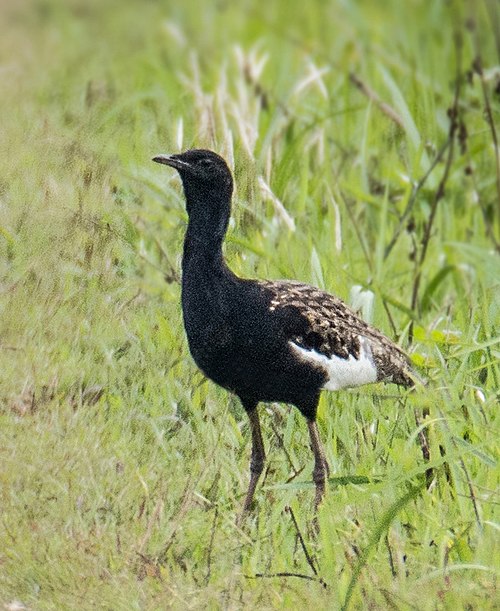
Bendire's thrasher is a medium-sized species of thrasher native to the southwestern United States and northwestern Mexico. It is 23–28 centimetres (9.1–11.0 in) long, with a long tail and a medium-sized bill. Coloration is grayish-brown on its upperparts with paler, faintly dark streaked underparts. The base of the lower bill is often pale, the eyes are bright yellow, and the tips of the tail are white-tipped.
Region
Southwestern United States and Northwestern Mexico
Typical Environment
Occurs from Arizona, New Mexico, and adjacent Nevada into Sonora and northern Sinaloa, favoring arid desert and semi-desert scrub. It uses open shrublands with scattered mesquite, creosote bush, yucca, and cholla, as well as saguaro stands. Birds forage on the ground in open flats and along washes, retreating to shrubs and cacti for cover. It avoids dense woodlands and extensive grass monocultures but tolerates lightly grazed rangeland and desert edges.
Altitude Range
0–1800 m
Climate Zone
Arid
Ease of Keeping
Beginner friendly: 1/5
Named for U.S. Army ornithologist Charles Bendire, this elusive desert thrasher often nests in cholla or saguaro cacti, gaining protection from spines. It can be tricky to distinguish from the Curve-billed Thrasher; look for the paler base to the lower bill, finer breast streaking, and slightly straighter bill. Its populations have declined with habitat loss and shrub removal in arid rangelands.


Charles Bendire
Temperament
solitary and territorial
Flight Pattern
short rapid wingbeats with low, direct flights between shrubs
Social Behavior
Generally solitary or in pairs, especially during the breeding season. Pairs build bulky twig nests, often in cholla or saguaro, and defend territories vigorously. Clutches typically contain 2–4 eggs; both parents share incubation and provisioning duties.
Migratory Pattern
Partial migrant
Song Description
A rich, varied series of whistles and warbles delivered in short phrases with pauses, often from a prominent perch. Includes mimicry of other desert birds and environmental sounds, though less exuberant than some other thrashers.
Plumage
Grayish-brown upperparts with pale, faintly streaked underparts; long tail with white-tipped corners; medium, slightly decurved bill with pale base to the lower mandible.
Diet
Feeds primarily on ground-dwelling insects such as beetles, ants, grasshoppers, and caterpillars, plus spiders and other arthropods. Seasonally consumes cactus fruits (e.g., saguaro, prickly pear), berries, and seeds. Probes leaf litter and soil, flicking debris aside with its bill to expose hidden prey.
Preferred Environment
Forages on open ground beneath desert shrubs, around cactus thickets, and along sandy washes. Uses low shrubs and cacti for cover while moving between feeding spots and to escape predators.