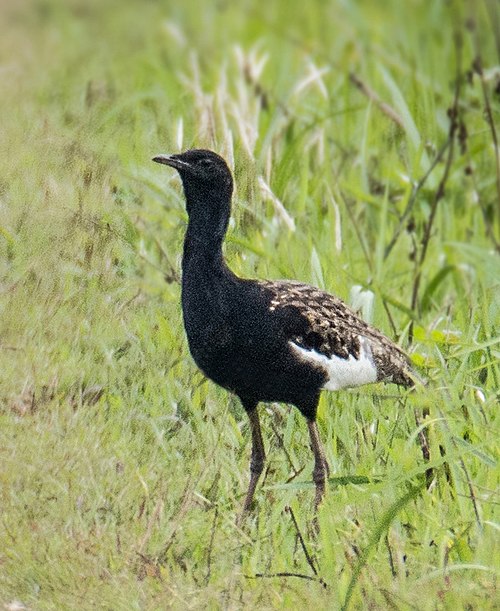
The belted flycatcher is a species of bird in the family Tyrannidae, the tyrant flycatchers. It is known in El Salvador, Guatemala, and Mexico and possibly occurs in Honduras.
Region
Mesoamerica (southern Mexico to El Salvador)
Typical Environment
Found locally in southern Mexico (notably Chiapas) south through Guatemala and El Salvador, and possibly into western Honduras. It favors humid to semi-humid montane habitats, especially pine–oak and cloud forest edges, secondary growth, and streamside thickets. Shaded coffee plantations and scrubby clearings with scattered trees are also used. The species typically keeps to dense undergrowth and lower to mid canopy along edges and gaps where perches are available.
Altitude Range
800–2200 m
Climate Zone
Highland
Ease of Keeping
Beginner friendly: 1/5
A small, elusive tyrant flycatcher of Mesoamerican highlands, the belted flycatcher is best detected by its distinctive chest 'belt' and thin, high-pitched calls. It frequents forest edges, thickets, and shaded coffee plantations rather than deep interior forest. Habitat loss and fragmentation are primary concerns across its limited range. It often forages by short sallies from low to mid-level perches.


Temperament
quiet, elusive, and edge-dwelling
Flight Pattern
short rapid wingbeats with brief sallies from perches
Social Behavior
Typically seen singly or in pairs, especially during the breeding season. Pairs hold small territories along forest edges and thickets. The nest is likely a small cup concealed in dense vegetation, and both parents participate in caring for the young.
Migratory Pattern
Resident
Song Description
A thin, high-pitched series of tsee or tseep notes, often delivered from a semi-concealed perch. Calls are soft and easily overlooked amid insect noise, but are repeated persistently at dawn and early morning.
Plumage
Olive-brown upperparts with warmer brown wings and tail, pale grayish face and throat, and a contrasting dusky to dark breast band that forms the namesake 'belt'. Underparts below the belt are buffy to pale ochre. Feathers are soft and plain-textured with subtle edging on the wings.
Diet
Primarily small flying and gleaned insects such as flies, beetles, moths, and small wasps. It hunts by sallying out from exposed or semi-concealed perches to snatch prey in the air. Occasional gleaning from foliage and twigs occurs, and it may take tiny berries opportunistically.
Preferred Environment
Forages along forest edges, clearings, riparian thickets, and shade-coffee understorey. Chooses low to mid-level perches (approximately 1–6 m) with nearby open spaces for short aerial sallies.