

The bearded vulture, also known as the lammergeier and ossifrage, is a very large bird of prey in the monotypic genus Gypaetus. The bearded vulture is the only known vertebrate whose diet consists of 70–90% bone.
Region
Afro-Eurasian mountains
Typical Environment
Found in high mountain ranges including the Pyrenees, Alps, Caucasus, Ethiopian Highlands, East African mountains, Himalayas, and across Central Asia. Prefers rugged terrain with cliffs for nesting and open alpine or subalpine slopes for foraging. It frequents gorges and escarpments where updrafts aid soaring. In Europe it persists patchily but has benefited from reintroduction efforts in the Alps.
Altitude Range
500–4500 m
Climate Zone
Highland
Ease of Keeping
Beginner friendly: 1/5
Also called the lammergeier or ossifrage, it is the only known vertebrate whose diet is composed mostly of bone, often 70–90%. It drops large bones from height onto rocks to shatter them and access the nutritious marrow. Adults often show a rusty-orange wash on the underparts, caused by deliberate bathing in iron-rich soils. Its long wedge-shaped tail and narrow wings give it a distinctive silhouette among vultures.


Wild bearded vulture in flight at Pfyn-Finges, Switzerland

A bearded vulture in the Puga valley in Ladakh in the Indian Himalayas
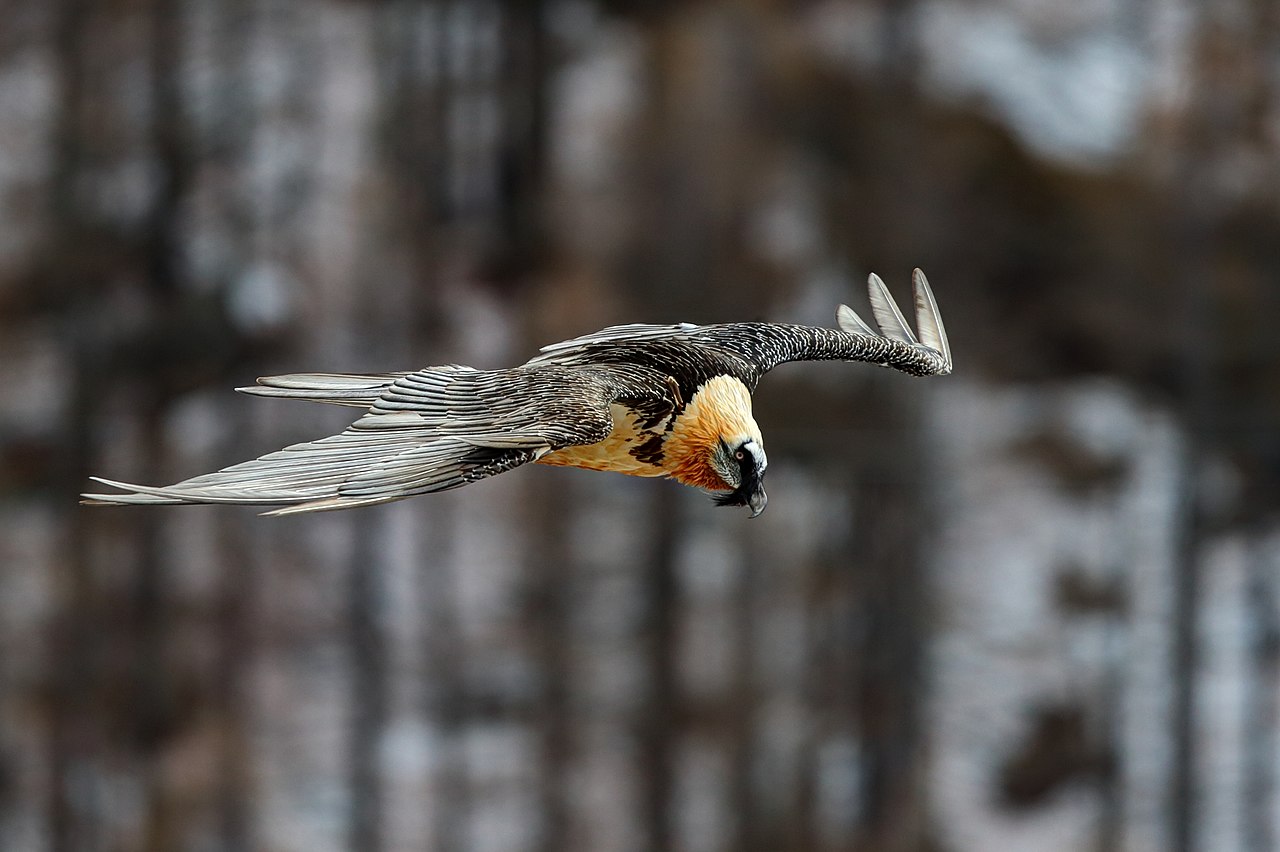
A bearded vulture flying over Gran Paradiso National Park, Italy

Bearded vulture on the rocks in Gran Paradiso National Park


Boy with live bearded vulture, Kabul, Afghanistan
Temperament
solitary and territorial
Flight Pattern
soaring glider using thermals and ridge updrafts; long, steady wingbeats
Social Behavior
Usually occurs singly or in pairs that hold large territories year-round. Nests on sheltered cliff ledges, often reusing sites for many years. Lays one to two eggs but typically raises a single chick due to cainism. Courtship involves aerial displays and mutual preening.
Migratory Pattern
Resident
Song Description
Generally quiet; most vocal near the nest. Emits high-pitched whistles and mewing calls during displays and soft croaks or grunts at close range.
Plumage
Long, narrow wings and a long wedge-shaped tail; upperparts grey to blackish, underparts pale to rich rust-orange from staining. Pale head with a contrasting black eye mask and elongated black 'beard' of feathers. Legs are fully feathered to the feet.
Diet
Specializes in consuming bones and bone marrow from carcasses of ungulates and other mammals, comprising the majority of its diet. Carries large bones aloft and drops them onto rock 'anvils' to break them into swallowable pieces. Will also take carrion scraps, small mammals, and occasionally tortoises, but soft tissue is a minor component for adults. Powerful stomach acids allow digestion of dense bone fragments.
Preferred Environment
Forages over open alpine meadows, scree slopes, and rocky valleys near cliffs. Often patrols migration corridors and areas with natural mortality of wild ungulates or livestock. Uses known bone-breaking sites repeatedly.


