
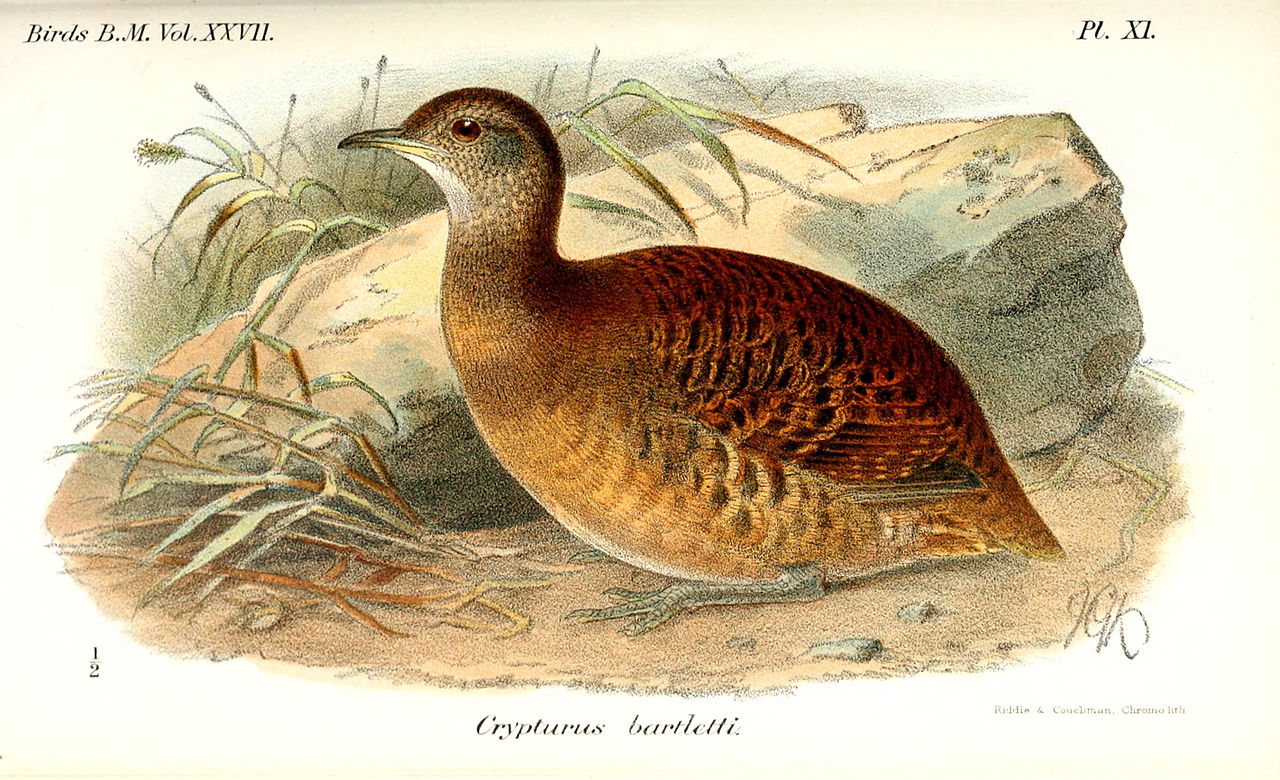
Bartlett's tinamou is a type of tinamou found in lowland forest in South America.
Region
Western Amazon Basin
Typical Environment
Occurs in lowland tropical rainforests of eastern Peru, northwestern Bolivia, and far western Brazil (e.g., Acre), typically below 900 m. It favors dense understory in terra firme and seasonally flooded (várzea) forests, river-edge thickets, and secondary growth. The species uses palm groves and bamboo-rich patches where cover is abundant. It is largely terrestrial, keeping to shaded, humid forest floors and avoiding open habitats.
Altitude Range
Sea level to 900 m
Climate Zone
Tropical
Ease of Keeping
Beginner friendly: 2/5
Bartlett's tinamou is a shy, ground-dwelling bird of the western Amazon lowlands. Like other tinamous, males take the lead in nesting, incubating eggs from multiple females and caring for the chicks. It prefers to run through dense understory and only flushes in short, explosive flights when threatened. Its mellow, whistled calls are most often heard at dawn and dusk.


Temperament
solitary and secretive
Flight Pattern
short rapid wingbeats with explosive flushes; prefers to run
Social Behavior
Usually encountered alone or in pairs, occasionally small family groups. Nests are shallow ground scrapes concealed in dense cover. Males incubate clutches that may include eggs from multiple females and lead precocial chicks after hatching.
Migratory Pattern
Resident
Song Description
Gives a low, mournful, whistled series of notes that carry through the forest undergrowth. Phrases are spaced and repeated, most active at dawn and dusk. Calls are subtle and can be ventriloquial, making the bird hard to locate.
Plumage
Fine, barred and vermiculated brown upperparts with subtle blackish markings; underparts warm buff to rufescent with less barring. Throat often paler, sometimes whitish, with slightly grayer sides of the head and neck. Feathers are soft and compact, aiding camouflage on the forest floor.
Diet
Feeds on fallen fruits and seeds, supplemented with insects, spiders, and other small invertebrates gleaned from leaf litter. It occasionally takes tender shoots and small berries. Foraging is deliberate, with frequent pauses to listen and scan for danger.
Preferred Environment
Forest floor within dense understory, along trails, and at forest edges where fruit falls are common. Also uses river margins and floodplain forests where seasonal resources concentrate.


