
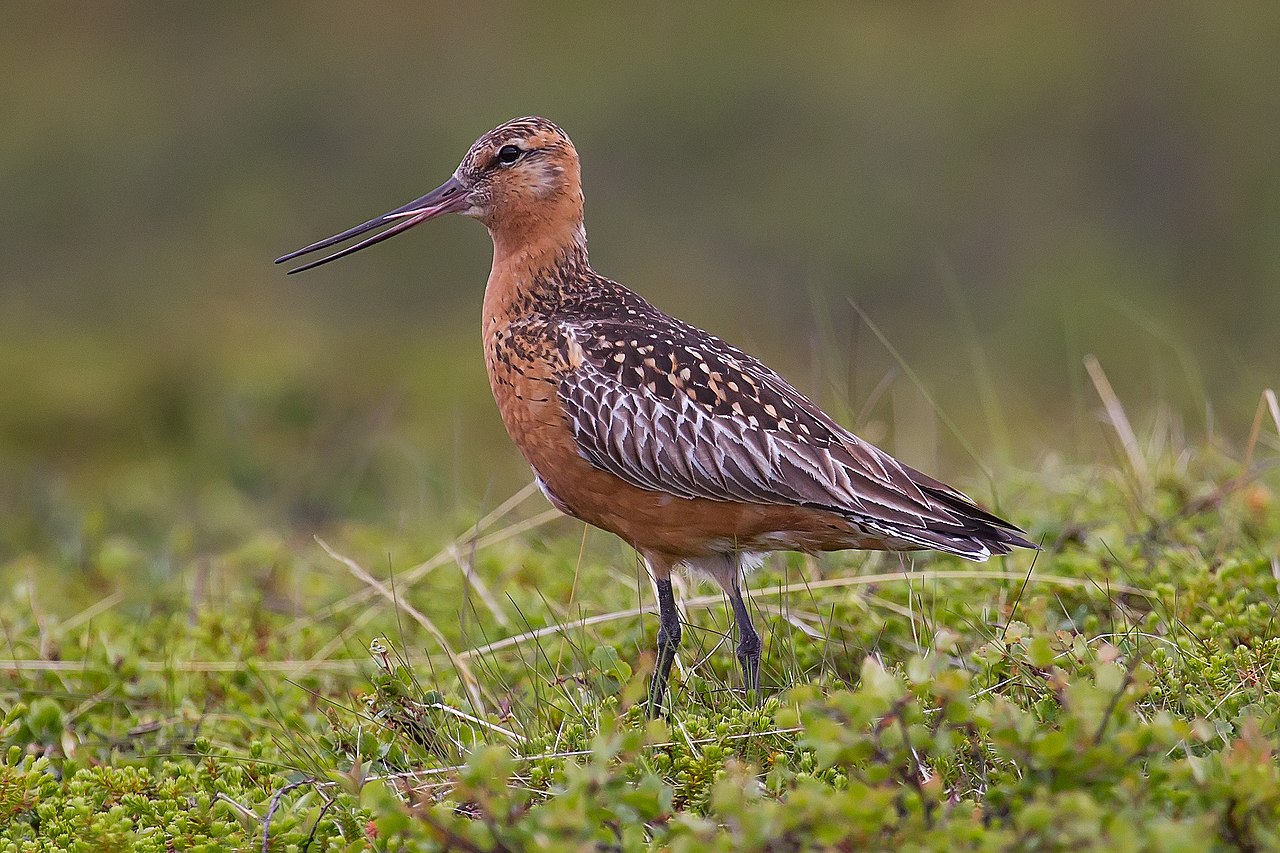
The bar-tailed godwit is a large and strongly migratory wader in the family Scolopacidae, which feeds on bristle-worms and shellfish on coastal mudflats and estuaries. It has distinctive red breeding plumage, long legs, and a long upturned bill. Bar-tailed godwits breed on Arctic coasts and tundra from Scandinavia to Alaska, and overwinter on coasts in temperate and tropical regions of Australia and New Zealand. The migration of the subspecies Limosa lapponica baueri across the Pacific Ocean from Alaska to New Zealand is the longest known non-stop flight of any bird, and also the longest journey without pausing to feed by any animal. The round-trip migration for this subspecies is over 29,000 km (18,020 mi).
Region
Arctic Eurasia to Western Europe, Africa, and Australasia via Palearctic and East Asian–Australasian flyways
Typical Environment
Breeds on Arctic coasts and tundra from Scandinavia across northern Russia to Alaska. During migration and winter it uses intertidal mudflats, estuaries, sandbanks, and sheltered bays. Key staging areas include the Wadden Sea in Europe and the Yellow Sea in East Asia, where birds build crucial fat reserves. In winter it is common along coasts of Western Europe, Africa, South and Southeast Asia, Australia, and New Zealand, roosting on beaches and saltmarsh at high tide and feeding on exposed flats at low tide.
Altitude Range
Sea level to 500 m
Climate Zone
Other
Ease of Keeping
Beginner friendly: 1/5
Bar-tailed godwits hold the record for the longest known non-stop flight, with the subspecies L. l. baueri flying from Alaska to New Zealand across the Pacific. They rely heavily on key staging sites such as the Yellow Sea and the Wadden Sea to refuel during migration. Females are larger with longer bills, an adaptation that reduces competition by allowing different prey depths. Their impressive flights are fueled by large pre-migratory fat stores and organ changes that optimize endurance.


In flight, showing tail barring
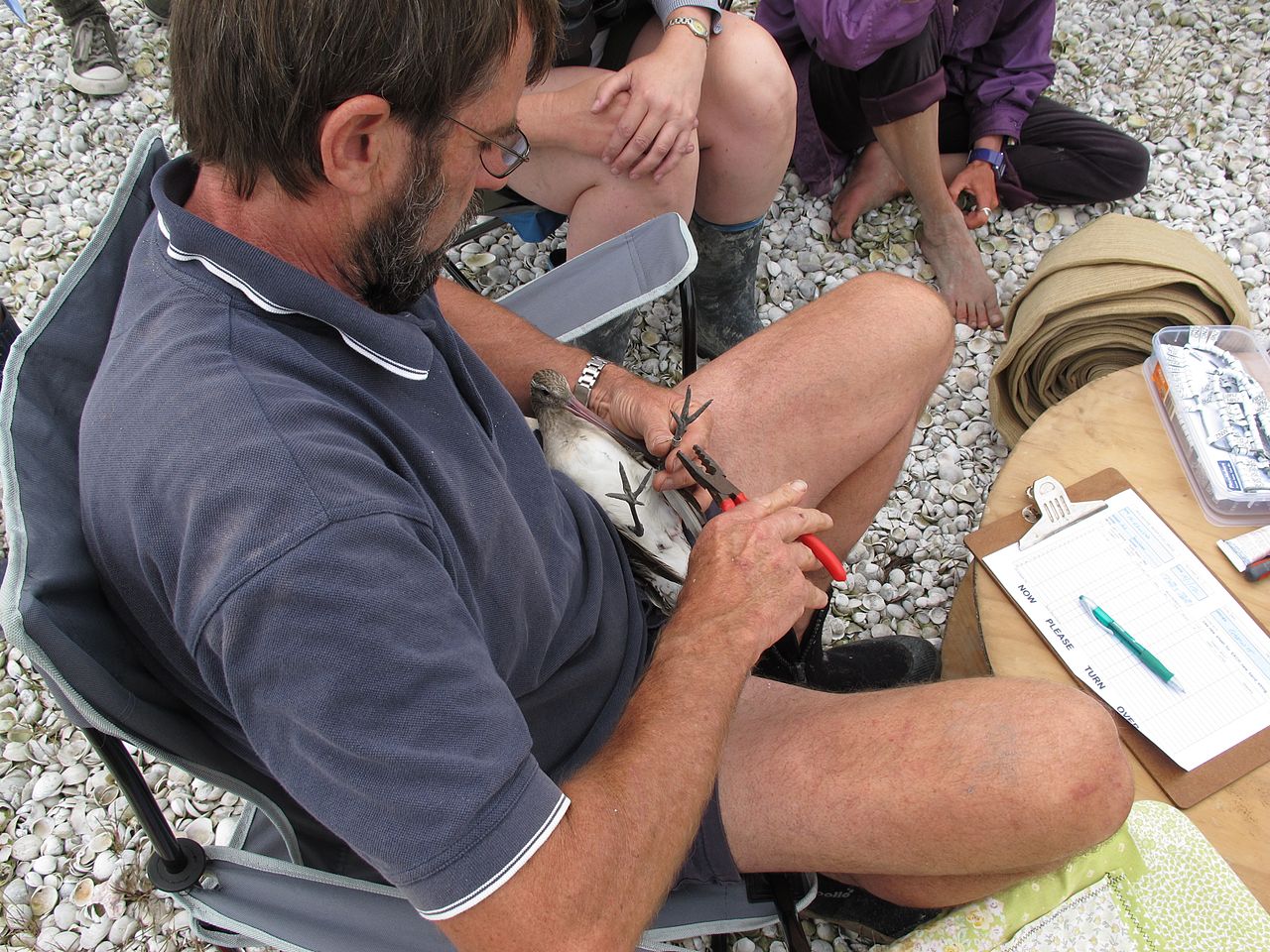
Banding L. l. baueri at Miranda Shorebird Centre, New Zealand

Routes of satellite tagged bar-tailed godwits migrating north from New Zealand to Korea and China


Temperament
gregarious and wary
Flight Pattern
strong, direct flight with rapid wingbeats; capable of sustained long-distance endurance flights
Social Behavior
Outside the breeding season they form large, cohesive flocks on mudflats and roost communally on nearby shores. On the tundra they nest on the ground, with pairs defending small territories. Both parents typically attend the nest and chicks, which are precocial and leave the nest shortly after hatching.
Migratory Pattern
Seasonal migrant
Song Description
Calls are clear, ringing wick or week notes and rapid, rippling chatter in display flights. On breeding grounds, males produce a bubbling series of notes and sharp, repeated contact calls. Flock flight calls are brisk and carrying over mudflats.
Plumage
Breeding males show rich brick-red underparts with mottled brown upperparts; females are paler and less extensively red. In nonbreeding plumage they are grey-brown above with whitish, lightly streaked underparts and a conspicuously barred tail. The bill is long and slightly upturned with a pinkish base and darker tip.
Diet
Primarily takes marine invertebrates, including polychaete worms, small bivalves, and crustaceans, located by probing soft sediments. It can swallow small shellfish whole and crush softer-shelled prey, and may wash items in shallow water. On breeding grounds it adds insects, larvae, and occasionally berries or plant material. Foraging depth and prey size vary with bill length, with females typically reaching deeper prey.
Preferred Environment
Feeds on intertidal mud and sand flats, estuaries, tidal creeks, and the edges of saltmarsh. During high tide it roosts on nearby beaches, sandspits, and saltmarsh, returning to exposed flats as the tide falls.


