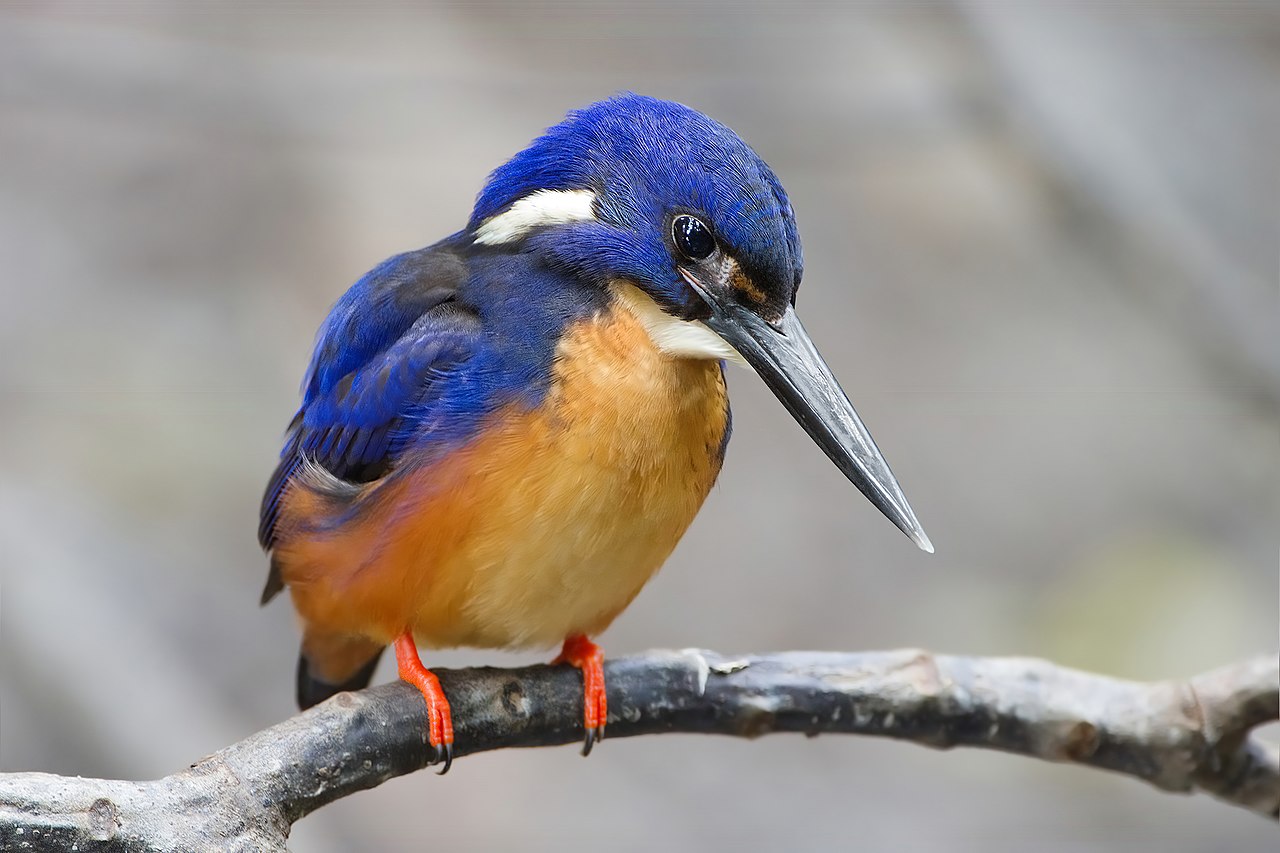
The azure dollarbird also known as the azure roller, purple dollarbird or purple roller, is a species of bird in the family Coraciidae. It is endemic to North Maluku in Indonesia. Formerly, some authorities considered the azure dollarbird to be a subspecies of the oriental dollarbird.
Region
North Maluku, Indonesia (Wallacea)
Typical Environment
Occurs in lowland and foothill forests, favoring forest edges, clearings, riverine corridors, and degraded or secondary growth. It also uses agroforestry mosaics such as coconut and mixed gardens where tall perches are available. The species often hunts from exposed snags along roads and village margins adjacent to forest. It requires tree cavities for nesting, so areas with mature trees are important.
Altitude Range
Sea level to 800 m
Climate Zone
Tropical
Ease of Keeping
Beginner friendly: 1/5
The azure dollarbird, also called the azure roller, is a striking member of the roller family found only in North Maluku, Indonesia. It was formerly treated as a subspecies of the oriental dollarbird but is now recognized as a distinct species. Its name comes from the pale blue round patches in its wings that flash like coins in flight. Ongoing deforestation in its limited range is the main threat to its survival.

Temperament
perches conspicuously, territorial around nest sites
Flight Pattern
strong flier with rapid wingbeats and short glides
Social Behavior
Usually seen singly or in pairs perched high on dead branches, snags, or wires. Pairs defend territories and nest in natural tree cavities or old woodpecker holes. Both parents incubate and feed the young, performing aerial sallies to bring food.
Migratory Pattern
Resident
Song Description
Vocalizations are harsh, grating series of rattling calls, often rendered as kak-kak-kak. Calls are given from high perches and during display flights over the territory.
Plumage
Glossy azure to purplish-blue overall with a slightly darker head and mantle; blackish flight feathers show pale blue round 'dollar' patches; tail slightly notched.
Diet
Feeds mainly on large flying insects such as beetles, cicadas, grasshoppers, and dragonflies. It hunts by sallying out from an exposed perch to snatch prey in the air, occasionally dropping to the ground. Prey is often subdued by beating it against the perch before swallowing. Small lizards or other invertebrates are taken opportunistically.
Preferred Environment
Forages along forest edges, over clearings, rivers, and coastal margins where flight corridors are open. Frequently uses tall dead branches, emergent trees, and utility wires as hunting perches near forested areas and agroforestry zones.