
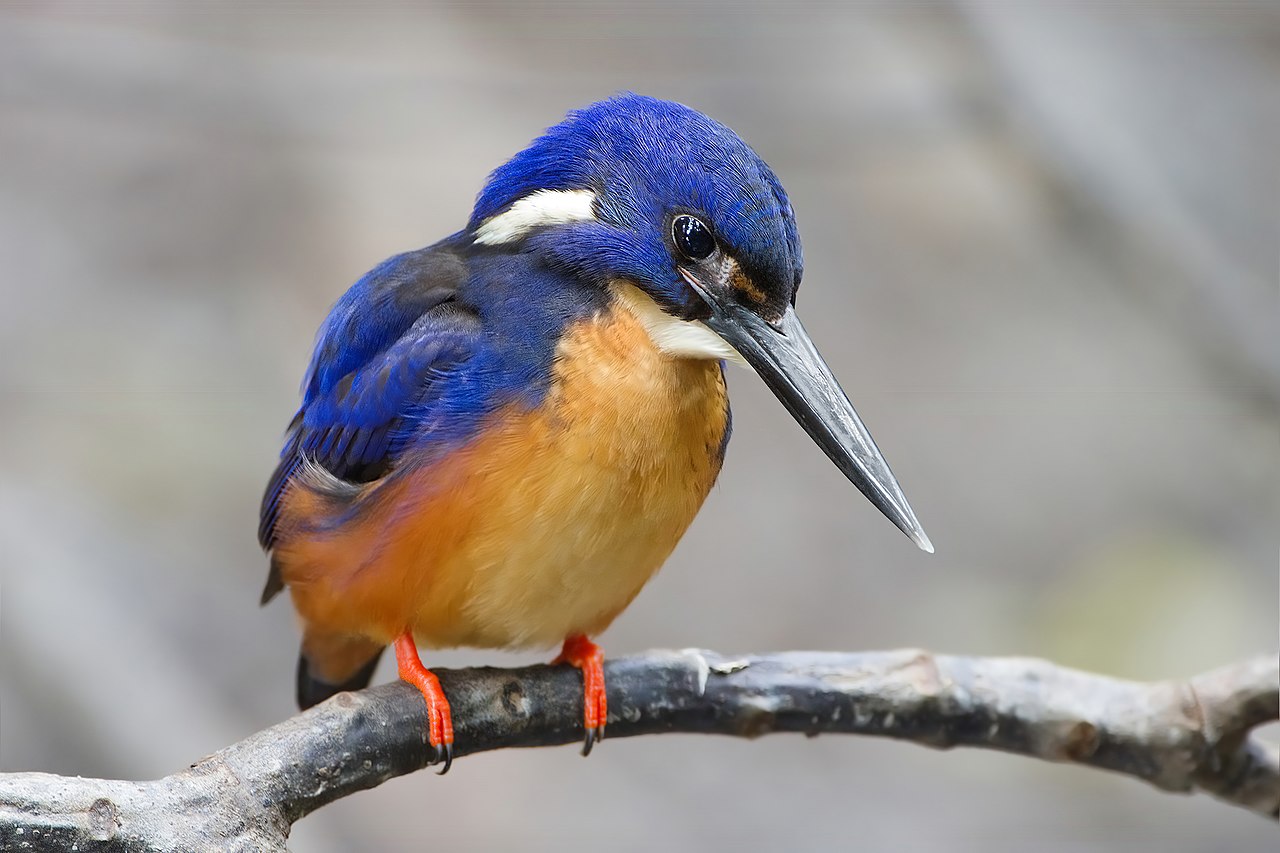
The azure kingfisher is a small kingfisher in the river kingfisher subfamily, Alcedininae.
Region
Australasia
Typical Environment
Found along shaded streams, creeks, rivers, billabongs, swamps, and mangrove-lined estuaries across much of Australia (including Tasmania) and southern New Guinea. It favors clear or slow-moving water with overhanging vegetation and exposed perches such as low branches, roots, or rocks. Breeding typically occurs near earthen banks where burrows can be excavated. Local movements track water levels, and it may vacate drying inland sites to remain near permanent water.
Altitude Range
Sea level to 1200 m
Climate Zone
Other
Ease of Keeping
Beginner friendly: 1/5
The azure kingfisher is a tiny but brilliantly colored river kingfisher of Australia and New Guinea. It hunts from low perches, plunging to snatch small fish and aquatic invertebrates. Its presence often indicates clean, well-vegetated waterways. Shy and fast-flying, it is more often seen as a cobalt flash skimming over water than observed closely.


Azure kingfisher showing large white eye-like lores
Temperament
solitary and territorial
Flight Pattern
fast, direct flight low over water with rapid wingbeats
Social Behavior
Usually seen alone or in pairs defending short stretches of stream. Pairs excavate a horizontal burrow in a vertical bank, ending in a nesting chamber where 4–7 glossy white eggs are laid. Both sexes incubate and feed the young, delivering prey headfirst. Outside breeding, it remains tied to suitable water but may shift locally as conditions change.
Migratory Pattern
Resident
Song Description
Voice is a sharp, high-pitched tseet or zeet, often given in flight. Also emits thin whistles and short chatter when agitated near the nest. Calls carry along waterways but are brief and infrequent.
Plumage
Glossy deep azure to cobalt-blue upperparts with a brighter spangled mantle and rich rufous-orange underparts; white chin and small white neck spots.
Diet
Takes small fish, aquatic insects, crustaceans (such as shrimps and yabbies), tadpoles, and occasionally small frogs. Hunts by sit-and-wait from a low perch, then plunges headfirst to seize prey near the surface. Prey is beaten against the perch and swallowed whole, typically headfirst. Foraging intensity increases when water is clear and levels are stable.
Preferred Environment
Feeds along clear, calm sections of streams, pools, billabongs, and mangrove creeks with overhanging cover and exposed perches. Often uses shaded banks, fallen logs, and root tangles to ambush prey. Avoids wide, turbulent waters lacking perches.


