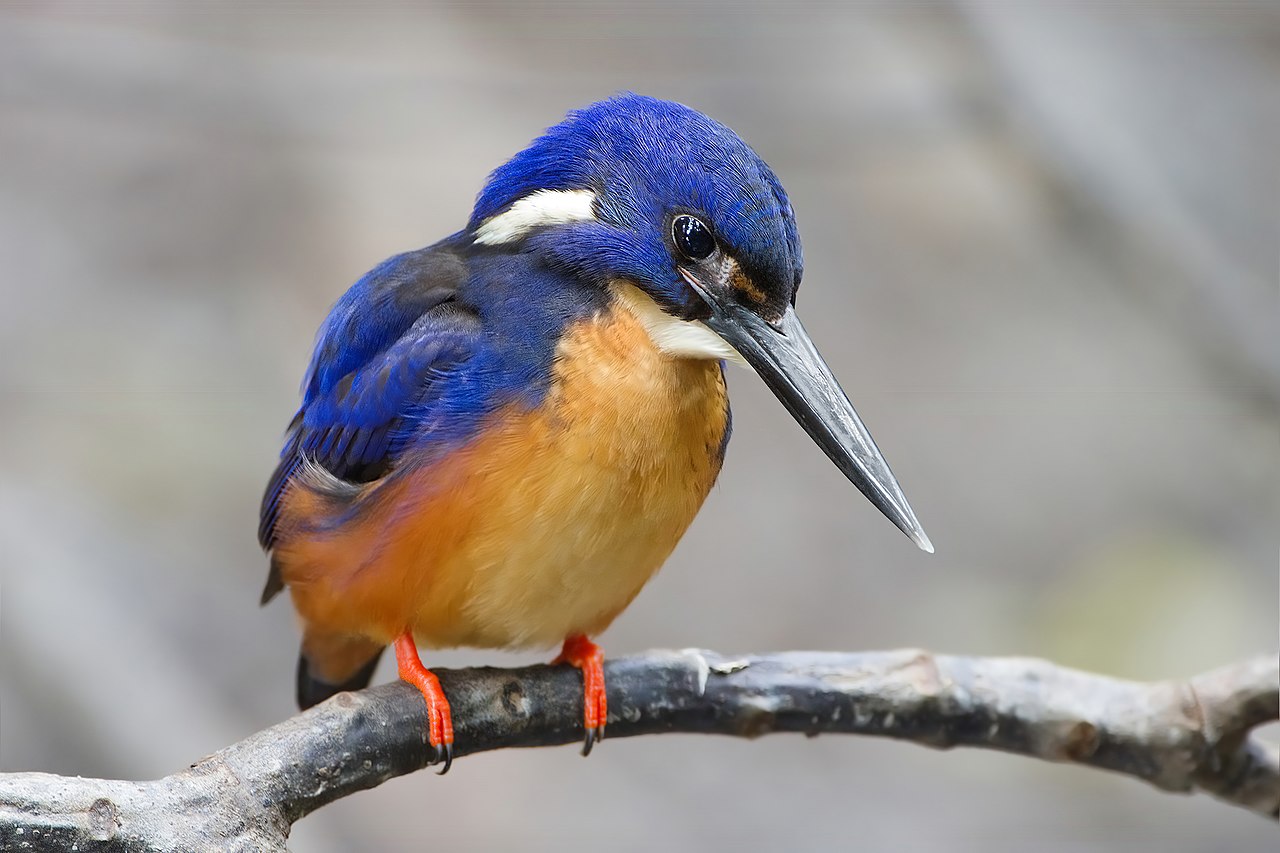
The azure gallinule is a species of bird in subfamily Rallinae of family Rallidae, the rails, gallinules, and coots. It is found in Argentina, Bolivia, Brazil, Colombia, Ecuador, French Guiana, Guyana, Paraguay, Peru, Suriname, Trinidad and Tobago, and Venezuela.
Region
Amazon Basin, Guianas, northern South America and Trinidad
Typical Environment
The azure gallinule inhabits freshwater marshes, flooded savannas, oxbow lakes, and the vegetated margins of slow rivers. It favors dense emergent vegetation and floating mats of hyacinth and lilies, where it forages and nests. It readily uses human-modified wetlands such as rice paddies and irrigation canals. Within its range it can appear locally common where shallow, vegetated water is extensive.
Altitude Range
Sea level to 1500 m
Climate Zone
Tropical
Ease of Keeping
Beginner friendly: 2/5
This small gallinule has very long toes that spread its weight, letting it walk atop floating vegetation like water lilies. It often exploits seasonally flooded wetlands and rice fields, shifting locally as water levels change. Juveniles are buffy-brown and much duller than adults. When alarmed, it flicks its bright white undertail coverts while slipping into dense cover.


Temperament
shy and skulking
Flight Pattern
short rapid wingbeats with dangling legs; reluctant flier
Social Behavior
Typically seen singly, in pairs, or small family groups, moving quietly through dense aquatic vegetation. Both sexes build a platform nest among reeds or floating plants and share incubation and chick care. Territorial during breeding, but may gather loosely where food is abundant.
Migratory Pattern
Partial migrant
Song Description
Vocalizations are sharp squeaks, clucks, and cackling chatter given from cover or in flight. Alarm notes are rapid, metallic keks and harsh scolds that carry over marshes.
Plumage
Sleek, smooth plumage with a bluish to azure head and neck contrasting with olive-brown upperparts and paler underparts; bright white undertail coverts are conspicuous when flicked.
Diet
Feeds on aquatic insects, small snails, crustaceans, seeds, tender shoots, and grains. It nips at floating plant parts and probes among hyacinth roots and lily pads. In rice fields it takes spilled grain as well as invertebrates attracted to the crop. Opportunistic and adaptable, shifting its diet with seasonal availability.
Preferred Environment
Usually forages atop floating vegetation or along emergent reedbeds and grassy marsh edges. It also works muddy margins and shallow flooded fields where cover is nearby. Dense vegetation is preferred for both feeding and quick concealment.