The Altamira oriole is a New World oriole. The bird is widespread in subtropical lowlands of the Mexican Gulf Coast and northern Central America, the Pacific coast and inland. They have since spread to southern Texas, but this was not until 1939.
Region
Mesoamerica (Gulf Coast of Mexico to northern Central America)
Typical Environment
Found in subtropical and tropical lowlands along the Gulf slope of Mexico south through Veracruz and into northern Central America, with smaller populations on the Pacific slope and a resident foothold in southern Texas. Prefers open woodland, forest edges, riparian gallery forest, second growth, and semi-urban parks with tall, scattered trees. Common in agricultural mosaics, citrus groves, and gardens where large shade trees are present. Often associates with flowering trees and palms that provide nesting sites.
Altitude Range
0–1500 m
Climate Zone
Subtropical
Ease of Keeping
Beginner friendly: 1/5
The Altamira oriole is one of the largest New World orioles and the largest regularly occurring oriole in the United States, where it resides locally in the Lower Rio Grande Valley of Texas. It weaves long, pendant nests that hang from tall branches, often in shade trees or palms. Both sexes sing, producing rich whistles mixed with harsh chatters, and they readily visit fruit and nectar feeders.


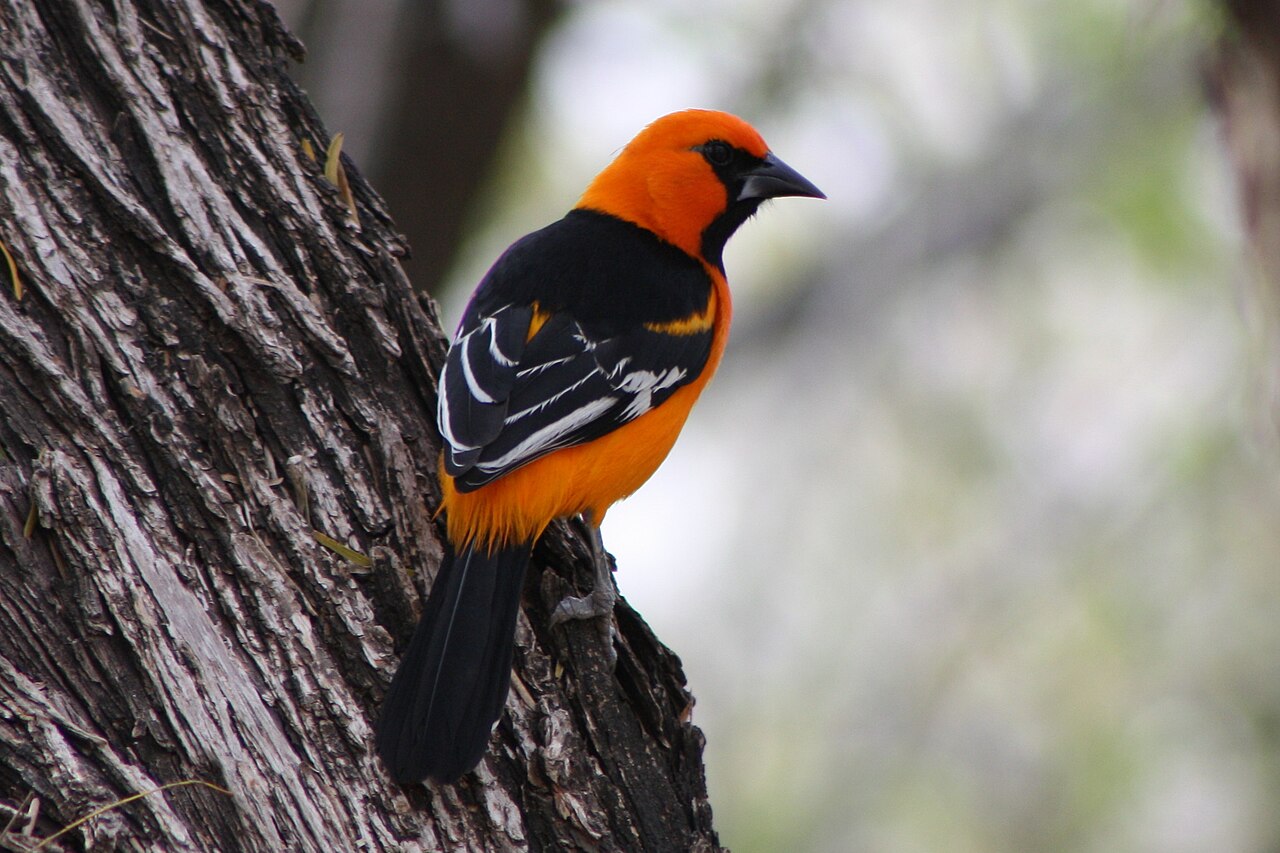
In Bentsen State Park, Texas, US
Temperament
alert and moderately shy, territorial in breeding season
Flight Pattern
strong flier with undulating flight and rapid wingbeats
Social Behavior
Usually seen singly or in pairs; small family groups form after fledging. Monogamous pairs build long, woven pendant nests suspended from the tips of branches, often high in isolated trees. Nests are lined with fine fibers and placed in open sites to deter predators. Both parents feed the young.
Migratory Pattern
Resident
Song Description
A series of rich, fluty whistles interspersed with rattles and harsh chatters. Both sexes sing; calls include sharp chacks and scolds, especially near the nest.
Plumage
Bright orange head and underparts with a contrasting black throat and upper chest, black back and wings with crisp white wing bars, and a mostly black tail.
Diet
Eats insects, spiders, and other arthropods gleaned from foliage and bark. Also takes fruit such as citrus, berries, and figs, and sips nectar from flowers. Will visit feeders for orange halves or sugar-water, especially in suburban areas. Occasionally probes flower clusters and may take small vertebrate prey opportunistically.
Preferred Environment
Forages in mid to upper canopy of open woodlands, along forest edges, and in riparian trees. Frequently uses flowering and fruiting trees, orchards, and shade trees in farms and parks.