

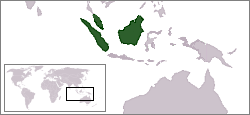
The wrinkled hornbill or Sunda wrinkled hornbill is a medium-large hornbill which is found in forest in the Thai-Malay Peninsula, Sumatra and Borneo.
Region
Sundaland (Thai-Malay Peninsula, Sumatra, Borneo)
Typical Environment
Inhabits primary and well-structured secondary lowland evergreen rainforest, including dipterocarp forests. Often found along riverine corridors and in peat or swamp forests where large fruiting trees occur. Requires very large, old trees with natural cavities for nesting, so it is sensitive to logging. Generally avoids heavily degraded or fragmented habitats but may range across them to reach fruiting trees.
Altitude Range
Sea level to 1200 m
Climate Zone
Tropical
Ease of Keeping
Beginner friendly: 2/5
Also called the Sunda wrinkled hornbill, it is named for the corrugated ridges on its casque. Males and females look strikingly different, with the male showing warm-colored facial skin and the female cooler blue tones. It is a key seed disperser for large rainforest trees, especially figs, and depends on old-growth trees for nesting. Habitat loss in the Sundaic lowlands has caused significant declines.


Belait District, Brunei, Borneo, female and male Wrinkled hornbill

Sukau Rainforest Lodge, Kinabatangen River - Sabah, Borneo - Malaysia

Sukau Rainforest Lodge, Kinabatangen River - Sabah, Borneo - Malaysia

Female Wrinkled hornbill, Belait District, Brunei, Borneo
Temperament
social and active
Flight Pattern
strong flier with deep wingbeats and short glides
Social Behavior
Typically seen in pairs or small groups, sometimes gathering at fruiting trees. Forms long-term pair bonds; the female seals herself inside a tree cavity during nesting, leaving a narrow slit. The male delivers food to the sealed nest throughout incubation and chick-rearing. Outside the breeding season they move widely to track fruit availability.
Migratory Pattern
Resident
Song Description
Vocalizations include loud honks, cackles, and braying calls that carry through the canopy. Wingbeats produce a characteristic whooshing sound in flight.
Plumage
Mostly glossy black with contrasting white in the tail and undertail; heavy bill topped by a ridged, corrugated casque.
Diet
Primarily frugivorous, with figs (Ficus) forming a major portion of the diet. Also consumes other large-seeded rainforest fruits and occasionally supplements with insects, small reptiles, or other animal matter. Swallows fruits whole and later regurgitates or defecates seeds, aiding long-distance dispersal.
Preferred Environment
Forages high in the canopy at large fruiting trees, especially figs. Frequently visits river edges, forest gaps, and edges where fruiting trees are accessible. Will cross open areas to reach seasonal fruit sources.


