

The woodlark or wood lark is the only extant species in the lark genus Lullula. It is found across most of Europe, the Middle East, western Asia and the mountains of north Africa. It is mainly resident (non-migratory) in the west of its range, but eastern populations of this passerine bird are more migratory, moving further south in winter.
Region
Europe, Middle East, and North Africa
Typical Environment
Woodlarks occupy open, dry habitats with short vegetation, such as heathlands, forest clear-cuts, young conifer plantations, dunes, and steppe-like grasslands. They prefer sandy or well-drained soils with scattered shrubs or trees and patches of bare ground for foraging. In the west and south of their range many populations are resident, while eastern birds may shift southward in winter. They are widespread across much of Europe, extending into western Asia and the Maghreb.
Altitude Range
Sea level to 2000 m
Climate Zone
Temperate
Ease of Keeping
Beginner friendly: 1/5
The Woodlark is the sole living member of the genus Lullula, named after its fluty, looping song that often includes a repeated 'lu-lu' motif. Males deliver prolonged, melodious song-flights in circles high above open habitats, a key way to locate this otherwise inconspicuous bird. It nests on the ground in short vegetation and relies on a mosaic of bare patches and low cover. Populations have fluctuated with land-use changes, benefiting locally from forestry clear-fell and heathland management.


Coloured lithograph by Magnus von Wright

Bird in flight at Südheide Nature Park
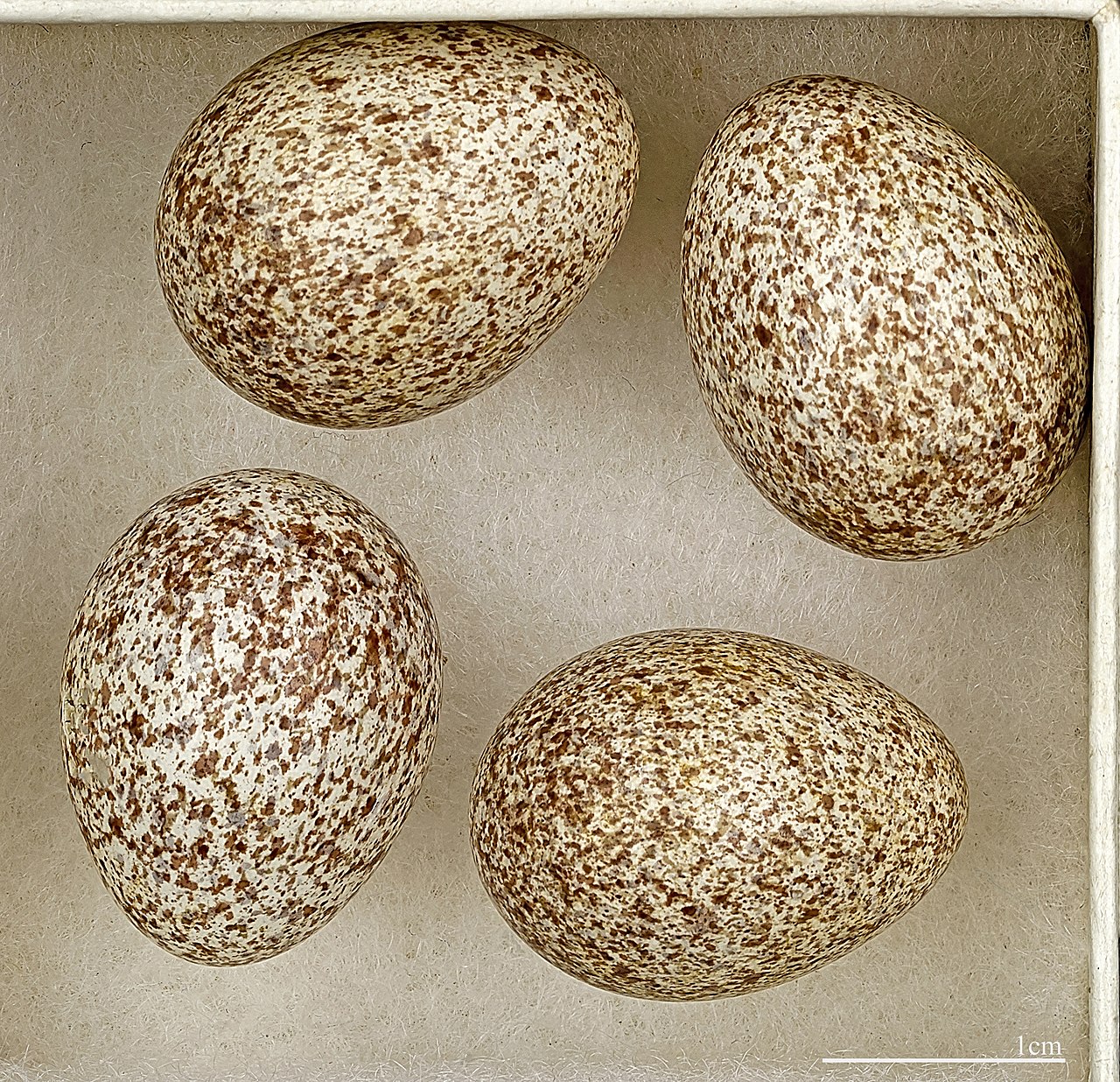
Four eggs
Temperament
solitary and territorial
Flight Pattern
buoyant display flights with circling and hovering; otherwise low, undulating flight
Social Behavior
Breeding pairs defend territories, with the male displaying and singing in flight or from low perches. The nest is a ground scrape lined with fine vegetation, and clutches are often raised early in spring. Outside the breeding season, birds may form small loose groups at feeding sites.
Migratory Pattern
Partial migrant
Song Description
A rich, fluty, and melancholic series of rolling phrases delivered in long, circling song-flights. Also sung from perches, with clear repeated 'lu-lu' notes that carry far over open ground.
Plumage
Warm brown, finely streaked upperparts with buffy, lightly streaked underparts and a somewhat short tail. Broad pale supercilia meet at the nape, creating a distinctive V-shaped effect. Subtle crest can be raised; wings show pale edges in flight.
Diet
Woodlarks feed mainly on small seeds of grasses and weeds outside the breeding season. In spring and summer they take more invertebrates, including beetles, caterpillars, ants, and spiders, which are vital for chick growth. They pick food from the ground, probing among short turf and bare patches.
Preferred Environment
Foraging occurs on short swards, bare soil, tracks, forestry rides, and lightly vegetated heath. They often feed near nesting areas where open ground is interspersed with low cover.


