

The woodpecker finch is a monomorphic species of bird in the Darwin's finch group of the tanager family Thraupidae, endemic to the Galapagos Islands. The diet of a woodpecker finch revolves mostly around invertebrates, but also encompasses a variety of seeds. Woodpecker finches, like many other species of birds, form breeding pairs and care for young until they have fledged. The most distinctive characteristic of woodpecker finches is their ability to use tools for foraging. This behaviour indicates that they have highly specialized cognitive abilities. Woodpecker finches have also shown the ability to learn new behaviours regarding tool use via social learning. Not all populations of woodpecker finches use tools equally often, as this is influenced by the environment in which they live.
Region
Galápagos Islands
Typical Environment
Occurs across several islands of the Galápagos archipelago, using both arid lowlands and moister highland zones. It frequents arid scrub with Opuntia cacti, Scalesia woodland, and Miconia shrublands, as well as edges and second-growth. Birds forage on trunks, branches, and dead wood, probing bark and cavities. They adapt well to mixed habitats where insect larvae in wood are available.
Altitude Range
Sea level to 1500 m
Climate Zone
Tropical
Ease of Keeping
Beginner friendly: 1/5
A member of Darwin’s finches, the woodpecker finch is famous for using cactus spines or twigs as tools to extract insect larvae from crevices—one of the best-known examples of tool use in wild birds. It inhabits multiple habitat zones across the Galápagos, from arid scrub to humid highlands. Not all populations use tools equally; frequency varies with local food availability and habitat structure.

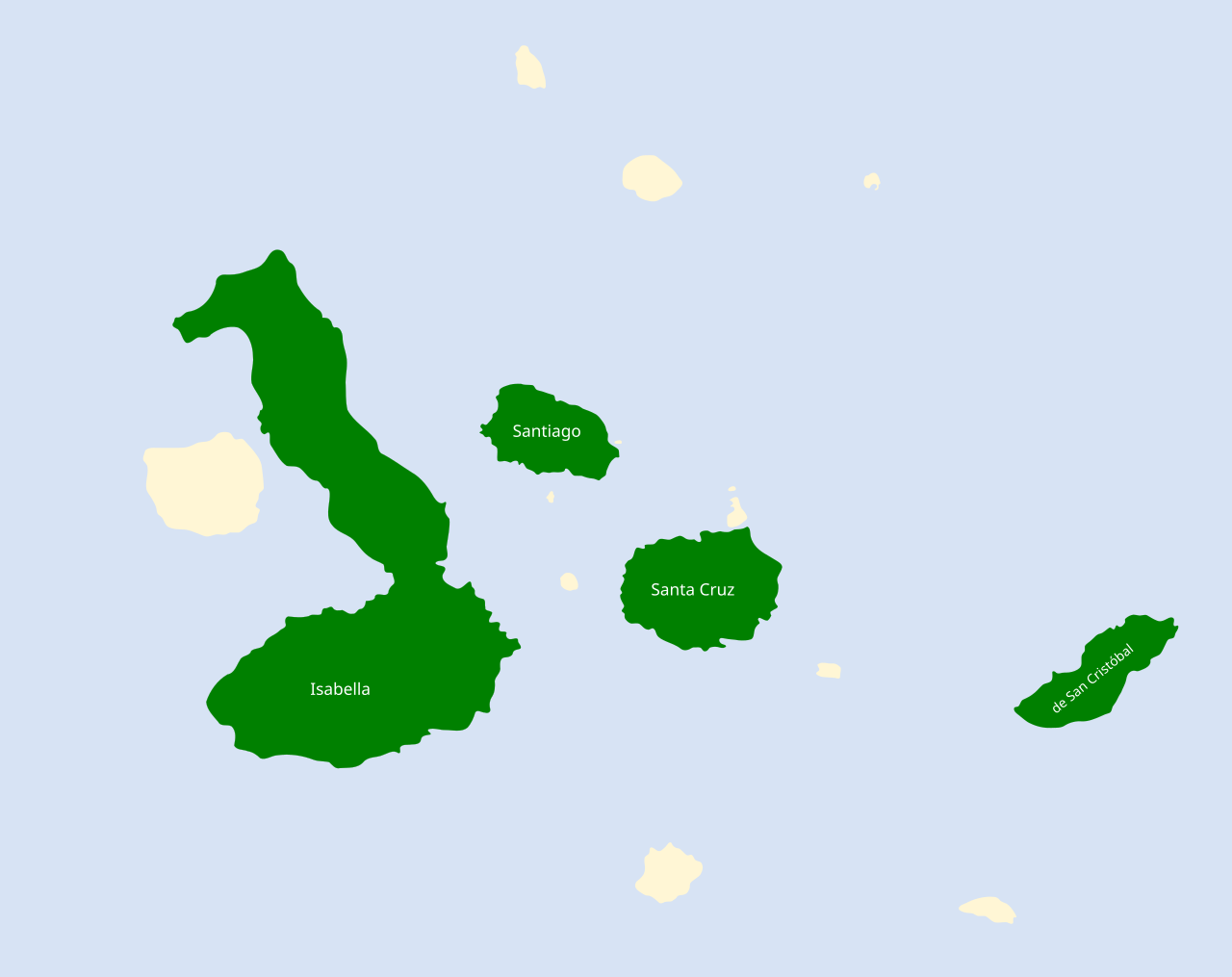

Illustration of a woodpecker finch

Woodpecker finch on branch
Temperament
inquisitive and active
Flight Pattern
short rapid wingbeats between perches
Social Behavior
Typically forms monogamous pairs during breeding and defends small territories. Nests are built in trees or shrubs; both parents feed the young. Outside breeding, small loose groups may form while foraging.
Migratory Pattern
Resident
Song Description
A series of thin, tinkling notes and soft trills interspersed with sharp chips. Calls are simple but repeated; birds can be quite vocal while foraging.
Plumage
Olive-brown upperparts with a greyish cast, and whitish underparts marked with fine brown streaking. Throat pale; head often shows a subtle pale eyebrow. Feathers appear plain overall, with minimal contrast.
Diet
Primarily feeds on arthropods, especially beetle larvae extracted from dead wood. Uses cactus spines or twigs to probe bark and holes, and may hammer at soft wood. Also takes adult insects and occasionally supplements with seeds and small fruits when insects are scarce.
Preferred Environment
Forages on tree trunks, branches, and dead limbs in arid scrub and Scalesia forests. Often searches in areas with abundant fallen branches, snags, and cactus stands that harbor wood-boring larvae.


