
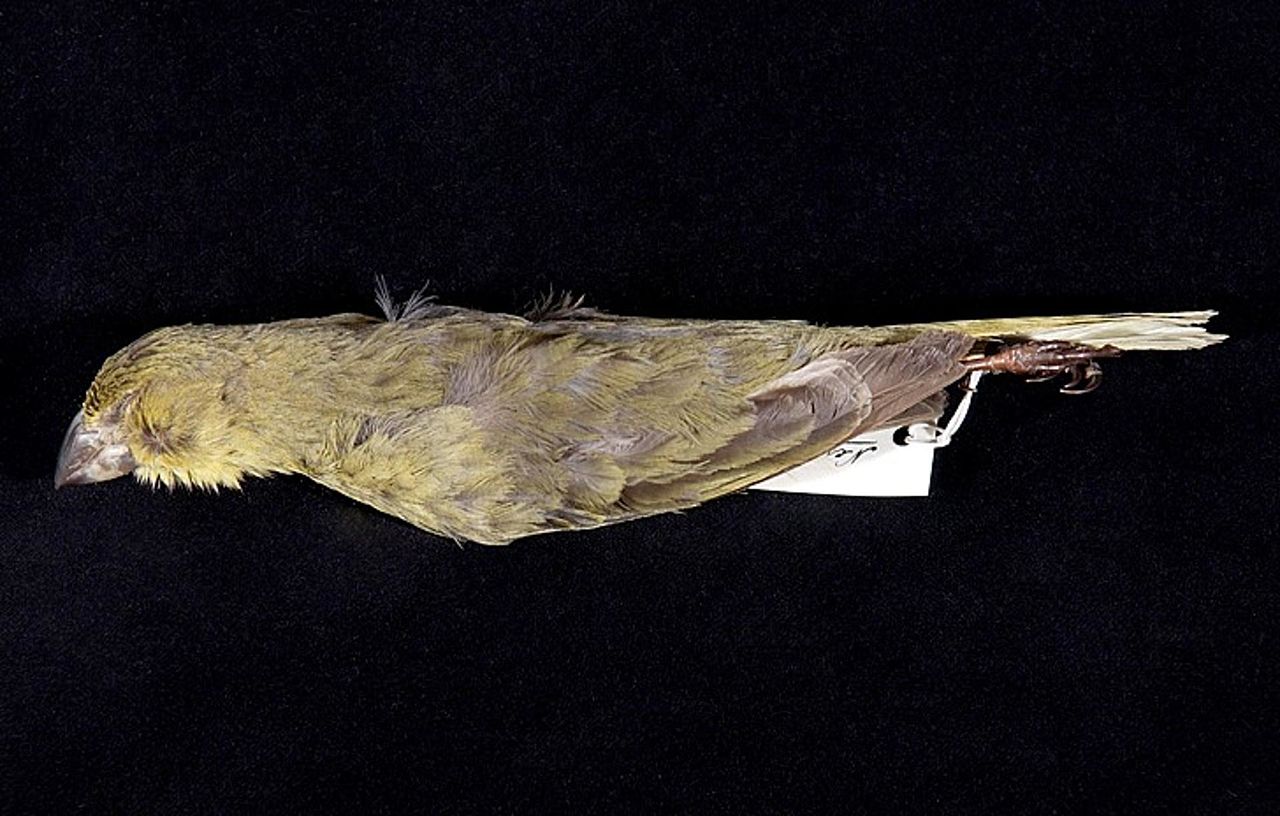
Wilkins's Bunting , also known as the grosbeak bunting, is a species of bird in the family Thraupidae. It is restricted to Inaccessible Island and Nightingale Island of the Tristan da Cunha archipelago, part of the British overseas territory of Saint Helena, Ascension and Tristan da Cunha in the South Atlantic Ocean. Its natural habitats are temperate shrubland and subantarctic grassland.
Region
South Atlantic Ocean, Tristan da Cunha archipelago
Typical Environment
It occupies temperate shrubland, fern-bush, and subantarctic tussock grasslands on steep coastal slopes and plateau edges. Birds forage within dense Poa-like tussock and among low Phylica scrub where available. Edges of boulder beaches, seepage gullies, and open patches within grassland are also used for feeding. The species is absent from human settlements and remains largely tied to natural, wind-swept vegetation mosaics.
Altitude Range
Sea level to 600 m
Climate Zone
Temperate
Ease of Keeping
Beginner friendly: 1/5
Also called Wilkins's bunting or the grosbeak bunting, this tanager is notable for its stout bill, which varies in size among individuals and is adapted to cracking tough island seeds. It is confined to the remote Tristan da Cunha archipelago, where it inhabits dense tussock and shrub communities. Because of its tiny range, it is sensitive to habitat changes and the introduction of predators.


Temperament
shy and skulking
Flight Pattern
short rapid wingbeats with low, undulating flights
Social Behavior
Usually seen singly or in pairs during the breeding season, becoming small family parties when fledglings are present. Likely monogamous, nesting low in dense grass or shrub cover in well-concealed cup nests. Territorial behavior is most evident around nest sites, while feeding areas can be loosely shared.
Migratory Pattern
Resident
Song Description
A soft, tinkling series of notes interspersed with thin chips, often delivered from within cover. Calls include sharp metallic ticks and subdued twittering used to maintain contact in dense vegetation.
Plumage
Dull olive-brown to brown upperparts with fine, diffuse streaking and paler, buffy underparts. Feathers are plain with subtle contrast between back and breast, giving a somewhat muted, earth-toned appearance.
Diet
It feeds on a mix of grass and shrub seeds, small fruits, and various invertebrates such as beetles, caterpillars, and spiders. The stout bill allows efficient husking of tough seeds and pods. During the breeding season, more invertebrates are taken, likely to meet protein demands. It will opportunistically glean from low foliage and probe among leaf litter and tussock bases.
Preferred Environment
Foraging occurs mainly on the ground and in the lower strata of tussock grass and heath-like scrub. Birds also work along edges of fern-bush and open patches where seeds and insects are easier to access. Sheltered gullies and lee slopes are favored in windy conditions.


