The wild turkey is an upland game bird native to North America, one of two extant species of turkey and the heaviest member of the order Galliformes. It is the ancestor to the domestic turkey, which was originally derived from a southern Mexican subspecies of wild turkey.
Region
North America
Typical Environment
Wild turkeys inhabit a mosaic of mature and mixed forests interspersed with openings, fields, and shrublands. They favor oak-hickory and mixed hardwood forests for acorns and mast, but also use pine, riparian woodlands, and juniper-pinyon in the West. Edge habitats are important for feeding and brood-rearing, and they readily forage in agricultural lands. They roost in tall trees at night and require nearby cover for nesting and predator avoidance.
Altitude Range
Sea level to 3300 m
Climate Zone
Temperate
Ease of Keeping
Beginner friendly: 2/5
The wild turkey is an upland game bird native to North America and the heaviest member of the order Galliformes. It is the ancestor of the domestic turkey, derived from a southern Mexican subspecies. After severe declines in the early 20th century, wild turkeys rebounded dramatically thanks to science-based restoration and habitat conservation.


Close-up of head features

Closeup of wild turkey tom

Eastern subspecies

Wild turkey agile in flight

Wild turkey, fast flier

Hen with poults

Wild turkeys foraging in the Appalachian Foothills of Pennsylvania
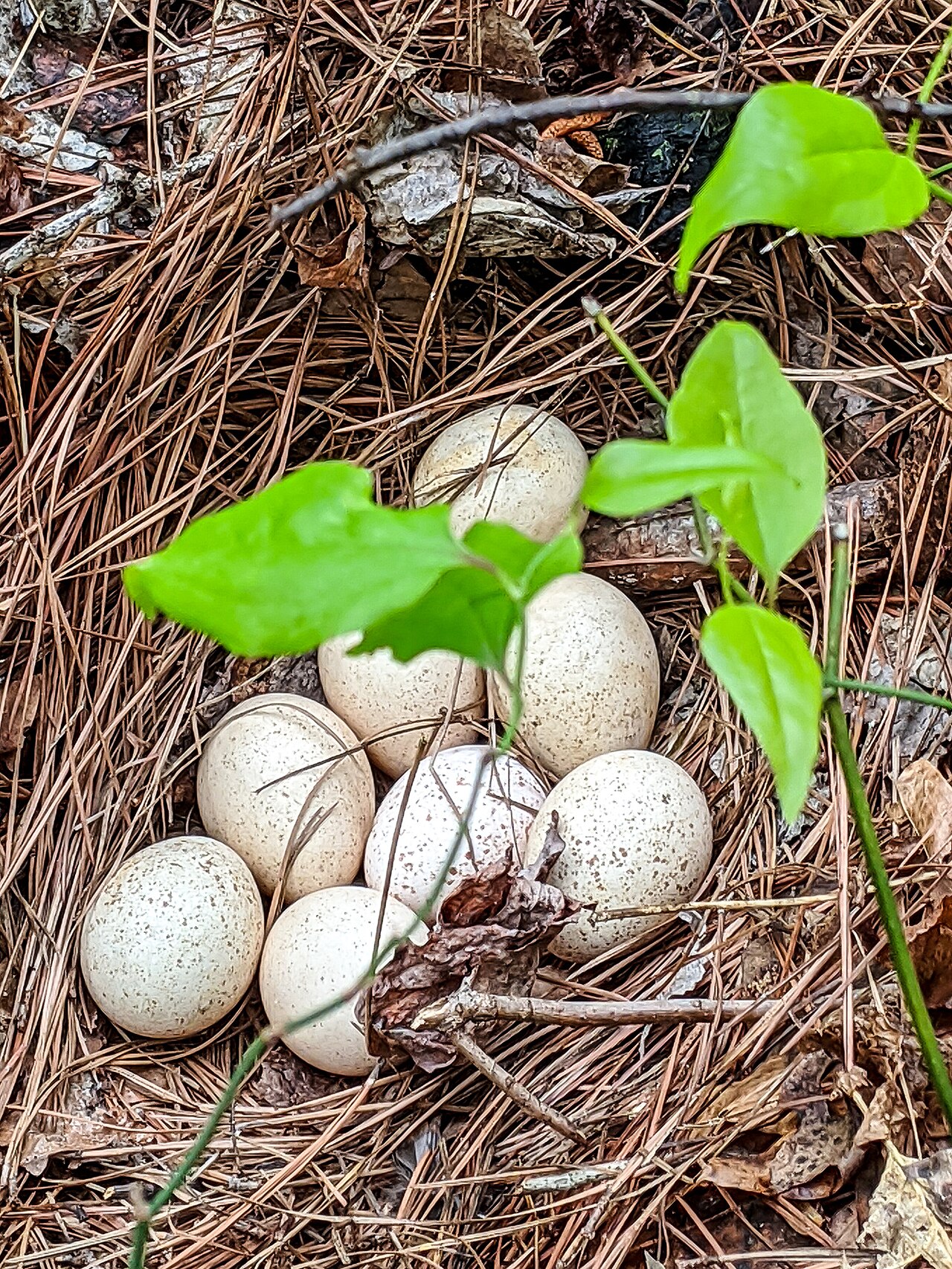
Nest found in Nelson County, Virginia

Nest in Ontario
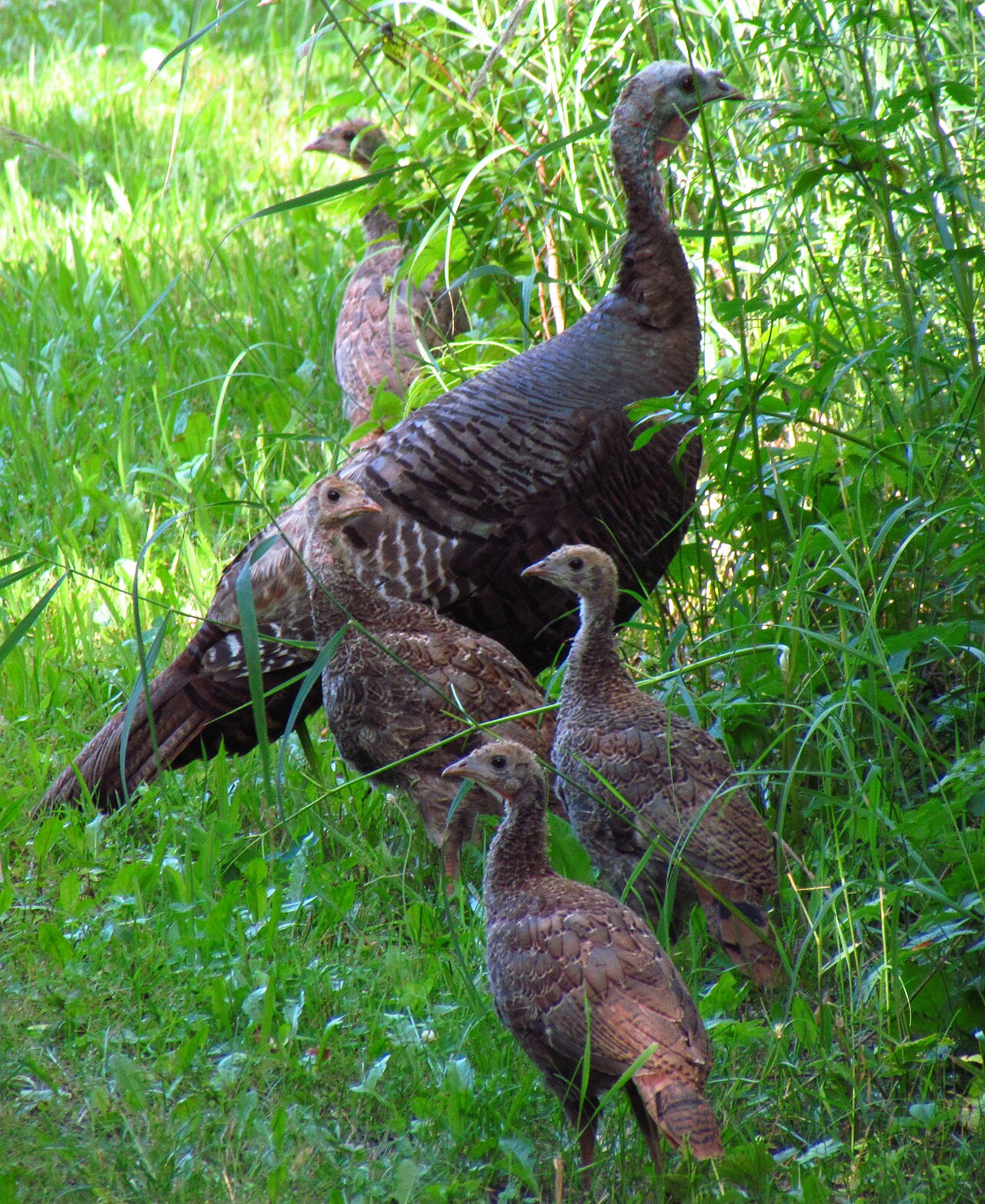
Hen with juveniles

A hen caught in the open hides her young poults beneath her wings and body.
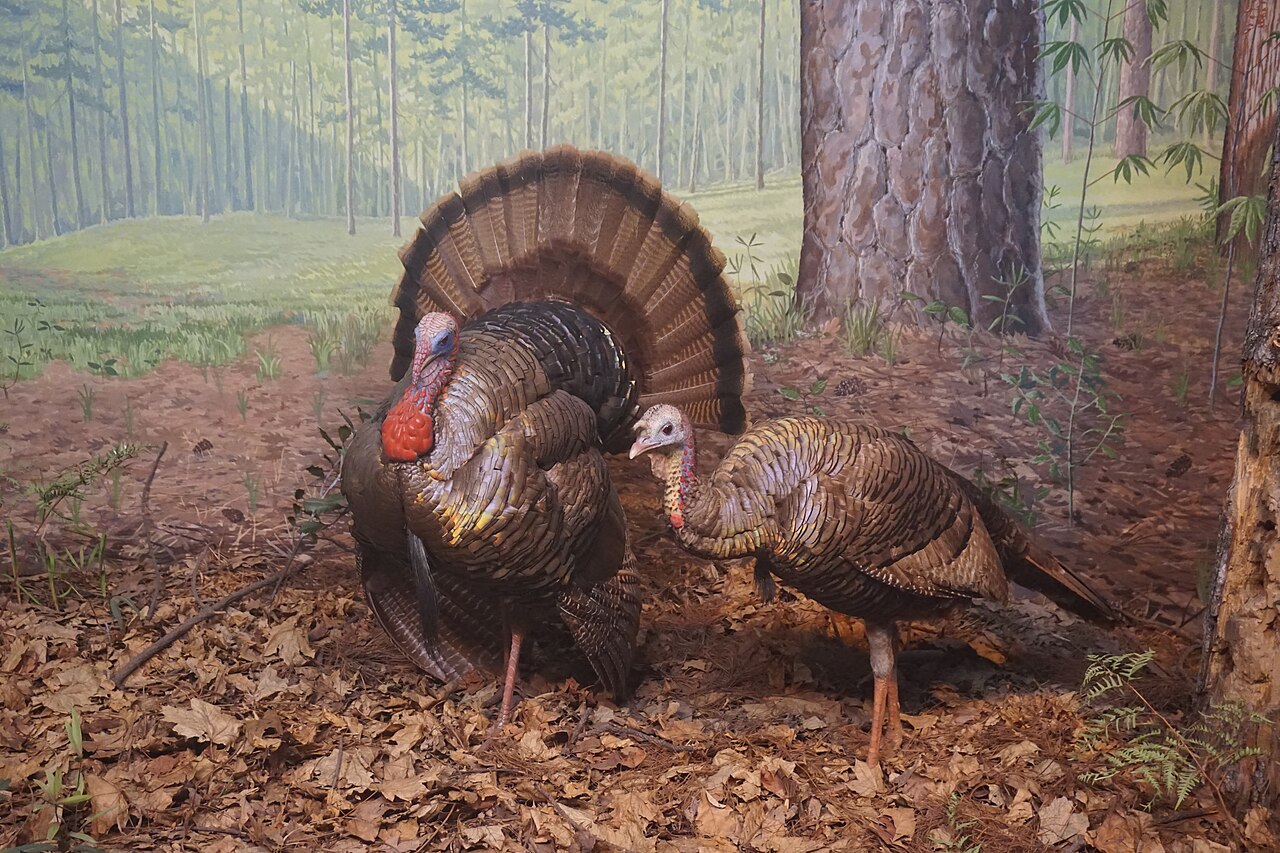
A Bird of the Deciduous Forest, Wild Turkey, Georgia diorama at the Milwaukee Public Museum

Eastern wild turkey

Rio Grande wild turkey has relatively long legs

Gould's wild turkey

Female wild turkey with young, from Birds of America by John James Audubon
![Smoke-morph wild turkey (right), a relatively rare color morph almost exclusively manifested in females.[65]](https://upload.wikimedia.org/wikipedia/commons/thumb/6/6a/20251015_smoke_morph_wild_turkey_near_matthei_botanical_garden_PD204621.jpg/1280px-20251015_smoke_morph_wild_turkey_near_matthei_botanical_garden_PD204621.jpg)
Smoke-morph wild turkey (right), a relatively rare color morph almost exclusively manifested in females.[65]

Eastern wild turkey (M. g. silvestris) hens
Temperament
wary and alert
Flight Pattern
short rapid wingbeats with powerful, brief flights and glides
Social Behavior
Outside the breeding season, wild turkeys form flocks often segregated by sex and age. In spring, males display by strutting and gobbling to attract multiple females, and dominance hierarchies are pronounced. Nests are shallow ground scrapes concealed in vegetation, and hens rear broods alone while roosting with poults in trees once they can fly.
Migratory Pattern
Resident
Song Description
Males produce loud, carrying gobbles used for mate attraction and territory advertisement. Both sexes give clucks, yelps, purrs, and putts, with soft contact calls in flocks and sharp alarm notes when disturbed.
Plumage
Large, heavy-bodied bird with dark, iridescent plumage that shows bronze, green, and copper sheens; females are duller and browner. Tail fans broadly with chestnut to cinnamon tips during displays. Bare head and neck with caruncles and wattles that change from bluish to red during excitement.
Diet
Wild turkeys eat acorns, nuts, seeds, berries, grasses, and green shoots, supplemented by insects such as beetles, grasshoppers, and caterpillars. They also consume small reptiles and amphibians on occasion. Diet shifts seasonally, with more insects in spring and mast in autumn and winter, while poults are heavily insectivorous in their first weeks.
Preferred Environment
They forage on the ground in forest edges, clearings, and open woodlands, often moving between cover and fields. Agricultural landscapes, including pastures and crop stubble, are frequently used, especially in winter.