

The white-throated toucan (Maeve) is a near-passerine bird in the family Ramphastidae found in South America throughout the Amazon Basin including the adjacent Tocantins and Araguaia River drainage. It prefers tropical humid forest, but also occurs in woodland and locally in riverine forest within cerrado.
Region
Amazon Basin and the Guianas
Typical Environment
Occurs widely across the Amazon Basin, including Brazil, Peru, Colombia, Ecuador, Bolivia, Venezuela, and the Guianas. It inhabits humid lowland rainforest, both terra firme and seasonally flooded várzea, and frequents forest edges and secondary growth. Locally it extends into woodland mosaics and riverine forests along the Tocantins and Araguaia drainages, even into patches within the cerrado. Often ranges along rivers and gallery forests where fruiting trees are plentiful.
Altitude Range
Sea level to 1000 m
Climate Zone
Tropical
Ease of Keeping
Beginner friendly: 2/5
This large toucan is a key seed disperser in Amazonian forests, helping regenerate canopy trees over long distances. Its oversized bill is lightweight and aids in both foraging and thermoregulation. Pairs often engage in gentle bill-fencing and fruit-tossing displays. Its loud, far-carrying yelps are a signature sound of intact lowland rainforest.


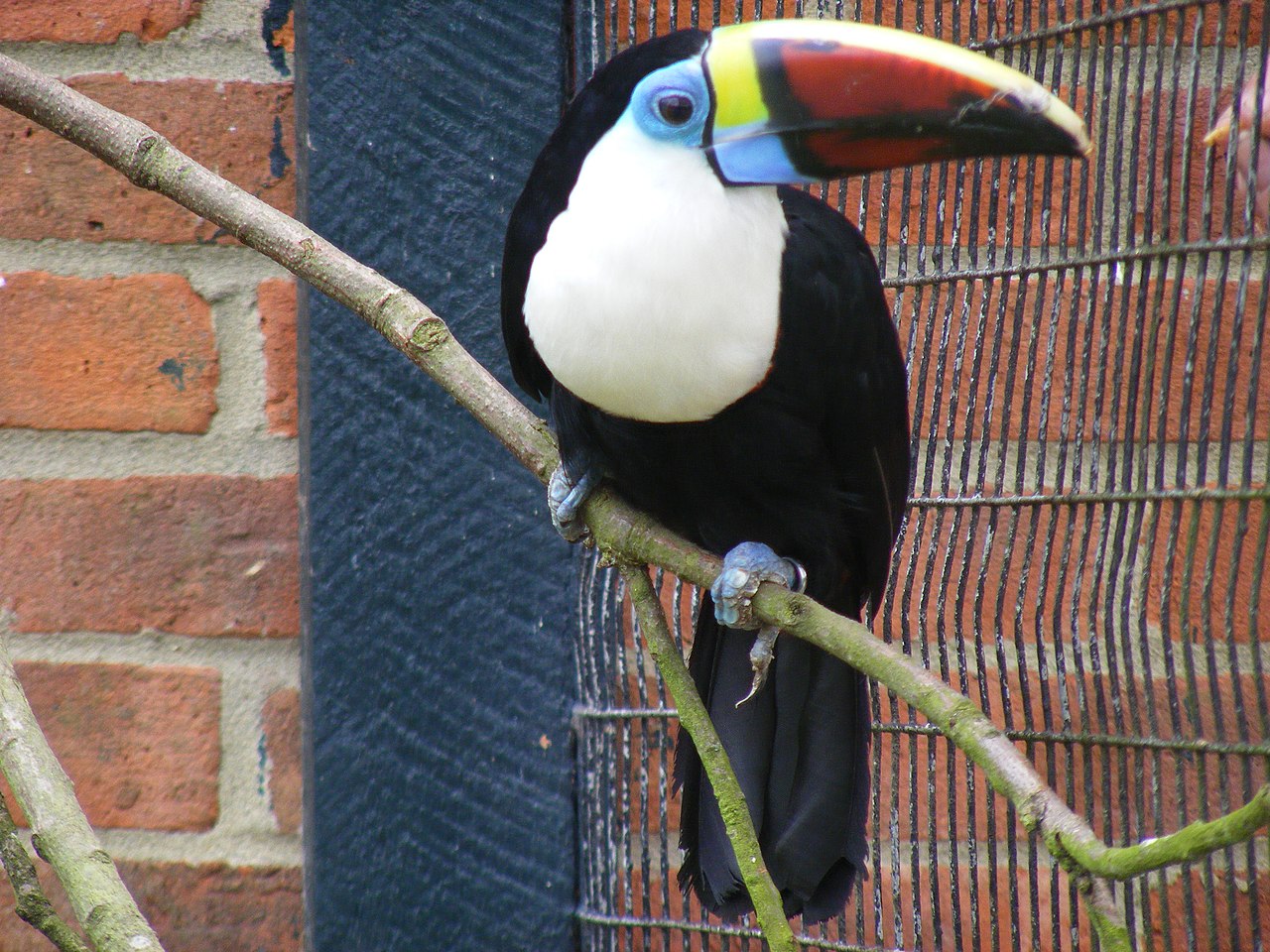
At first this may resemble a Cuvier's toucan, R. t. cuvieri, but a closer look reveals a brownish patch on the upper part of the mandible, identifying it as a tucanus-cuvieri intergrade.

Red-billed toucanRamphastos t. tucanus

Red-billed toucan in captivity


Temperament
social and active
Flight Pattern
short rapid wingbeats with brief glides
Social Behavior
Usually seen in pairs or small, loosely knit groups moving through the mid to upper canopy. Nests in natural cavities or old woodpecker holes; both sexes share incubation and chick-rearing. Pairs engage in mutual preening and toss fruit to each other during courtship.
Migratory Pattern
Resident
Song Description
Vocalizations are loud, far-carrying yelps and croaking calls, often delivered in rhythmic series. Calls can sound frog-like and are used for contact between mates and to advertise territory at dawn and dusk.
Plumage
Mostly glossy black with a crisp white throat and upper breast and bright red undertail coverts.
Diet
Primarily consumes a wide variety of fruits, including figs and palm drupes, which it swallows whole and later disperses as seeds. Also opportunistically eats insects, small reptiles, and the eggs or nestlings of other birds. Uses its long bill to reach fruit from thin outer branches and to deftly manipulate items.
Preferred Environment
Forages mainly in the canopy and along forest edges and river corridors where fruiting trees are abundant. Regularly visits secondary growth and forest clearings with fruiting shrubs and isolated trees.


