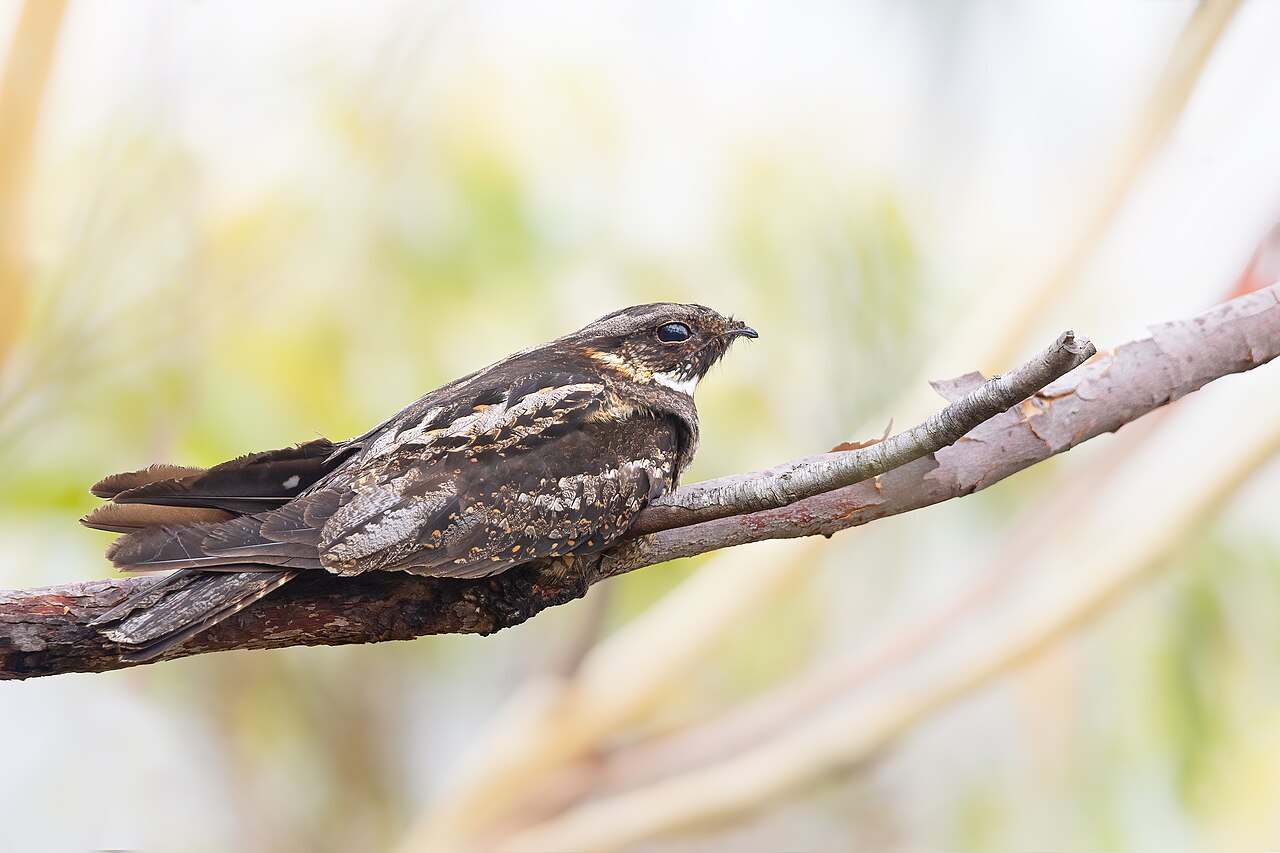
The white-throated mountain babbler is a passerine bird in the family Leiothrichidae. It is native to the Cameroonian Highlands forests.
Region
Cameroonian Highlands (Gulf of Guinea Highlands)
Typical Environment
Occurs in moist montane and submontane evergreen forests, including mature forest, secondary growth, and forest edges. It favors dense understory and vine tangles, thickets along streams, and bamboo or bracken patches. Birds often keep low to mid-levels in vegetation and move in small groups through interior forest. In parts of its range it extends into adjacent highland forest in southeastern Nigeria.
Altitude Range
700–2000 m
Climate Zone
Highland
Ease of Keeping
Beginner friendly: 1/5
This shy understory babbler is confined to the Cameroonian (Gulf of Guinea) Highlands, where it slips through dense tangles and often joins mixed-species flocks. Its crisp white throat stands out in the dim montane forest light and helps separate it from other brown babblers. Habitat loss from agriculture and logging is the main threat. It is more often heard than seen, giving soft chatters and duets.
Temperament
secretive and group-oriented
Flight Pattern
short rapid wingbeats; reluctant long-distance flier
Social Behavior
Typically found in small family parties that keep close contact with soft calls. Frequently joins mixed-species flocks in the midstory and understory. Likely pairs during the breeding season and nests low in dense vegetation, with both parents attending young.
Migratory Pattern
Resident
Song Description
A series of soft chatters, whistles, and trills delivered in short phrases, often as antiphonal duets between pair members. Contact calls are dry ticks and churrs given while moving through thick cover.
Plumage
Overall warm brown to olive-brown with a clearly defined white throat patch; underparts buffy to grayish with subtle streaking; wings and tail slightly rufous-tinged. Plumage is soft and plain, adapted for a skulking, understory lifestyle.
Diet
Feeds primarily on insects and other small arthropods such as beetles, caterpillars, ants, and spiders. It gleans from leaves, vines, and mossy branches and will probe bark crevices. Occasional small berries or seeds may be taken, especially when insect prey is scarce.
Preferred Environment
Forages in dense understory, vine tangles, and along forest edges and streams within montane forest. Often accompanies mixed-species flocks to exploit disturbed foliage and flushed prey.