

The white-throated bulbul is a species of songbird in the bulbul family, Pycnonotidae. It is found in south-eastern Asia from the eastern Himalayas to Myanmar and western Thailand. Its natural habitat is subtropical or tropical moist lowland forests.
Region
Eastern Himalayas and Mainland Southeast Asia
Typical Environment
Occurs from the eastern Himalayan foothills through Northeast India and Bangladesh into Myanmar and western Thailand, with local populations in neighboring Indochina. Prefers subtropical and tropical moist lowland forests, forest edges, and well-vegetated secondary growth. Frequently uses bamboo thickets, riverine woods, and degraded forest with dense understory. It adapts to semi-open habitats near forests, including plantations and gardens adjacent to woodlands.
Altitude Range
Sea level to 1500 m
Climate Zone
Tropical
Ease of Keeping
Beginner friendly: 2/5
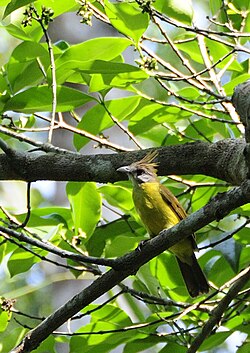
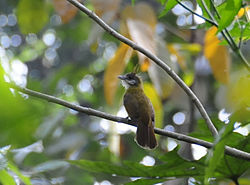
This medium-sized bulbul sports a crisp white throat set off by olive-brown upperparts and a slight crest. It often joins mixed-species flocks in forest edges and secondary growth, helping disperse seeds as it forages on fruits. Pairs build neat cup-shaped nests in low shrubs or small trees. Its clear, whistled phrases carry well through the understory.


Temperament
social and active
Flight Pattern
short rapid wingbeats with undulating, agile flights through understory
Social Behavior
Often forages in pairs or small groups and readily joins mixed-species flocks. Nests are neat cups placed in low shrubs or small trees, with both parents participating in care. Territoriality is moderate around nest sites but relaxed while feeding in flocks.
Migratory Pattern
Resident
Song Description
Song consists of clear, ringing whistles and melodious phrases delivered from concealed perches. Calls include sharp chups and soft contact notes that keep groups coordinated.
Plumage
Olive-brown upperparts with paler, yellow-olive underparts and a clean white throat bordered by darker moustachial edges; slight bushy crest typical of Alophoixus bulbuls.
Diet
Takes a wide variety of soft fruits and berries, often swallowing small fruits whole and later dispersing seeds. Supplements its diet with insects, spiders, and other small invertebrates gleaned from foliage and branches. Will hawk briefly for flying insects when opportunities arise.
Preferred Environment
Feeds from the midstory to canopy edges of moist forests, along forest margins, and in secondary growth. Frequently visits fruiting trees and shrubs, and may forage in bamboo thickets and along streams.


