
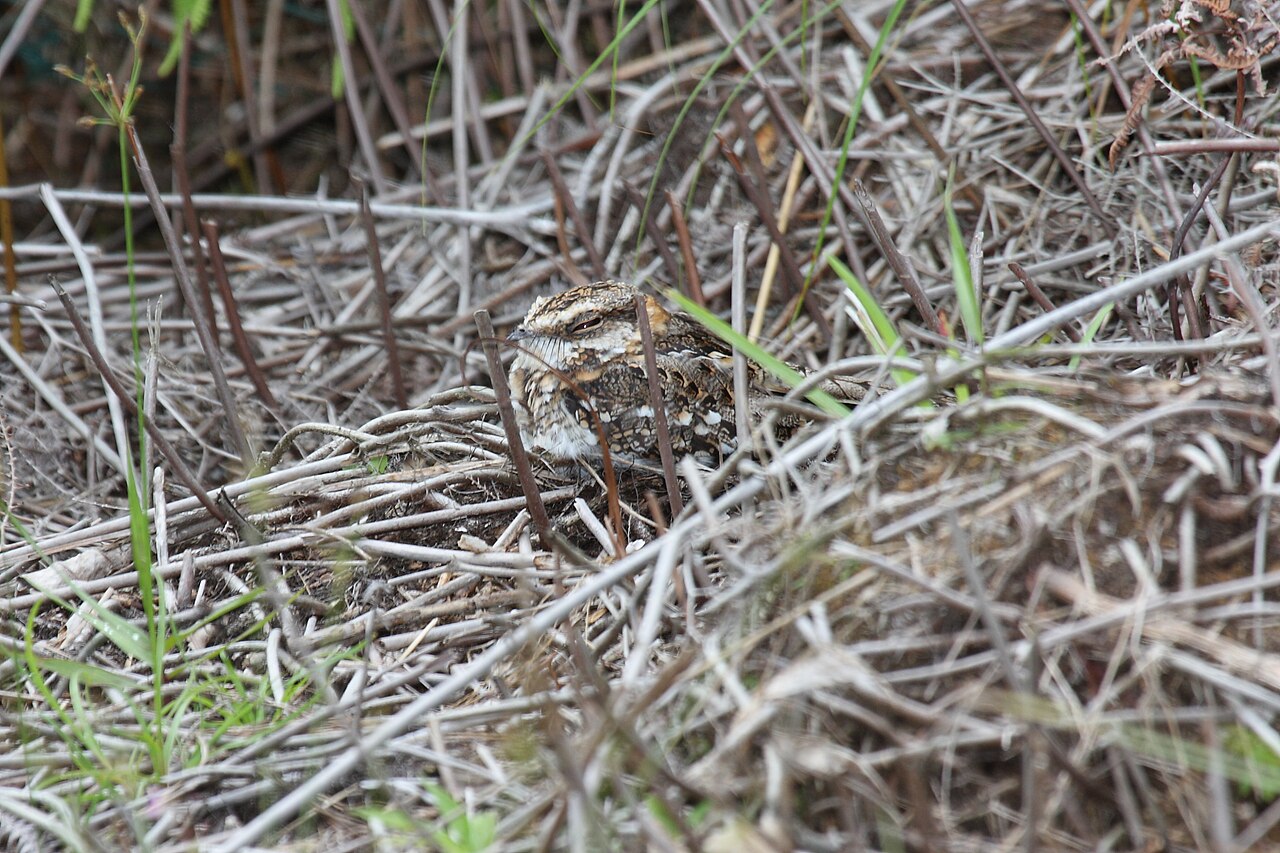
The white-tailed nightjar is a species of nightjar in the family Caprimulgidae. It is found in the tropic regions of Central and South America.
Region
Central America and northern South America
Typical Environment
This species occurs from parts of Central America south through northern South America, including Colombia, Venezuela, the Guianas, northeastern Brazil, and Trinidad and Tobago. It favors open and semi-open habitats such as savannas, llanos, pastures, coastal scrub, and forest edges. It also uses sandy or gravelly clearings, airstrips, and lightly grazed fields. Daytime roosts are typically on bare ground or low horizontal branches where its mottled plumage blends with leaf litter.
Altitude Range
Sea level to 1500 m
Climate Zone
Tropical
Ease of Keeping
Beginner friendly: 1/5
The white-tailed nightjar is a small, cryptically patterned nightjar notable for the male’s striking white outer tail feathers that flash in flight at dusk. It spends the day roosting on the ground or low branches, relying on camouflage, and becomes active at twilight to hunt flying insects. Its soft, repetitive calls carry over open savannas and scrub. It nests directly on the ground without building a traditional nest.


Temperament
solitary and crepuscular
Flight Pattern
buoyant and erratic with short glides and rapid wingbeats
Social Behavior
Typically seen alone or in pairs, especially during the breeding season. Nests are simple ground scrapes where 1–2 eggs are laid, relying on camouflage rather than nest construction. Adults may perform distraction displays to lead intruders away from chicks. Roosting is usually on open ground or low horizontal branches during the day.
Migratory Pattern
Resident
Song Description
Song is a soft, repetitive trilling or churring phrase delivered from the ground or a low perch at dusk and dawn. Calls include sharp chips and soft whistles used in territorial and courtship contexts.
Plumage
Cryptic mottled mix of browns, grays, and buff with fine streaking and barring; soft, loose-textured feathers that blend into leaf litter.
Diet
Primarily hunts flying insects such as moths, beetles, termites, and other night-flying invertebrates. It sallies from the ground or low perches, catching prey on the wing with its wide gape. Foraging often centers around open areas, edges, and places with concentrations of insects like lights or water bodies.
Preferred Environment
Feeds over open savannas, pasture edges, scrublands, and along tracks or airstrips where sight lines are clear. Frequently forages at ecotones between open ground and low shrubbery and may patrol along roadsides at night.


