

The white-edged oriole is a species of bird in the family Icteridae. It is found in Ecuador and Peru.
Region
Tumbesian region (southwest Ecuador and northwest Peru)
Typical Environment
Occupies subtropical and tropical dry forests, woodland edges, and semi-open scrub within the Tumbesian biome. Frequently uses riparian corridors, thorny scrub, and second-growth where tall trees remain. It tolerates moderately degraded habitats but depends on patches of mature canopy for nesting and foraging. Occurs in protected areas and on private lands, with local movements tracking fruiting and flowering trees.
Altitude Range
0–1200 m
Climate Zone
Tropical
Ease of Keeping
Beginner friendly: 1/5
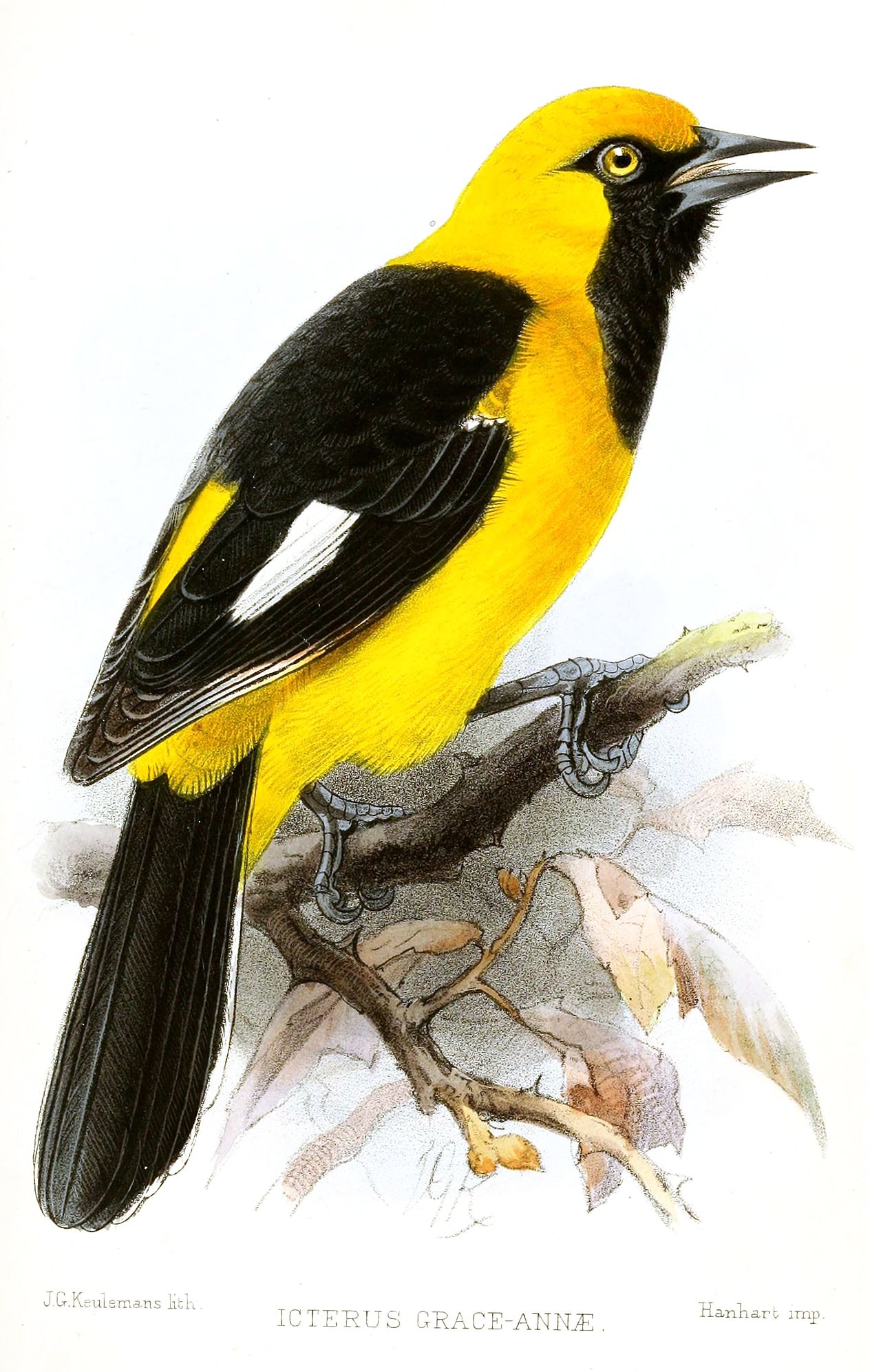
This striking icterid is confined to the Tumbesian dry forest region of southwestern Ecuador and northwestern Peru. Males are vivid orange with black upperparts and crisp white edging on the wings, while females are duller yellowish. It often forages high in the canopy and may join mixed-species flocks. The specific epithet likely honors American naturalist Graceanna Lewis.



Temperament
active and somewhat wary
Flight Pattern
strong direct flight with short rapid wingbeats
Social Behavior
Usually seen singly, in pairs, or family groups, often high in the canopy. Pairs maintain small territories during the breeding season. Like other orioles, it weaves a pendant, basket-like nest suspended from the tips of branches.
Migratory Pattern
Resident
Song Description
Song is a series of clear, fluted whistles delivered at a measured pace, often from a concealed perch. Calls include sharp chucks and chatters given during foraging and when alarmed.
Plumage
Male shows bright orange head, breast, and underparts with a contrasting black back, wings, and tail; flight feathers and wing coverts neatly edged in white. Female is duller yellow to yellow-olive with dusky wings showing paler edging and reduced black on the upperparts.
Diet
Takes a varied diet of insects and other arthropods gleaned from foliage and bark, along with fruit and nectar. It probes flowers and occasionally follows blooming trees. Will hawk briefly for flying insects and visit fruiting trees when available.
Preferred Environment
Forages mainly in the mid- to upper canopy of dry forest and woodland edges. Also uses riparian trees, scattered shade trees in fields, and second-growth with mature emergents.


