

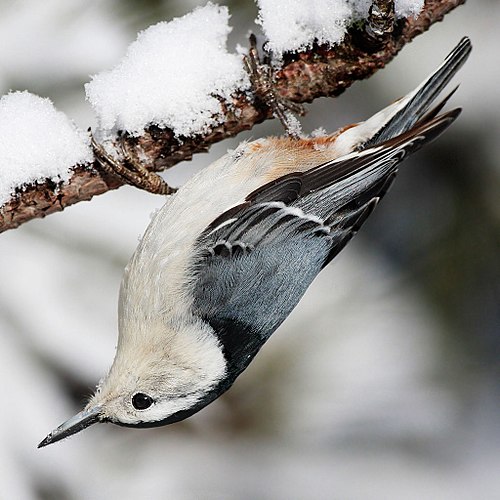
The white-breasted nuthatch is a species of bird in the nuthatch family Sittidae. It is a medium-sized nuthatch, measuring approximately 15.5 cm (6.1 in) in length. Coloration varies somewhat along the species' range, but the upperparts are light blue-gray, with a black crown and nape in males, while females have a dark gray crown. The underparts are whitish, with a reddish tinge on the lower abdomen. Despite not being closely related, the white-breasted nuthatch and the white wagtail are very similar in plumage.
Region
North America
Typical Environment
Occurs widely across the United States, much of southern Canada, and into parts of northern Mexico. Prefers mature deciduous and mixed woodlands, especially with large oaks, hickories, or maples. Common in wooded suburbs, parks, riparian corridors, and edges where large trees provide foraging and nesting sites. Uses tree cavities for nesting and roosting, including natural holes and old woodpecker cavities.
Altitude Range
Sea level to 3000 m
Climate Zone
Temperate
Ease of Keeping
Beginner friendly: 1/5
White-breasted nuthatches are expert climbers that can descend tree trunks headfirst, using their strong toes and short tails for grip. They cache seeds and insects in bark crevices, often remembering hundreds of hiding spots. Pairs defend territories year-round and frequently join mixed-species flocks with chickadees and titmice in winter.




Deciduous woodland is the preferred habitat in the northeast.


Feeding sequence

Bird feeders provide a supplementary source of food.
Temperament
bold and active
Flight Pattern
short rapid wingbeats with an undulating path
Social Behavior
Typically found in pairs that maintain year-round territories; monogamous and cavity-nesting. In winter they often join mixed-species foraging flocks with chickadees and titmice but remain assertive at food sources. Both sexes cache food and may defend cache sites.
Migratory Pattern
Resident (with short-distance winter movements in northern areas)
Song Description
Loud, nasal series of repeated yank or wha notes, often delivered in steady sequences. Also gives softer contact calls and sharp scolds when alarmed.
Plumage
Clean white face and underparts with a slight rusty wash on the lower belly; blue-gray upperparts with contrasting dark crown and nape (males black, females dark gray).
Diet
Feeds on insects and spiders gleaned from bark, including beetles, weevils, caterpillars, and ants. Consumes seeds and nuts, especially acorns and hickory nuts, and readily visits feeders for sunflower seeds, peanuts, and suet. Frequently wedges large seeds into bark and hammers them open with the bill. Stores surplus food in bark crevices for later use.
Preferred Environment
Forages along trunks and large branches of mature deciduous and mixed forests, often moving headfirst down bark surfaces. Also feeds at forest edges, in wooded neighborhoods, and at backyard feeders near large trees.


