

The violaceous euphonia is a small passerine bird in the true finch family Fringillidae. It is widely distributed in eastern South America.
Region
Northern and Eastern South America
Typical Environment
Occurs widely from Trinidad and Tobago through coastal Venezuela and the Guianas into much of eastern Brazil. Favors forest edges, secondary growth, plantations, and gardens with fruiting trees. Most activity is in the mid to upper canopy, but it also forages along edges and clearings. Readily occupies human-altered landscapes where fruit is available.
Altitude Range
Sea level to 1200 m
Climate Zone
Tropical
Ease of Keeping
Beginner friendly: 2/5
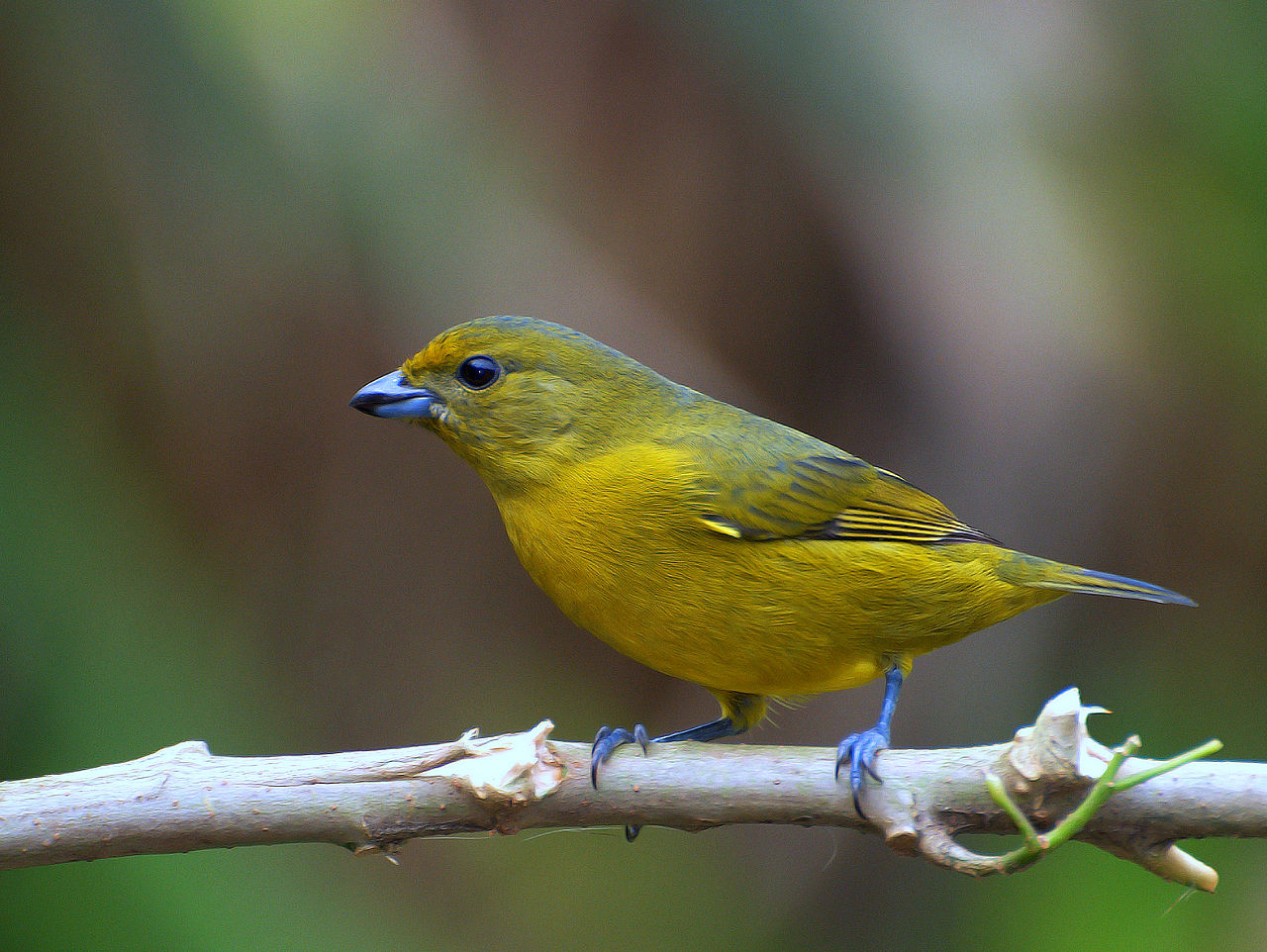
The violaceous euphonia is a tiny finch noted for its glossy violet-blue male plumage and bright yellow underparts. It is a fruit specialist, especially fond of mistletoe berries, and plays a key role in seed dispersal. Pairs often keep close contact calls while foraging in the canopy and edges. The name “violaceous” refers to the male’s violet sheen.


Temperament
social and active
Flight Pattern
short rapid wingbeats
Social Behavior
Usually seen in pairs or small family groups and may join mixed-species flocks at fruiting trees. Builds a small, globular nest concealed in vine tangles or dense foliage. Pairs maintain close contact calls while foraging, and both adults may attend the nest.
Migratory Pattern
Resident
Song Description
Song is a series of bright, clear, whistled notes and short trills delivered from the canopy. Calls are thin, high-pitched tsee or peee notes exchanged frequently between mates.
Plumage
Male with glossy violaceous-blue upperparts and bright yellow underparts with a yellow forehead patch; female olive-green above with dull yellow underparts and grayish head. Both sexes have a neat, smooth plumage and compact silhouette.
Diet
Primarily consumes small, soft fruits and berries, especially mistletoe and other parasitic or edge-dwelling plants. Will take figs and other native fruits and occasionally small insects. Swallows fruits whole and later regurgitates seeds, aiding seed dispersal. Often feeds methodically from perch to perch within fruiting crowns.
Preferred Environment
Forages in the mid to upper canopy at forest edges, secondary woodlands, orchards, and gardens. Frequently visits fruiting shrubs and trees along roadsides and clearings.


