
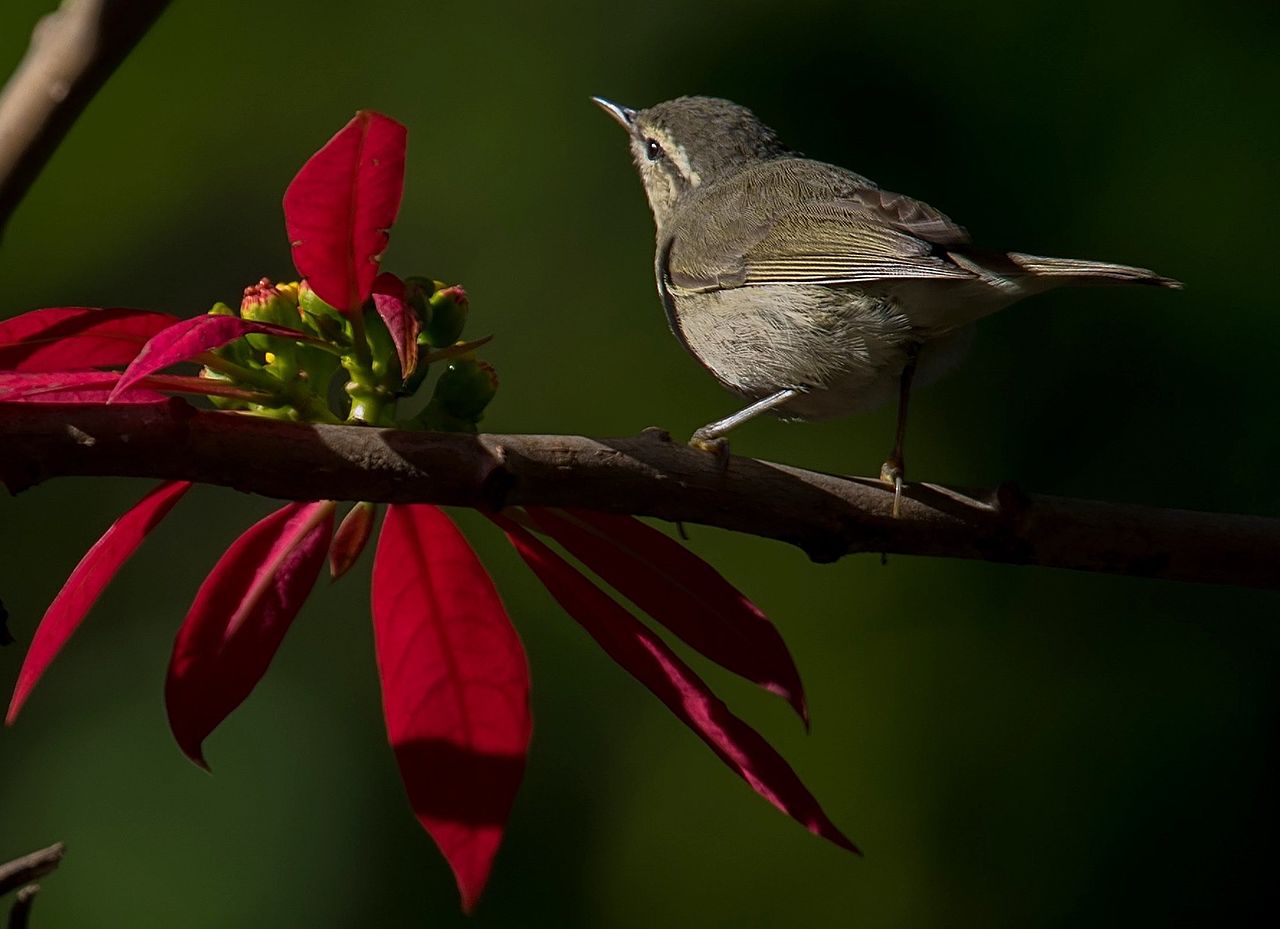
Tytler's leaf warbler is a songbird species. Like all leaf warblers, it was formerly placed in the "Old World warbler" assemblage, but now belongs to the new leaf-warbler family Phylloscopidae.
Region
South and Central Asia
Typical Environment
Typically inhabits montane and submontane forests, especially mixed broadleaf and coniferous woodland, forest edges, and well-vegetated valleys. During migration and in winter it uses a wider range of habitats including parks, orchards, plantations, and scrubby secondary growth. Frequently forages from lower understory to mid- and upper canopy. Often accompanies mixed flocks, moving quickly through foliage while gleaning small arthropods.
Altitude Range
0–3000 m
Climate Zone
Temperate
Ease of Keeping
Beginner friendly: 1/5
Tytler's leaf warbler is a small, active foliage gleaner in the leaf-warbler family Phylloscopidae. It forages nimbly through trees and shrubs, often joining mixed-species flocks outside the breeding season. The species is named in honor of British naturalist Robert Christopher Tytler. It can be challenging to distinguish from similar leaf warblers, so voice and subtle plumage details are important.


Illustration
Temperament
active and restless
Flight Pattern
short rapid wingbeats with fluttery, agile movements
Social Behavior
Usually solitary or in pairs during the breeding season, becoming more social in nonbreeding periods. Frequently joins mixed-species foraging flocks with other small insectivores. Nests are typically concealed in dense vegetation or near the ground, with both sexes involved in parental care. Territorial singing is common in the breeding season.
Migratory Pattern
Seasonal migrant
Song Description
Song is a quick, high-pitched series of thin trills and sweet whistles delivered in repeating phrases. Calls include sharp tzip notes and very thin seee contact calls, often given while foraging.
Plumage
Olive-green to greenish-brown upperparts with paler whitish to yellowish underparts; fine, neat feathering with two pale wingbars and a distinct pale supercilium.
Diet
Feeds mainly on small insects and other arthropods, including caterpillars, aphids, and tiny beetles. Gleans prey from leaves and twigs and occasionally hover-gleans or sallies short distances to snatch insects. May supplement with small spiders and their eggs. Foraging is rapid and methodical through foliage strata.
Preferred Environment
Forages in leafy trees and shrubs in forests, edges, orchards, and gardens. Uses both understory and mid-canopy, often following mixed-species flocks along productive edges and clearings.


