

The Timneh parrot, also known as the Timneh grey parrot or Timneh African grey parrot, is a West African parrot. Formerly classified as a subspecies of the grey parrot Psittacus erithacus timneh, it is now considered a full species Psittacus timneh. In aviculture, it is often referred to by the initials TAG and is commonly kept as a companion parrot.
Region
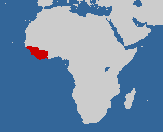
West Africa
Typical Environment
Occurs from Guinea-Bissau and Guinea through Sierra Leone and Liberia into western Côte d’Ivoire, mainly within the Upper Guinea rainforest belt. It inhabits lowland moist forests, forest edges, and gallery forests along rivers. The species also uses secondary forests, mangroves fringes, wooded savannas, and agricultural mosaics, especially cocoa and oil palm plantations. Roost sites are often in tall emergent trees near feeding areas.
Altitude Range
Sea level to 800 m
Climate Zone
Tropical
Ease of Keeping
Beginner friendly: 2/5
Smaller and darker than the Congo grey parrot, the Timneh is distinguished by its maroon tail and pale upper mandible. It is an exceptional vocal mimic and problem-solver, capable of learning complex sounds. International trade is tightly restricted (CITES Appendix I) due to heavy trapping and habitat loss.


Showing dull maroon tail
Temperament
social but cautious and wary
Flight Pattern
strong, direct flight with rapid wingbeats and short glides
Social Behavior
Typically forms small flocks outside the breeding season and gathers at communal roosts. Pairs are monogamous and nest in tree cavities, laying a small clutch that both parents attend. Birds may travel between feeding sites and roosts daily, maintaining regular routes.
Migratory Pattern
Resident
Song Description
Vocalizations include clear whistles, squeals, and harsh squawks, with piercing contact calls in flight. Highly adept at mimicking natural sounds and human speech, especially in captivity.
Plumage
Overall dark charcoal-grey with slightly paler scalloped feather edging on the breast and belly; maroon to chestnut tail; whitish bare facial skin around the eye.
Diet
Feeds mainly on fruits, nuts, and seeds, including oil palm fruits, figs, and berries. It cracks hard-shelled nuts with its powerful bill and also takes leaf buds and occasional bark. Birds may seasonally exploit cultivated crops such as cocoa or maize and sometimes visit mineral-rich clays.
Preferred Environment
Forages primarily in the forest canopy and edges, moving between fruiting trees. It also feeds in agroforestry systems like cocoa and oil palm plantations and along riverine gallery forests.


