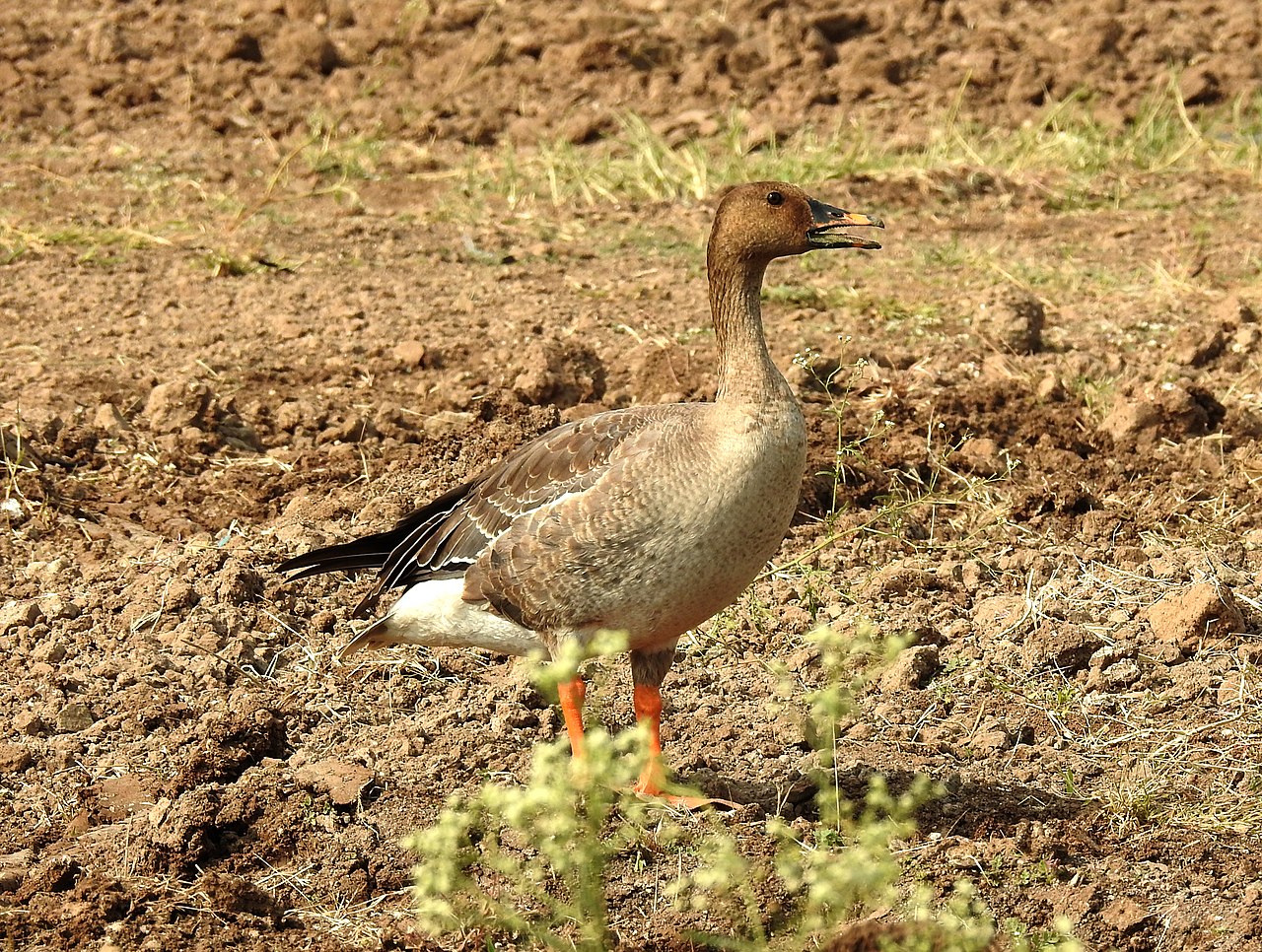
The taiga bean goose is a species of goose that breeds in northern Europe and Asia. It is migratory and winters further south in Europe and Asia. This and the tundra bean goose were recognised as separate species by the International Ornithologists' Union and the American Ornithological Society from 2007, but are still considered a single species by some other authorities, notably BirdLife International and the IUCN. The taiga and tundra bean goose diverged about 2.5 million years ago and established secondary contact c. 60,000 years ago, resulting in extensive gene flow.
Region
Northern Europe and western Siberia
Typical Environment
Breeds across the boreal taiga from Scandinavia through western Siberia, favoring peat bogs, marshy lake edges, and forested wetlands. During migration and winter it shifts to temperate lowlands of northern and central Europe and parts of East Asia. Wintering flocks commonly use open farmland, estuaries, and large river valleys. Stopover sites include lakes, flooded meadows, and stubble fields near wetlands. It tends to avoid densely settled areas when undisturbed but readily exploits agricultural landscapes.
Altitude Range
Sea level to 1200 m
Climate Zone
Continental
Ease of Keeping
Beginner friendly: 2/5
Recognized by many authorities as distinct from the tundra bean goose, the taiga bean goose breeds in boreal forest zones and winters further south in Europe and Asia. It shows a longer, more wedge-shaped bill with a broad orange band and brighter orange legs than the tundra form. Flocks follow traditional migration routes and often feed on agricultural fields in winter. Conservation management now often treats it as separate flyway populations due to differing trends.




Egg at Museum Wiesbaden, Germany
Temperament
wary yet social
Flight Pattern
strong flier with steady wingbeats; migrates in V-formations
Social Behavior
Highly gregarious outside the breeding season, forming large flocks on staging and wintering grounds. Pairs are largely monogamous and may remain together for many years. Nests are placed on tussocks or drier hummocks near bogs and lakes, with the female incubating while the male stands guard.
Migratory Pattern
Seasonal migrant
Song Description
Calls are deep, nasal honks and clanging ank-ank notes, lower-pitched than many other grey geese. In flight, flocks give a resonant, rhythmic chorus; on the ground, softer conversational gabbling is common.
Plumage
Mostly dark brown to grey-brown with paler fringes on the upperparts, darker head and neck, and pale under-tail coverts. Wings show a narrow pale trailing edge; overall appearance is dusky and uniform.
Diet
Primarily grazes on grasses, sedges, and other herbaceous plants during the breeding season. In migration and winter it takes waste grain, cereals, potatoes, sugar beet, and other agricultural crops. It also feeds on roots, tubers, and aquatic vegetation, especially in shallow wetlands.
Preferred Environment
Feeds in damp meadows, marsh edges, and lakeshores on the breeding grounds. In winter it commonly forages in pastures and stubble fields near roosting wetlands, commuting at dawn and dusk.