

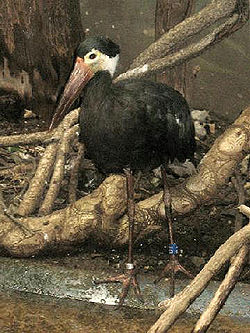
Storm's stork is a medium-sized stork species that occurs primarily in lowland tropical forests of Malaysia, Indonesia and southern Thailand. It is considered to be the rarest of all storks, and is estimated to number less than 500 wild individuals throughout its geographic range. The population has long been in decline and the primary cause is widely considered to be deforestation of its native habitat.
Region
Sundaland (Borneo and Sumatra)
Typical Environment
Occurs patchily in lowland tropical forests of Borneo (Indonesia, Malaysia, Brunei) and Sumatra (Indonesia), with remnant occurrences in peninsular Thailand and Malaysia historically. It favors undisturbed riverine, peat-swamp, and freshwater swamp forests with meandering rivers, oxbow lakes, and quiet backwaters. Nests on tall emergent trees near waterways and forages along shaded streams and forest pools. It avoids open wetlands and heavily altered landscapes, leading to highly fragmented distribution.
Altitude Range
Sea level to 300 m
Climate Zone
Tropical
Ease of Keeping
Beginner friendly: 1/5
Storm's stork is among the rarest storks, with only a few hundred individuals remaining in the wild. It depends on intact lowland tropical forests and quiet river systems, making it highly vulnerable to deforestation, drainage, and disturbance. The species is elusive and often overlooked, typically occurring singly or in pairs deep within forested wetlands.


Sukau Rainforest Lodge, Kinabatangen River - Sabah, Borneo - Malaysia

Sukau Rainforest Lodge, Kinabatangen River - Sabah, Borneo - Malaysia



Temperament
solitary and wary
Flight Pattern
strong, steady wingbeats with occasional soaring above the canopy
Social Behavior
Usually encountered alone or in pairs, seldom in flocks. Builds large stick nests high in emergent trees near rivers, likely forming long-term monogamous pairs. Breeding is timed to local rainfall and river levels, with chicks dependent on stable water conditions for prey availability.
Migratory Pattern
Resident
Song Description
Generally silent away from the nest. Most vocalizations are soft grunts and hisses; the primary display is rapid bill-clattering during courtship and at the nest.
Plumage
Mostly glossy black upperparts and wings with contrasting white underparts, including the belly and vent; white throat and upper breast stand out against the darker head and mantle.
Diet
Feeds mainly on fish, frogs, and aquatic invertebrates such as crustaceans and insects, and will take small reptiles when available. It hunts by slow stalking and quick jabs of the bill in shallow water along shaded forest streams and pools. Prey choice reflects seasonal water levels and water clarity within forested wetlands.
Preferred Environment
Forages along quiet, slow-flowing forest rivers, oxbow lakes, and swampy pools beneath intact canopy. It prefers secluded spots with overhanging vegetation and minimal human disturbance.


