

The spruce grouse, also known as Canada grouse, spruce hen or fool hen, is a medium-sized grouse closely associated with the coniferous boreal forests or taiga of North America. It is the only member of the genus Canachites.
Region
Boreal North America
Typical Environment
Found across the conifer-dominated boreal and subalpine forests of Alaska, most of Canada, and into the northern United States. It favors mature stands of spruce, fir, and pine, especially black spruce bogs and jack pine barrens with a dense shrub layer. During the breeding season it uses areas with ground cover near openings for brood-rearing. In winter it concentrates in dense conifer stands and may use snow roosts for shelter. It is generally sedentary with only local, short-distance movements.
Altitude Range
Sea level to 3000 m
Climate Zone
Continental
Ease of Keeping
Beginner friendly: 1/5
Also called Canada grouse, spruce hen, or fool hen, it is famed for its unusually tame behavior toward humans. It is the sole living member of the genus Canachites and is tightly tied to North America’s boreal conifer forests. In winter it grows comb-like scales on its toes to walk on snow and often roosts in snow burrows. Its winter diet is dominated by conifer needles, a rarity among grouse.


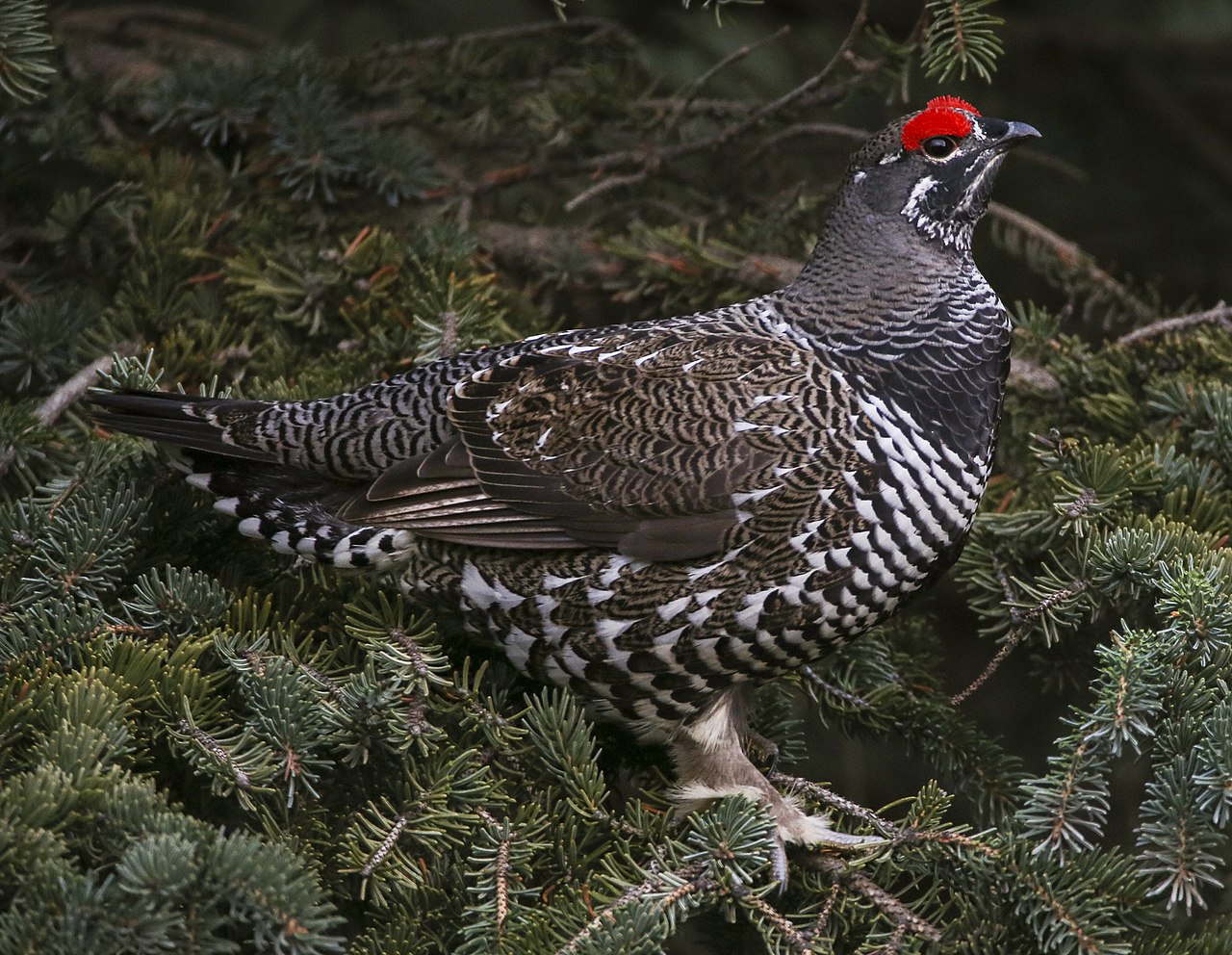


Kenai National Wildlife Refuge, Alaska.

Immature male "hiding" in tree, Matagamasi Lake, Temagami, Ontario


Temperament
cryptic and surprisingly tame
Flight Pattern
short rapid wingbeats with explosive flush; weak sustained flight
Social Behavior
Typically solitary or in small loose groups; forms small winter flocks. Males display on the ground or low perches with tail-fanning, puffed plumage, and wing-claps to attract females. Nests are shallow ground scrapes concealed under conifers; females alone incubate and brood. Chicks are precocial and follow the hen soon after hatching.
Migratory Pattern
Resident
Song Description
Vocalizations are soft clucks and low chuckles; females give gentle contact calls to chicks. Males produce distinctive non-vocal displays including wing-claps and low booming or hooting notes during courtship.
Plumage
Mottled and barred brown to slate-gray with intricate vermiculations; dense, cryptic patterning. Males are darker with a blackish throat and breast dotted with bold white spots; females are finely barred and mottled brown for camouflage. Tail often shows a rufous or chestnut terminal band, though some western populations lack it.
Diet
Winter diet consists largely of conifer needles, especially spruce and pine, supplemented with buds and catkins. In summer it broadens to include berries such as blueberries and lingonberries, leaves, seeds, and a variety of insects. Chicks rely heavily on protein-rich arthropods in their first weeks. Grit is ingested to aid gizzard grinding of tough conifer needles.
Preferred Environment
Forages on the forest floor and in lower conifer branches within dense boreal stands. Uses forest edges, bog margins, and openings with berry-producing shrubs for summer feeding. In winter it remains in mature conifer groves where needle availability and shelter are high.


