

The spur-winged goose is a large, Sub-Saharan African waterbird in the family Anatidae, which includes geese and shelducks. However, P. gambensis developed unique environmental adaptations, which resulted in the evolution of several anatomical features that are not shared with other anatids; thus, the species has been classified one step further into its own subfamily, the Plectropterinae.
Region
Sub-Saharan Africa
Typical Environment
Found widely across wetlands, floodplains, marshes, and the margins of lakes and slow rivers. It frequents seasonally inundated grasslands and pans, as well as agricultural fields near water. The species generally avoids dense forests and hyper-arid deserts but will use open savanna with nearby wetlands. Nests are placed near water in tree cavities, termite mounds, old nests of other birds, or on the ground concealed in vegetation.
Altitude Range
0–3000 m
Climate Zone
Tropical
Ease of Keeping
Beginner friendly: 2/5
The spur-winged goose is the largest waterfowl in Africa and the sole member of the subfamily Plectropterinae. It has sharp spurs at the bend of the wing used in territorial disputes. Individuals that feed on blister beetles can accumulate cantharidin, making their flesh potentially toxic to predators and humans. They often roost communally but breed in dispersed pairs near water.


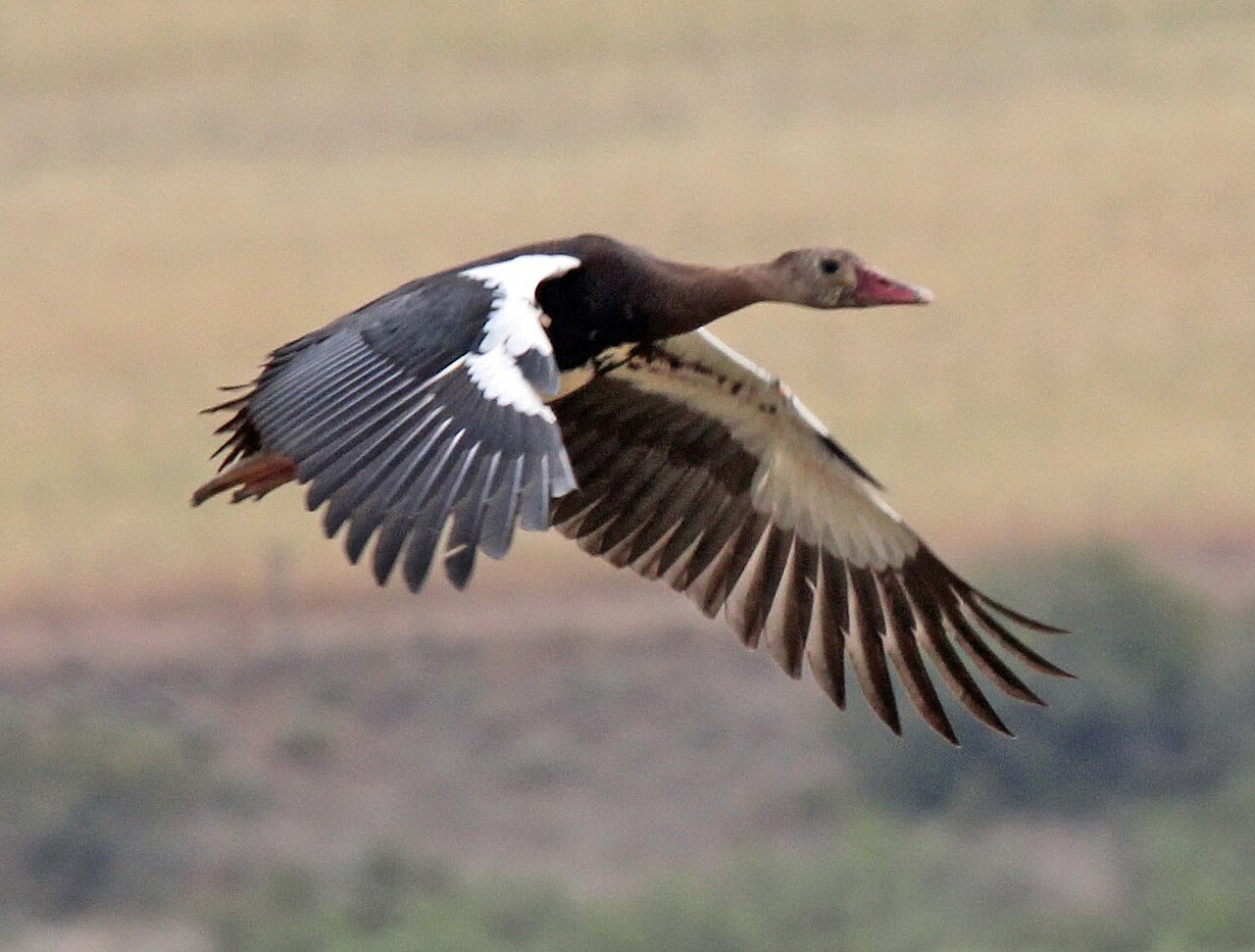
De Hoop Nature Reserve, South Africa


in a zoo in Germany
Temperament
wary and sometimes aggressive
Flight Pattern
strong flier with powerful wingbeats; often flies in loose, wavering skeins
Social Behavior
Outside the breeding season it gathers in flocks, sometimes large, especially at favored roosts. Breeding is typically in dispersed pairs, and males may be polygynous. Nests are lined with down and placed in cavities, termite mounds, or concealed ground sites, with the female incubating.
Migratory Pattern
Resident
Song Description
Generally quiet; vocalizations include low, wheezy honks and grunts. During displays it may hiss and utter harsh cackles; wingbeats can be audible in flight.
Plumage
Glossy black to dark brown upperparts with a green-purple iridescence, contrasting with bold white patches on the wings and belly.
Diet
Feeds on grasses, sedges, aquatic plants, seeds, bulbs, and tubers, often grazing like a goose. It also takes insects and other small invertebrates, including blister beetles that can render the bird’s tissues toxic due to cantharidin. Opportunistically consumes agricultural grains and spilled crops near wetlands.
Preferred Environment
Forages on open floodplains, wet meadows, lake margins, and shallow pans, as well as adjacent fields. Grazes on land and picks plant matter and invertebrates in shallow water.


