
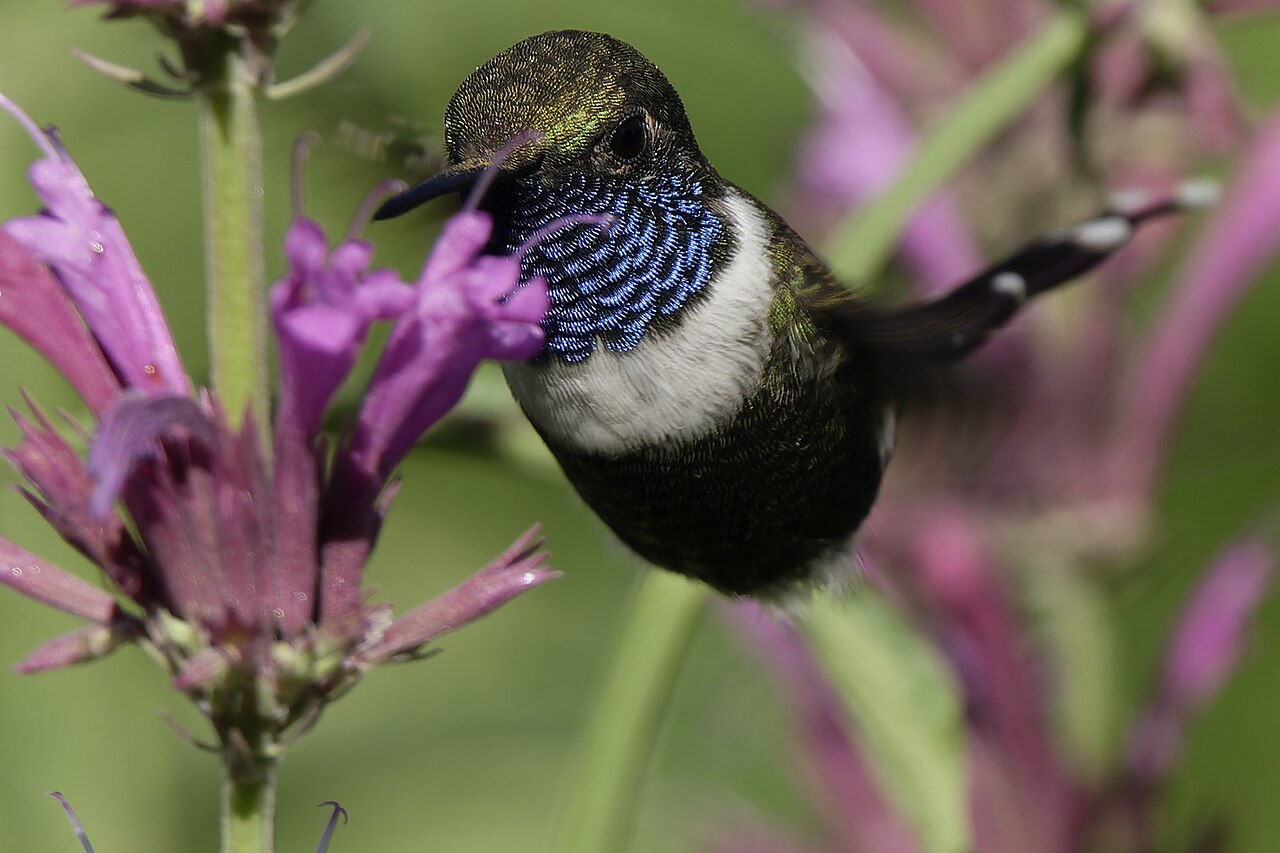
The sparkling-tailed woodstar, also known as the sparkling-tailed hummingbird, is a species of hummingbird in tribe Mellisugini of subfamily Trochilinae, the "bee hummingbirds". It is the only species placed in the genus Tilmatura. It is found in El Salvador, Guatemala, Honduras, Mexico, and Nicaragua.
Region
Mesoamerica
Typical Environment
Occurs from southern Mexico through Guatemala and El Salvador to Honduras and Nicaragua, mainly in foothill and montane zones. It favors pine–oak and moist broadleaf forest edges, second growth, hedgerows, and shade coffee plantations. The species often uses semi-open habitats with abundant flowering shrubs and trees. It can persist in moderately disturbed landscapes provided nectar resources remain available.
Altitude Range
800–2500 m
Climate Zone
Highland
Ease of Keeping
Beginner friendly: 1/5
A tiny hummingbird of Mesoamerican highlands, the sparkling-tailed woodstar is the only species in its genus. Males are unmistakable with extremely long, white outer tail streamers that flash in display flights. It frequents forest edges, scrub, and coffee plantations, often feeding low and rapidly moving between flowers. Like many hummingbirds, it supplements nectar with small insects for protein.


Female displaying her shorter tail.

Male showing the much longer, bifurcated tail.

Temperament
active and often territorial around rich flower patches
Flight Pattern
short rapid wingbeats with agile hovering and darting
Social Behavior
Generally solitary outside the breeding season, though multiple birds may forage at dense flower sources. Males perform display flights with arcing or U-shaped paths to court females and defend feeding territories. Nests are tiny cups of plant down and spider silk, placed on slender horizontal branches or in sheltered forks.
Migratory Pattern
Resident
Song Description
Vocalizations are high, thin tseet and tzip notes given during foraging and displays. Wing noise can add a faint whir during swift passes, especially in male display flights.
Plumage
Male with iridescent green upperparts, a glittering violet-blue throat, clean whitish underparts, and very long, narrow white outer tail streamers with dark tips; wings dusky. Female lacks streamers, shows green upperparts, whitish throat with fine spotting, buffy to cinnamon flanks, and a rounded tail with a dark subterminal band and white tips.
Diet
Primarily takes nectar from a variety of tubular flowers such as Salvia and other shrubs and trees, using a rapid, hovering feeding style. It also gleans or hawks tiny insects and spiders for protein, especially during the breeding season. Individuals may defend rich nectar sources against other hummingbirds and larger nectarivores.
Preferred Environment
Feeds along forest edges, clearings, coffee plantations under shade trees, and scrubby hillsides with abundant flowering plants. Often forages at low to mid-levels, visiting flower patches repeatedly on short circuits.


