

The South African cliff swallow, also known as the South African swallow, is a species of bird in the family Hirundinidae native southern Africa. It winters to the lower Congo Basin.
Region
Southern and Central Africa
Typical Environment
Breeds mainly in South Africa and adjacent parts of Namibia, Botswana, Lesotho, and Eswatini, nesting on cliffs and man-made structures. After breeding it migrates north, wintering to the lower Congo Basin and surrounding regions. It favors open country such as grasslands, savannas, farmlands, and river valleys where aerial insects are abundant. Colonies often occur near water and along transport corridors with suitable bridges and culverts.
Altitude Range
Sea level to 2600 m
Climate Zone
Subtropical
Ease of Keeping
Beginner friendly: 1/5
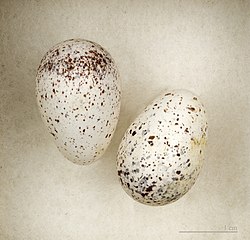
This colonial swallow builds gourd-shaped mud nests on cliff overhangs and readily uses bridges, culverts, and buildings. Outside the breeding season it forms large mixed flocks with other swallows and swifts while roaming widely to follow insect swarms. It is an efficient aerial hunter and a useful indicator of healthy insect populations.


Temperament
social and active
Flight Pattern
swift, agile with rapid wingbeats and brief glides
Social Behavior
Highly colonial nester, with dozens to hundreds of pairs building clustered mud nests under overhangs and structures. Both sexes collect mud and maintain the nest; colonies are reused across years. Forms large flocks outside the breeding season and roosts communally.
Migratory Pattern
Seasonal migrant
Song Description
A continuous series of thin twitters and chirps, given both in flight and at the colony. Calls are high-pitched and buzzy, used to keep contact in flocks and to coordinate activity at nests.
Plumage
Glossy dark upperparts with a contrasting pale rump, buffy to tawny underparts, and a square-tipped tail. Often shows a pale forehead patch and darker throat; wings are long and pointed, adapted for agile aerial flight.
Diet
Feeds almost entirely on flying insects such as flies, ants, termites, and small beetles. Captures prey on the wing using a wide gape while coursing over open habitats. Will exploit insect emergences over rivers and temporary pans and may follow grazing animals to catch flushed insects.
Preferred Environment
Forages over open grassland, savanna, agricultural fields, wetlands, and along rivers and dams. Often seen near colonies and along roadways and bridges where thermals and insect concentrations occur.


