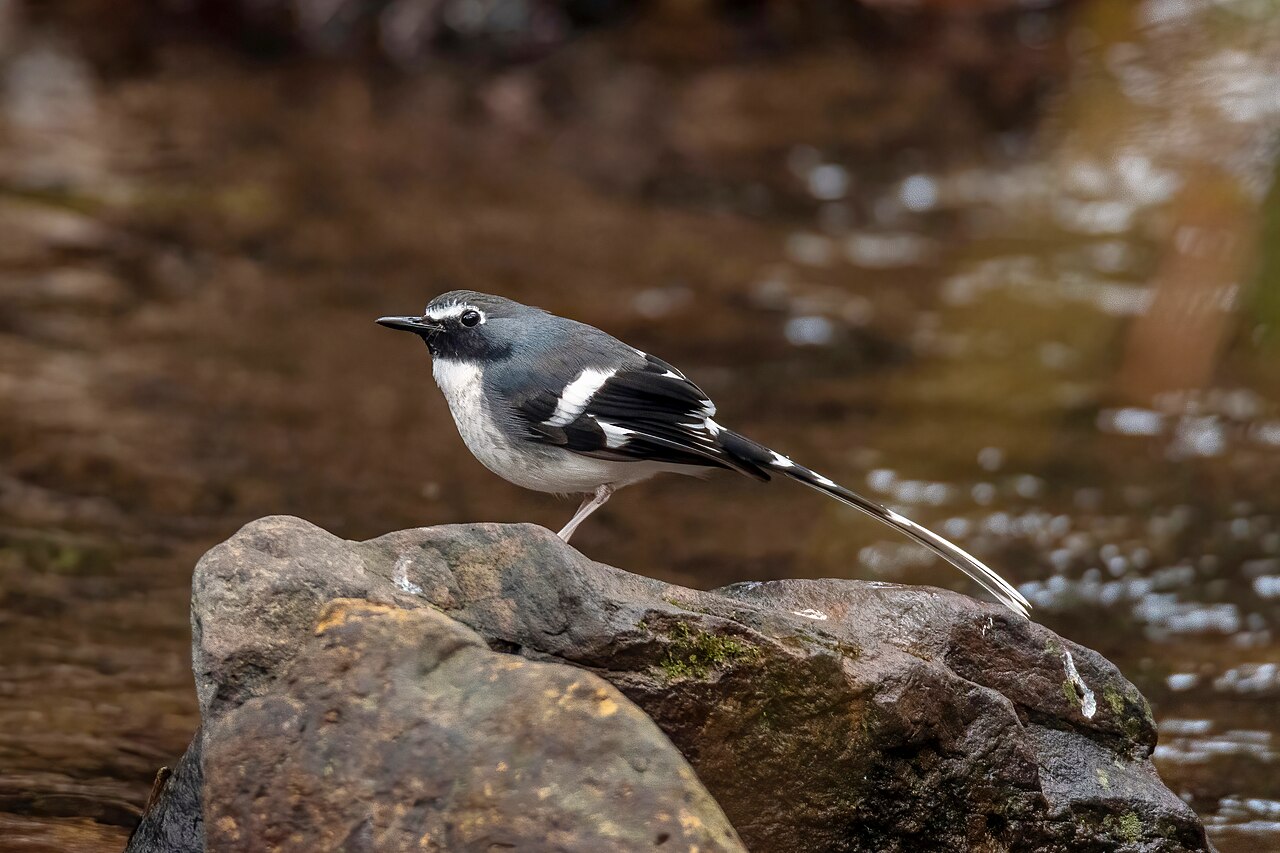
The slaty-backed flycatcher is a species of bird in the family Muscicapidae.
Region
Himalayas and Southeast Asia
Typical Environment
Breeds in the Himalayan region from Nepal and Bhutan through northeastern India into northern Myanmar and southwest China (e.g., Yunnan), with wintering or non-breeding records extending into northern Thailand, Laos, and Vietnam. It favors moist montane broadleaf forest, forest edges, bamboo and rhododendron thickets, and shaded ravines. During the non-breeding season it descends to lower elevations, using evergreen and mixed secondary forests, wooded valleys, and plantations near forest. Often associated with streamside vegetation and dense understory cover.
Altitude Range
500–3000 m
Climate Zone
Highland
Ease of Keeping
Beginner friendly: 1/5
A small Old World flycatcher of montane forests, the slaty-backed flycatcher shows strong sexual dimorphism: males are slate-grey above with a rich rufous throat, while females are brownish and more subdued. It forages by sallying from shaded perches to catch insects and often keeps to the understory along streams and ravines. It undertakes short-distance or altitudinal movements, breeding at higher elevations and descending in the non-breeding season. Its soft, high-pitched song can be heard at dawn from concealed perches.

Temperament
shy and retiring
Flight Pattern
short rapid wingbeats with quick sallies
Social Behavior
Typically solitary or in pairs during the breeding season and more loosely associated with mixed-species flocks in the non-breeding season. Nests are small cups placed low in shrubs, saplings, or bank ledges; both parents attend the young. Territorial singing males hold discrete patches of understory habitat.
Migratory Pattern
Seasonal migrant
Song Description
Song is a series of soft, high-pitched whistles and thin phrases delivered from concealed perches at dawn. Calls include sharp, dry ticks and thin seep notes, especially when foraging or alarmed.
Plumage
Male slate-grey to slaty-blue above with a rich rufous-orange throat and upper breast, clean whitish belly, and dark tail; female warm brown above with buffy to pale underparts and a faint pale eye-ring. Both sexes show plain wings without bold wing bars and a fairly neat, compact appearance.
Diet
Primarily small flying and terrestrial insects such as flies, beetles, moths, and caterpillars. It hawks prey in short sallies from a perch and also gleans from foliage and twigs. Occasionally supplements its diet with small berries during the non-breeding season when insects are less abundant.
Preferred Environment
Feeds in shaded forest understory, along stream margins, in bamboo and dense thickets, and at forest edges and clearings. Often hunts from low to mid-level perches within 1–6 meters above ground.