

The silvereye or wax-eye, also known by its Māori name tauhou, is a very small omnivorous passerine bird of the south-west Pacific. In Australia and New Zealand its common name is sometimes white-eye, but this name is more commonly used to refer to all members of the genus Zosterops, or the entire family Zosteropidae.
Region
Australasia and southwest Pacific
Typical Environment
Common across much of Australia and Tasmania, and widespread in New Zealand where it self-introduced and expanded rapidly. Occurs on several nearby island groups in the Tasman Sea and southwest Pacific. Inhabits forests, woodlands, shrublands, coastal scrub, and urban parks and gardens. Readily uses human-modified landscapes with flowering shrubs and fruiting trees.
Altitude Range
Sea level to 1500 m
Climate Zone
Temperate
Ease of Keeping
Beginner friendly: 2/5
Also called wax-eye or tauhou in New Zealand, the silvereye is a tiny passerine easily recognized by its crisp white eye-ring. It naturally colonized New Zealand in the 19th century and has since become widespread in gardens and forests. Silvereyes are important pollinators and seed dispersers but can also peck soft fruits in orchards.


Subspecies flaviceps from Fiji
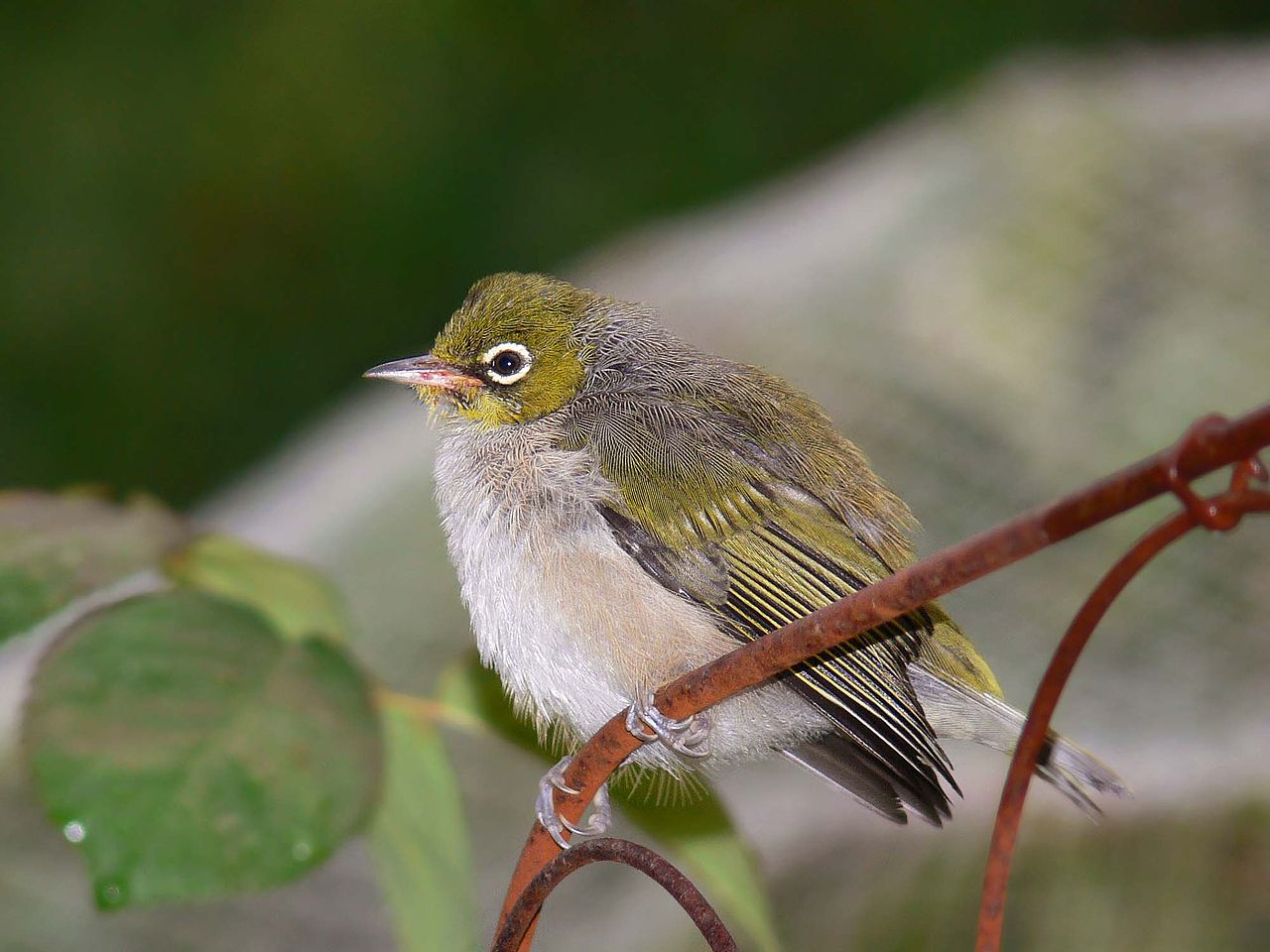
Juvenile
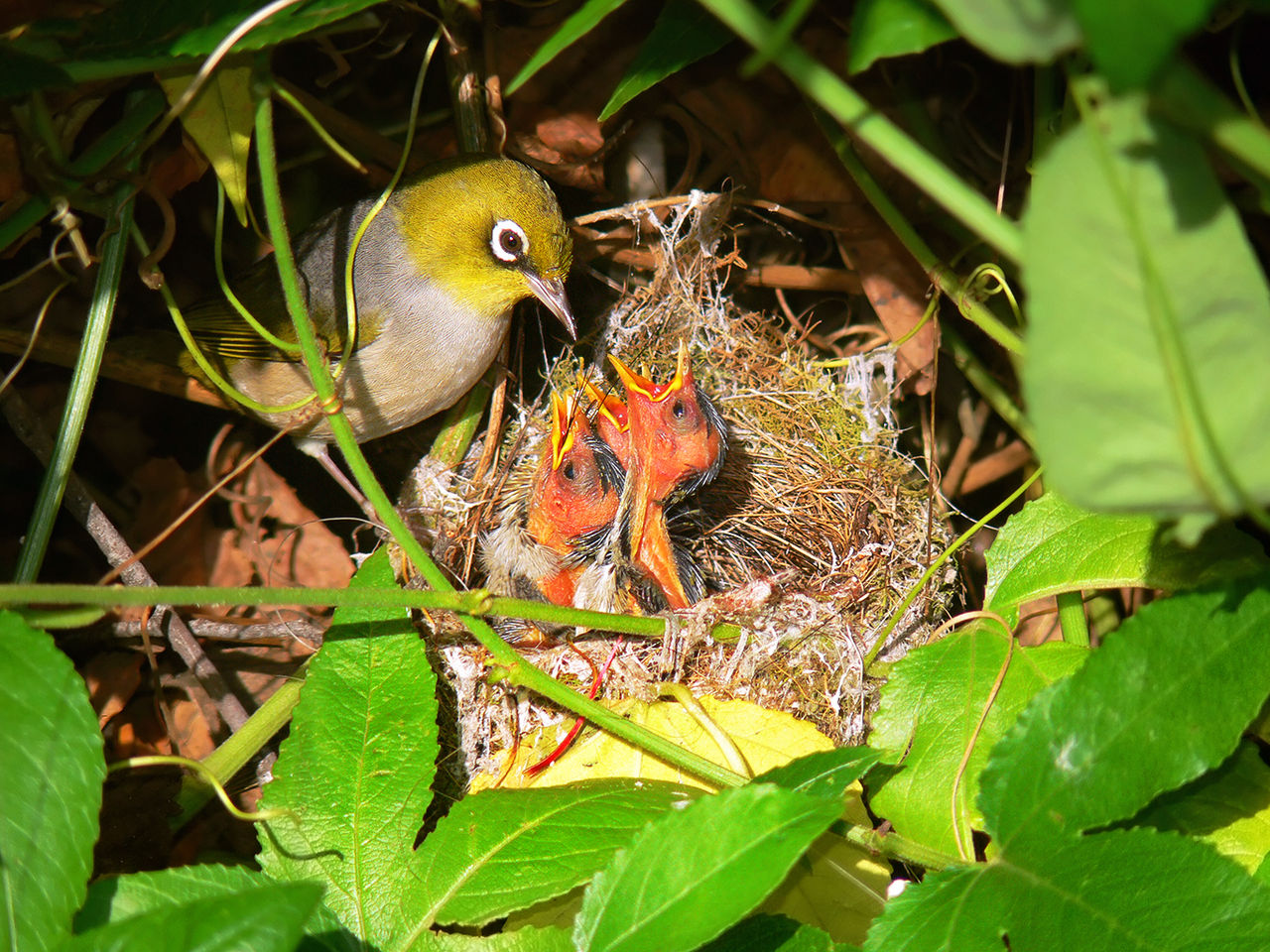
Nest and chicks

Silvereye perched on a Cestrum
Temperament
social and active
Flight Pattern
short rapid wingbeats with agile, darting flights
Social Behavior
Outside the breeding season they form lively flocks that move through foliage in cohesive bands. Pairs are monogamous during breeding, building small cup nests in shrubs or trees. They cooperatively mob predators and maintain small territories while nesting.
Migratory Pattern
Partial migrant
Song Description
High, thin, and musical warbles interspersed with soft trills and contact ‘tsee’ notes. Calls are frequent in foraging flocks and become more complex during courtship.
Plumage
Olive-green upperparts with greyish to whitish underparts and warm buff flanks; fine, neat feathering with a sleek look. Throat pale and slightly yellowish; undertail coverts whitish. Distinct, narrow white eye-ring forms a clear ‘spectacled’ appearance.
Diet
Feeds on small insects, spiders, and other invertebrates gleaned from leaves and bark. Also takes nectar and pollen from flowering shrubs and trees, and consumes a wide range of soft fruits and berries. In gardens it may visit sugar-water feeders and can occasionally damage ripe fruit in orchards.
Preferred Environment
Forages in the mid to upper canopy of forests and woodlands, moving methodically through foliage. Common in suburban gardens with flowering natives and fruiting plants, as well as coastal scrub and shelterbelts.


