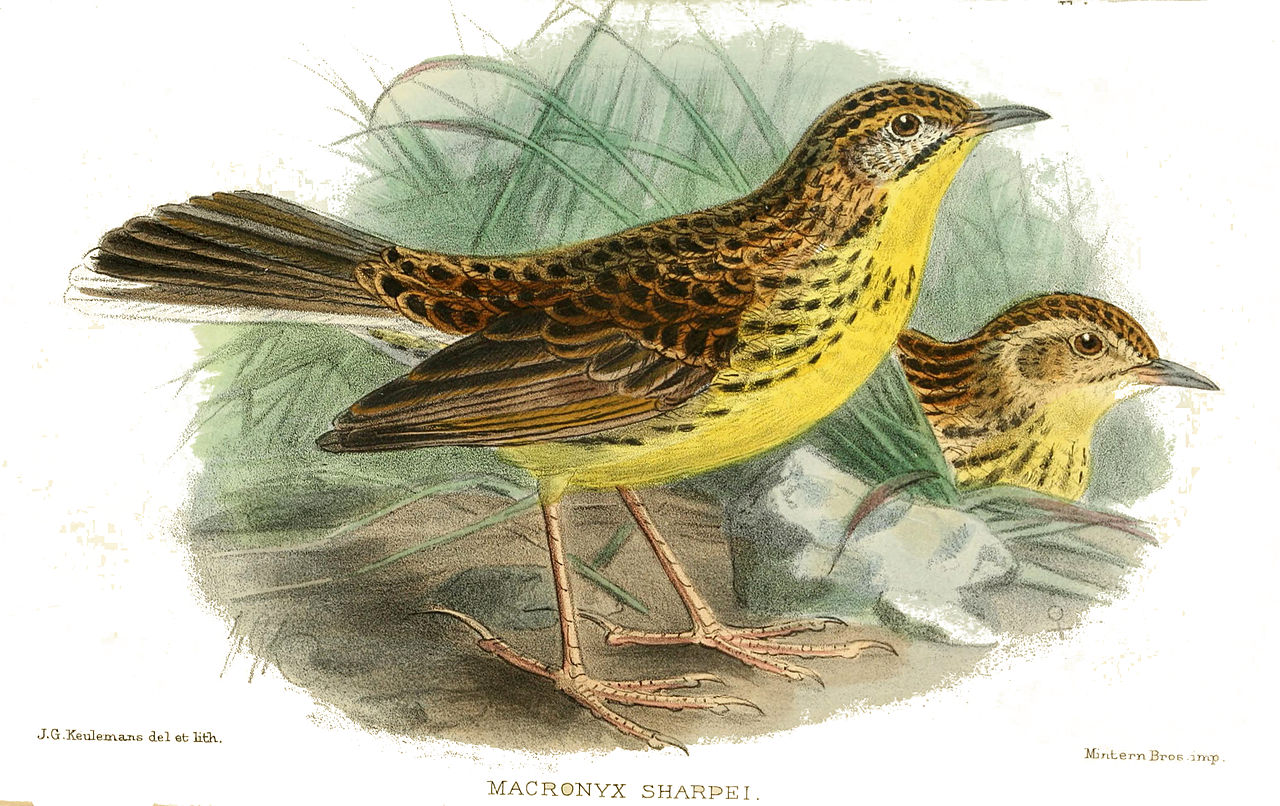
The sharp-tailed starling, also known as the sharp-tailed glossy-starling, is a species of starling in the family Sturnidae.
Region
Miombo belt of south-central and East Africa
Typical Environment
Found in open woodland and savanna, especially miombo (Brachystegia) and mixed acacia–combretum habitats. It frequents edges of forests, riparian woodland, and lightly wooded farmland. The species adapts well to human-altered mosaics with scattered trees and pastures. Outside the breeding season it may wander locally following food resources.
Altitude Range
300–1800 m
Climate Zone
Tropical
Ease of Keeping
Beginner friendly: 2/5
The sharp-tailed starling, or sharp-tailed glossy-starling, is a striking African starling noted for its iridescent plumage and distinctly tapered, pointed tail. It often forms small flocks and joins mixed-species groups when foraging. Like many starlings, it readily exploits seasonally abundant food such as termites after rains. It nests in natural cavities or old woodpecker holes and may use man-made structures when available.


Illustration by Keulemans showing the pointed tail shape
Temperament
social and active
Flight Pattern
direct flight with short rapid wingbeats
Social Behavior
Typically seen in small flocks that may join mixed feeding parties, and it gathers at communal roosts. Nests in tree cavities, often reusing old holes; pairs defend a small area around the nest. In some areas it shows loose cooperative tendencies, with nearby birds helping mob predators.
Migratory Pattern
Resident
Song Description
A varied series of bright, metallic whistles interspersed with chatters and harsh notes. Calls carry well over open woodland and are used for flock cohesion and territorial displays.
Plumage
Glossy, metallic plumage with a satiny sheen that shifts from green to blue-violet in good light; tail is long and distinctly pointed.
Diet
Eats a wide range of insects such as beetles, grasshoppers, and termites, especially during emergences after rain. Also takes spiders and other small invertebrates. Fruit and berries are important, and it will visit fig trees and other fruiting shrubs. Opportunistically consumes seeds and scraps around human settlements.
Preferred Environment
Forages both on the ground and in low to mid-level tree canopies. Often searches around livestock and along woodland edges where insects are flushed. Will exploit recently burned patches and termite mounds.