

The Seychelles bulbul is a member of the bulbul family of passerine birds. It is a common endemic species of the Seychelles, breeding on Mahé, Praslin, La Digue and Silhouette as well as some smaller islands.
Region
Seychelles (Western Indian Ocean)
Typical Environment
Occurs on the larger granitic islands where it uses native forest, secondary woodland, plantations, and well-wooded gardens. It is most common in mid-elevation forest but also appears along edges and in mixed habitat mosaics. Birds forage from the understory to the canopy, often following fruiting trees. They tolerate moderate human presence and sometimes visit cultivated areas.
Altitude Range
Sea level to 900 m
Climate Zone
Tropical
Ease of Keeping
Beginner friendly: 1/5
The Seychelles bulbul is a bold, inquisitive island songbird often seen in pairs or family groups. It plays an important role as a seed disperser for native trees and will vigorously mob potential predators near its nest. Despite its small range, it is currently not at risk, though it remains sensitive to habitat change and invasive species.

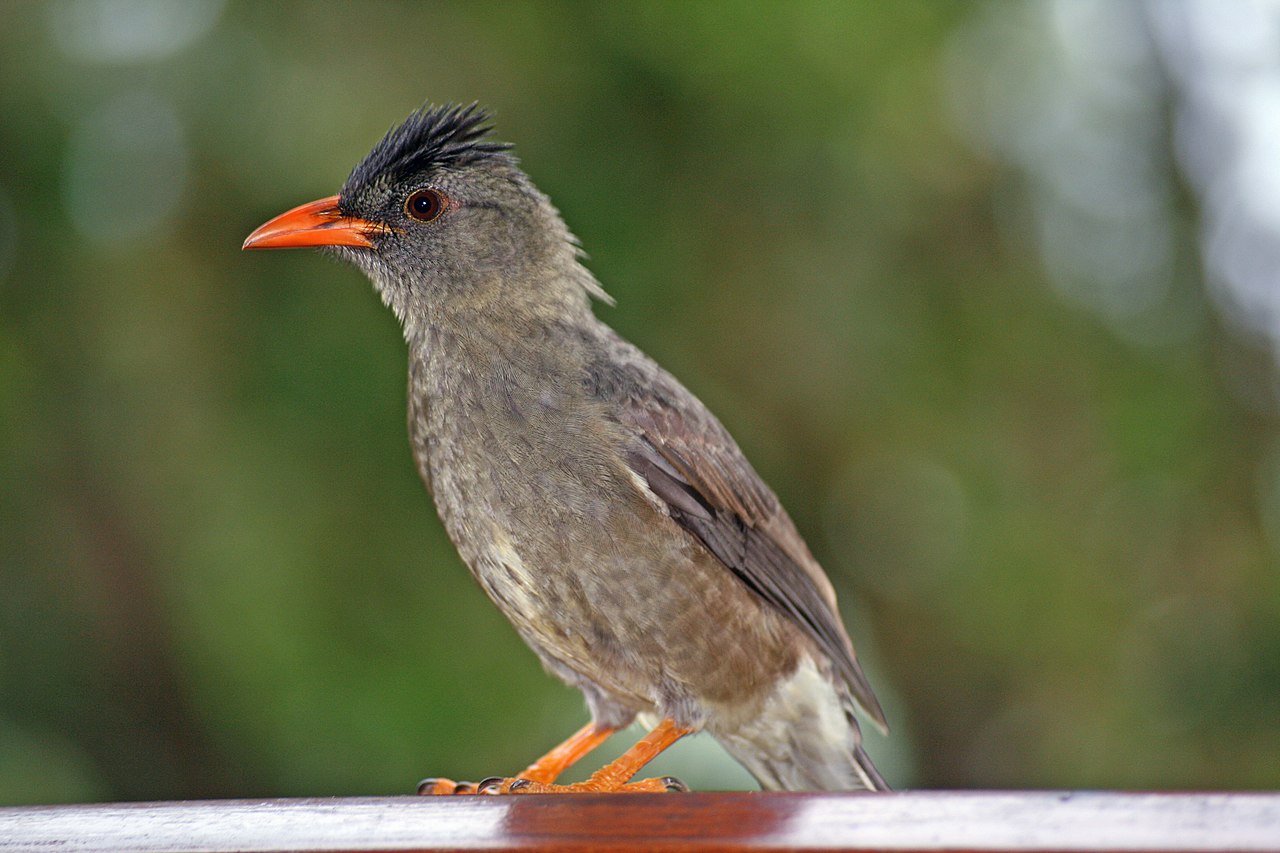
Seychelles Bulbul
Temperament
social and active, bold and somewhat territorial
Flight Pattern
short rapid wingbeats with quick, low forest-level flights
Social Behavior
Usually found in pairs or small family parties that maintain and defend feeding and nesting territories. Monogamous pairs build cup-shaped nests in trees or tall shrubs. Both parents participate in incubation and chick rearing, and groups will loudly mob intruders near the nest.
Migratory Pattern
Resident
Song Description
Vocal and conspicuous, giving rich, fluty whistles interspersed with chattering notes. Alarm calls are harsh and scolding, while advertising songs are melodious phrases repeated from exposed perches.
Plumage
Sooty to brownish-grey overall with a slightly paler, often faintly streaked throat and a shaggy, erectile crest. Feathers appear sleek with subtle gloss in good light.
Diet
Takes a broad diet of native fruits and berries, complemented by insects and other small invertebrates gleaned from foliage and bark. Will opportunistically sip nectar and occasionally take small lizards or raid other birds’ nests. Seasonal shifts in fruiting influence movements within territories, and family groups often forage cooperatively. By swallowing fruits whole, it helps disperse seeds across forest patches.
Preferred Environment
Forages from the mid-story to the canopy in forest, edges, and wooded gardens. Frequently visits fruiting trees and mixed-species foraging flocks may be joined when insects are abundant. Also uses plantations and orchards where fruit is available.


