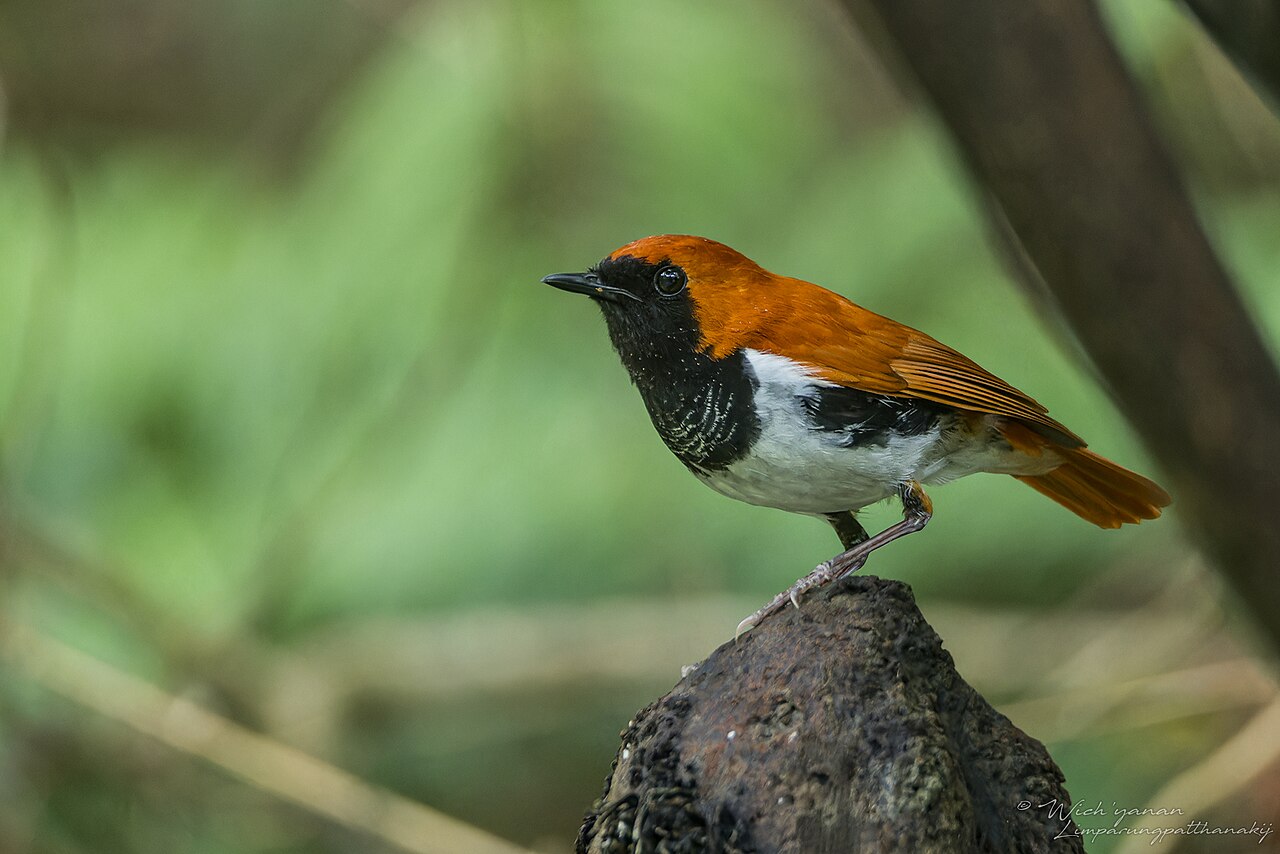
The Ryukyu flycatcher is a passerine bird in the Old World flycatcher family. It is native to the Ryukyu Islands.
Region
Ryukyu Islands (Southwest Japan)
Typical Environment
Occurs in subtropical evergreen broadleaf forests, forest edges, and well-vegetated valleys across the Ryukyu chain. It uses mid-story to canopy strata but also forages along shaded trails and streamside woods. Secondary growth with tall trees can be used if understory is intact, though it prefers older forest. Urban areas and open farmland are generally avoided except for brief passage.
Altitude Range
Sea level to 800 m
Climate Zone
Subtropical
Ease of Keeping
Beginner friendly: 1/5
The Ryukyu flycatcher is a small Old World flycatcher endemic to Japan’s Ryukyu Islands and was long treated as part of the Narcissus flycatcher complex. Males sing clear, ringing phrases from mid-canopy perches during the breeding season. It is sensitive to forest loss and fragmentation, favoring mature evergreen woods. Its scientific name honors the naturalist Alan Owston.

Temperament
shy and territorial
Flight Pattern
short rapid wingbeats with quick sallies from perches
Social Behavior
Typically solitary or in pairs during the breeding season, maintaining small territories. Builds a cup-shaped nest in a tree fork, niche, or sheltered ledge, often concealed by foliage. Clutch size is small, and both parents participate in feeding the young.
Migratory Pattern
Resident
Song Description
A clear, melodious series of whistled phrases delivered from mid to upper perches. Calls include sharp ticks and soft chips used during foraging and contact.
Plumage
Compact flycatcher with smooth, neat plumage; males show brighter yellow underparts contrasted with darker olive-brown to dusky upperparts, females are warm brown above with paler, washed-yellow underparts. Both sexes typically show subtle pale wing-bars and a faint eyebrow.
Diet
Primarily hunts flying and foliage-dwelling insects such as flies, beetles, moths, and caterpillars. It sallies out from exposed perches to catch prey on the wing and also gleans from leaves and twigs. Spiders and other small arthropods are taken regularly. Small berries may be eaten opportunistically, especially outside peak breeding.
Preferred Environment
Forages along forest edges, gaps, and shaded trails where insects are abundant. Uses the mid-story and lower canopy, often returning repeatedly to favored perches overlooking foraging spots.