
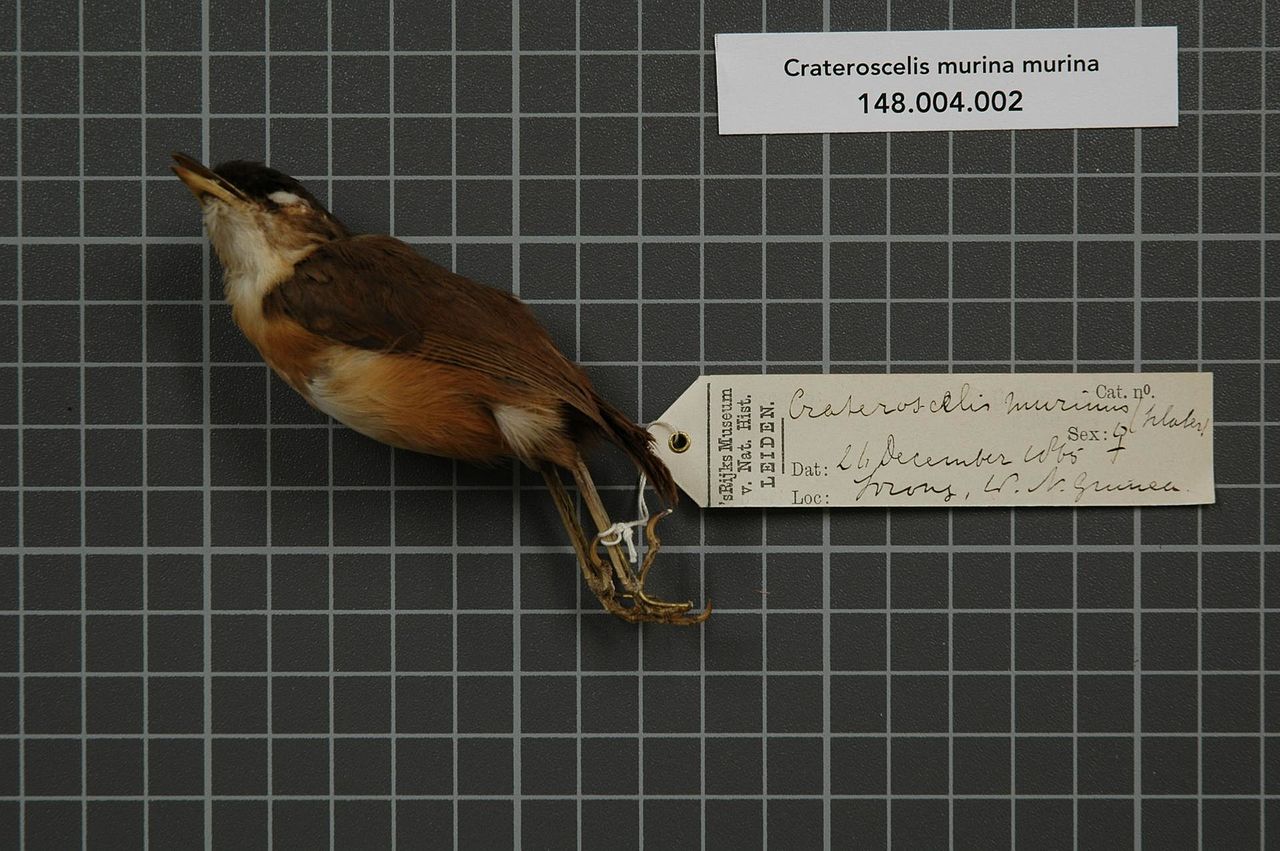
The rusty mouse-warbler, is a species of bird in the family Acanthizidae. It is found in Indonesia and Papua New Guinea, in a 1,270,000 km² distribution. Its natural habitats are subtropical or tropical moist lowland forests and subtropical or tropical moist montane forests.
Region
New Guinea
Typical Environment
Occurs across much of the island of New Guinea in both Indonesia and Papua New Guinea. It inhabits primary and secondary tropical moist forests, including lowland, hill, and lower montane zones. The species favors dense understory, thickets, vine tangles, and forest edges, often near the forest floor. It is typically shy and remains in shaded, cluttered microhabitats where it forages among leaf litter.
Altitude Range
0–2000 m
Climate Zone
Tropical
Ease of Keeping
Beginner friendly: 1/5
The rusty mouse-warbler is a small, ground-loving songbird of New Guinea’s rainforests, named for its mouse-like scurrying through leaf litter. It spends much of its time in dense understory where it is more often heard than seen. Its plain rusty plumage is excellent camouflage, and it typically forages quietly in pairs or alone.

Temperament
skulking and secretive
Flight Pattern
short rapid wingbeats, low to the ground; prefers running or hopping through cover
Social Behavior
Usually solitary or in pairs, occasionally joining mixed-species understory flocks. Nests are typically well-hidden in dense vegetation near the ground. Both adults are believed to share parental duties. Territorial calling is common at dawn.
Migratory Pattern
Resident
Song Description
Song is a series of thin, high-pitched whistles and trills delivered from low perches in dense cover. Calls include soft chips and squeaks, often given while moving through leaf litter.
Plumage
Mostly plain, uniform rusty to rufous-brown with slightly paler underparts; soft, close-textured feathers suited to understory living.
Diet
Primarily feeds on small arthropods such as insects, beetles, ants, spiders, and larvae gleaned from leaf litter and low vegetation. It probes among fallen leaves, moss, and rotting wood. Occasional small seeds or berries may be taken but are not a major component.
Preferred Environment
Forages on or near the forest floor within dense understory and vine tangles. Often along shaded trails, stream edges, and the bases of treefalls where leaf litter accumulates.


