

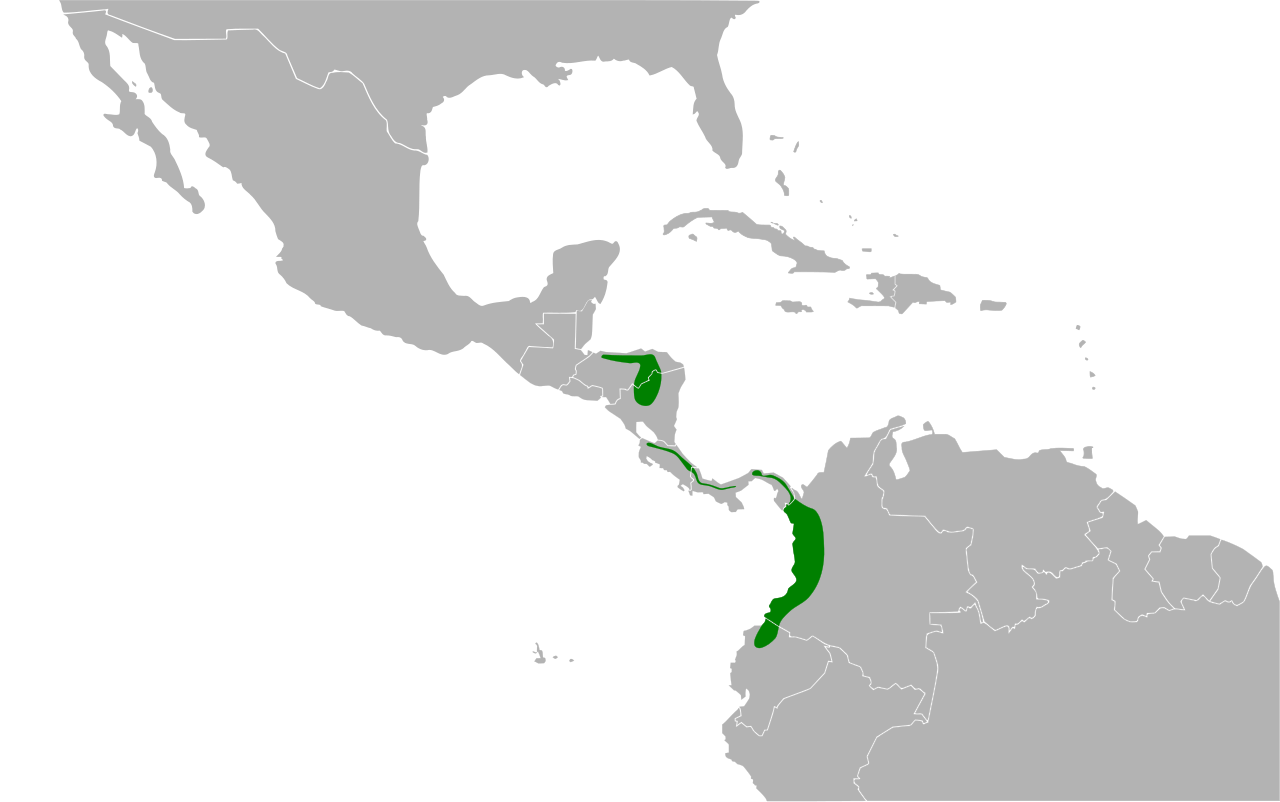
The rufous-winged tanager is a species of bird in the family Thraupidae. It is found in Colombia, Costa Rica, Ecuador, Honduras, Nicaragua, and Panama. Its natural habitats are subtropical or tropical moist lowland forests and heavily degraded former forest.
Region
Central America and northern South America
Typical Environment
Occurs from Honduras south through Nicaragua, Costa Rica, and Panama into western Colombia and northwestern Ecuador. It favors humid lowland and foothill forests, using the mid- to upper canopy as well as forest edges and clearings. The species readily occupies secondary growth and disturbed habitats where fruiting trees are present. It may enter plantations and gardens adjacent to forest. Local abundance can be higher where mixed-species flocks are common.
Altitude Range
Sea level to 1200 m
Climate Zone
Tropical
Ease of Keeping
Beginner friendly: 1/5
The rufous-winged tanager is a brightly colored member of the tanager family, often traveling in mixed-species flocks in the forest canopy. Its distinctive rufous wing patch helps separate it from similar green-and-blue Tangara species. It adapts well to edges and secondary growth, frequently visiting fruiting trees. Despite habitat alteration across parts of its range, it remains generally common and is assessed as Least Concern.

Temperament
social and active
Flight Pattern
short rapid wingbeats
Social Behavior
Often seen in pairs or small groups and regularly joins mixed-species flocks in the canopy. Builds a small cup nest concealed in foliage; breeding pairs are typically monogamous. Both adults help provision nestlings. Territorial defense is modest, focused near the nesting area.
Migratory Pattern
Resident
Song Description
A thin, high-pitched series of chips and twitters delivered from the canopy. Calls are sharp and sibilant contact notes used to keep in touch within flocks.
Plumage
Glossy green to blue-green body with a conspicuous rufous patch formed by the lesser and median wing coverts; contrasting darker wings and tail. Subtle darker mask on the face; underparts slightly brighter with a bluish tinge. Feathers are sleek and compact, suited to active canopy foraging.
Diet
Takes a variety of small fruits and berries, especially from canopy fruiting trees. Supplements fruit with insects and other arthropods gleaned from leaves and twigs. Occasionally sallies to snatch flying insects. Will follow fruiting events and may shift locally in response to food availability.
Preferred Environment
Forages mainly in the mid- to upper canopy of humid forest and along edges. Frequently visits secondary growth, forest gaps, and isolated fruiting trees in disturbed areas. Sometimes enters shade coffee or cacao where native trees are retained.


