

The rufous-collared sparrow or Andean sparrow is an American sparrow found in a wide range of habitats, often near humans, from the extreme south-east of Mexico to Tierra del Fuego, and the island of Hispaniola in the Caribbean. It has diverse vocalizations, which have been intensely studied since the 1970s, particularly by Paul Handford and Stephen C. Lougheed (UWO), Fernando Nottebohm and Pablo Luis Tubaro (UBA). Local names for this bird include the Portuguese tico-tico and mariquinha, the Spanish copetón ("tufted") in Colombia, as well as chingolo and chincol, comemaíz "corn eater" in Costa Rica, chincol in Chile and Cigua de Constanza in the Dominican Republic.
Region
Central and South America
Typical Environment
Occurs from southeastern Mexico through Central America and most of South America to Tierra del Fuego, and also on Hispaniola. It occupies open and semi-open habitats including gardens, parks, agricultural fields, shrublands, and forest edges. Common around human habitation and disturbed landscapes. In the Andes it is abundant in montane villages and puna grasslands. Local movements may occur in response to season, rainfall, and elevation.
Altitude Range
Sea level to 4500 m
Climate Zone
Tropical
Ease of Keeping
Beginner friendly: 2/5
Also called the Andean sparrow, this adaptable species thrives from city parks and farms to high Andean grasslands. Its song varies greatly across regions, making it a classic model for studies of vocal dialects and learning. It often approaches human settlements and can become quite tame.


Juvenile in Colombia
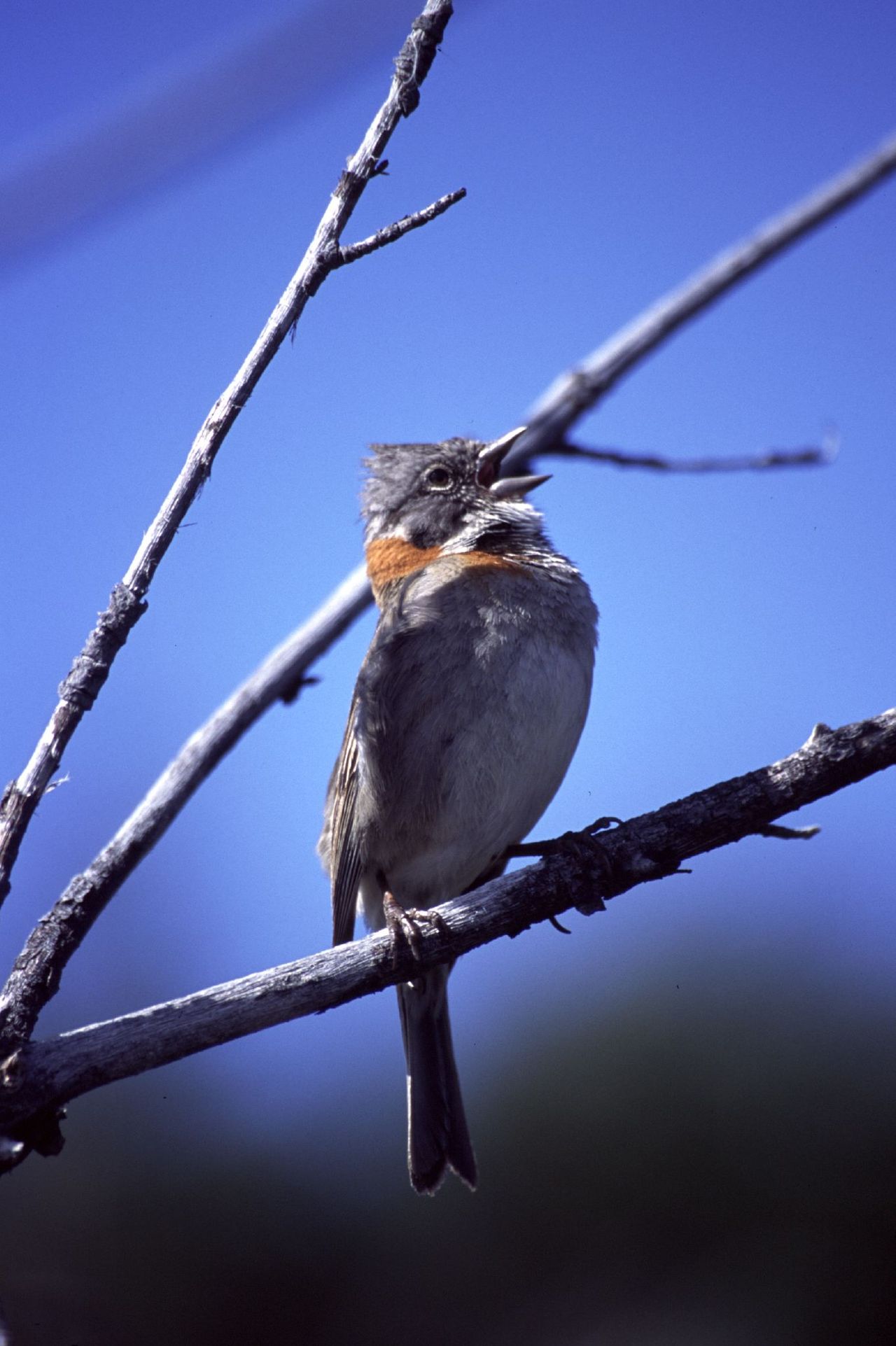
Z. c. australis singing in Los Glaciares National Park, Patagonia, Argentina

Adult rufous-collared sparrow feeds a parasitic shiny cowbird (Molothrus bonariensis) fledgling in São Paulo, Brazil

Singing male (Museu Paulista park, São Paulo, Brazil)
Temperament
social and adaptable
Flight Pattern
short rapid wingbeats with low, undulating flights
Social Behavior
Typically forages in small groups and forms larger flocks outside the breeding season. Breeding pairs defend territories, with the male singing prominently from exposed perches. Nests are cup-shaped, placed on or near the ground or low in shrubs. Comfortable in human-modified environments and frequents yards and farms.
Migratory Pattern
Partial migrant
Song Description
Song is a clear series of whistles followed by trills, highly variable across regions and elevational bands. Calls include sharp tseet contact notes and buzzy or metallic alarm chips. Males sing persistently at dawn and throughout the day during breeding.
Plumage
Brown, streaked upperparts with gray head and a distinct rufous collar on the nape; underparts grayish with buffy wash on breast and flanks. Head shows contrasting black stripes and a pale supercilium; a white throat bordered by a dark malar stripe. Often raises a small crest, giving a tufted look.
Diet
Primarily consumes grass and weed seeds, grains, and small invertebrates such as insects and spiders. During the breeding season it increases insect intake to feed nestlings. It also takes fallen fruit and will pick at crumbs and grain around human settlements. Opportunistic and flexible, shifting diet with availability.
Preferred Environment
Usually forages on the ground in open areas, lawns, roadsides, crop fields, and edges of shrublands. Often feeds near humans in parks, courtyards, and farmyards, hopping and scratching in leaf litter or bare soil. Uses low perches to scan between bouts of ground foraging.


