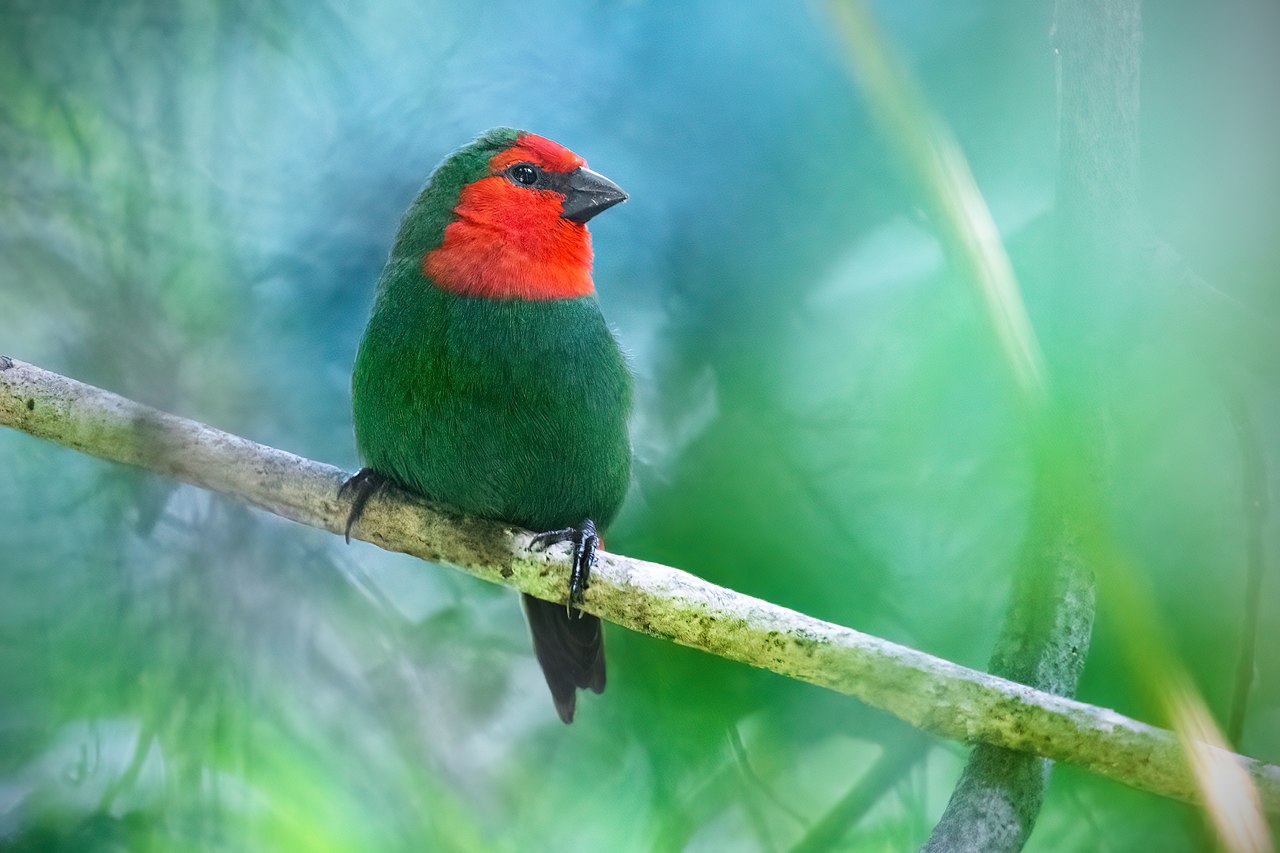
The red-throated bee-eater is a species of bird in the family Meropidae. This species is native to the Sudan (region). It has a wide range and large total population, and the International Union for Conservation of Nature has assessed its conservation status as being of "least concern".
Region
Sahel and Sudan Savanna of West and Central Africa
Typical Environment
Occurs in a broad belt from West Africa eastward through the Sahel and Sudan savanna into parts of Central and East Africa. It favors riverine banks, open woodland, wooded savanna, and edges of cultivation. Colonies are typically placed in vertical or sloping sandy banks along rivers, streams, and eroded road cuttings. The species forages over open areas, often near water and human settlements where flying insects are abundant.
Altitude Range
0–1500 m
Climate Zone
Tropical
Ease of Keeping
Beginner friendly: 1/5
The red-throated bee-eater is a colorful, colonial nester that excavates tunnels in sandy or lateritic riverbanks. It specializes in catching bees and wasps on the wing and deftly removes stings by beating prey against a perch. Pairs often breed in dense colonies numbering dozens to hundreds of burrows. It remains common across the Sahel and Sudan savanna and is assessed as Least Concern.


Ground nests of red-throated bee-eaters next to a stream in Yankari National Park, Bauchi, Nigeria
Temperament
social and active
Flight Pattern
short rapid wingbeats with agile sallies
Social Behavior
Highly colonial; dozens to hundreds of pairs may nest together in burrows excavated in sandy banks. Pairs are monogamous within a breeding season, and helpers may assist at nests in some colonies. They perch conspicuously on branches or wires and sally out to catch insects, often returning to the same perch.
Migratory Pattern
Resident
Song Description
A series of soft, rolling trills and liquid prrt or prree notes given in rapid sequences. Calls are musical and conversational within colonies, carrying well over open savanna. Alarm calls are sharper and more clipped.
Plumage
Bright green upperparts with a vivid red throat, contrasting bluish to turquoise underparts, and a black mask through the eye. The rump often shows a bluish wash; tail is green with slightly elongated central feathers.
Diet
Feeds mainly on flying Hymenoptera such as bees and wasps, but also takes dragonflies, butterflies, beetles, and other aerial insects. Prey is captured in mid-air after a watch-and-sally from an exposed perch. Before swallowing stinging insects, it removes the sting by repeatedly striking the prey against the perch and squeezing the abdomen.
Preferred Environment
Hunts over open savanna, river corridors, forest edges, and farmlands where insect flight activity is high. Often forages near colonies and along waterways and clearings that provide good visibility and perches.