

The purple-throated cotinga is a species of bird in the cotinga family, Cotingidae. It is found in the western Amazon rainforest of South America; its range extends from southern Colombia south through eastern Ecuador and Peru and east through extreme northwestern Bolivia and into western Amazonian Brazil. It lives in the canopy or along the borders of humid forest throughout its range. The purple-throated cotinga is monotypic within the genus Porphyrolaema and has no known subspecies. It is one of the smaller cotinga species and expresses strong sexual dimorphism. Males have black upperparts with a bold white wingstripe and white edges to the tertial feathers and a white belly with some black barring on the rear flanks. The throat is a deep purple, giving the bird both its common and scientific names. Females are dark brown with pale buffy margins on the upperparts, buffy cinnamon with black barring on the underparts, and rufous on the throat. The male has a powerful voice.
Region
Western Amazon Basin
Typical Environment
Occurs from southern Colombia through eastern Ecuador and Peru, east into western Amazonian Brazil and extreme northwestern Bolivia. It inhabits humid lowland rainforest, especially the canopy and edges, and is often seen along river corridors and forest gaps where fruiting trees are abundant. Uses both terra firme and seasonally flooded (várzea) forests. Individuals frequently sit atop emergent trees to forage or call, and will cross open spaces between forest crowns.
Altitude Range
0–900 m
Climate Zone
Tropical
Ease of Keeping
Beginner friendly: 1/5
A small cotinga of the western Amazon canopy, the purple-throated cotinga is strikingly dimorphic: males show a deep purple throat contrasting with bold black-and-white plumage, while females are brown and finely barred. Males often perch high above the canopy to broadcast powerful, far-carrying calls. It is monotypic in its genus Porphyrolaema. Despite its showy male, it can be surprisingly inconspicuous when not vocalizing.


Male from Contributions to Ornithology 1848 - 1852, Volume 2, 1852
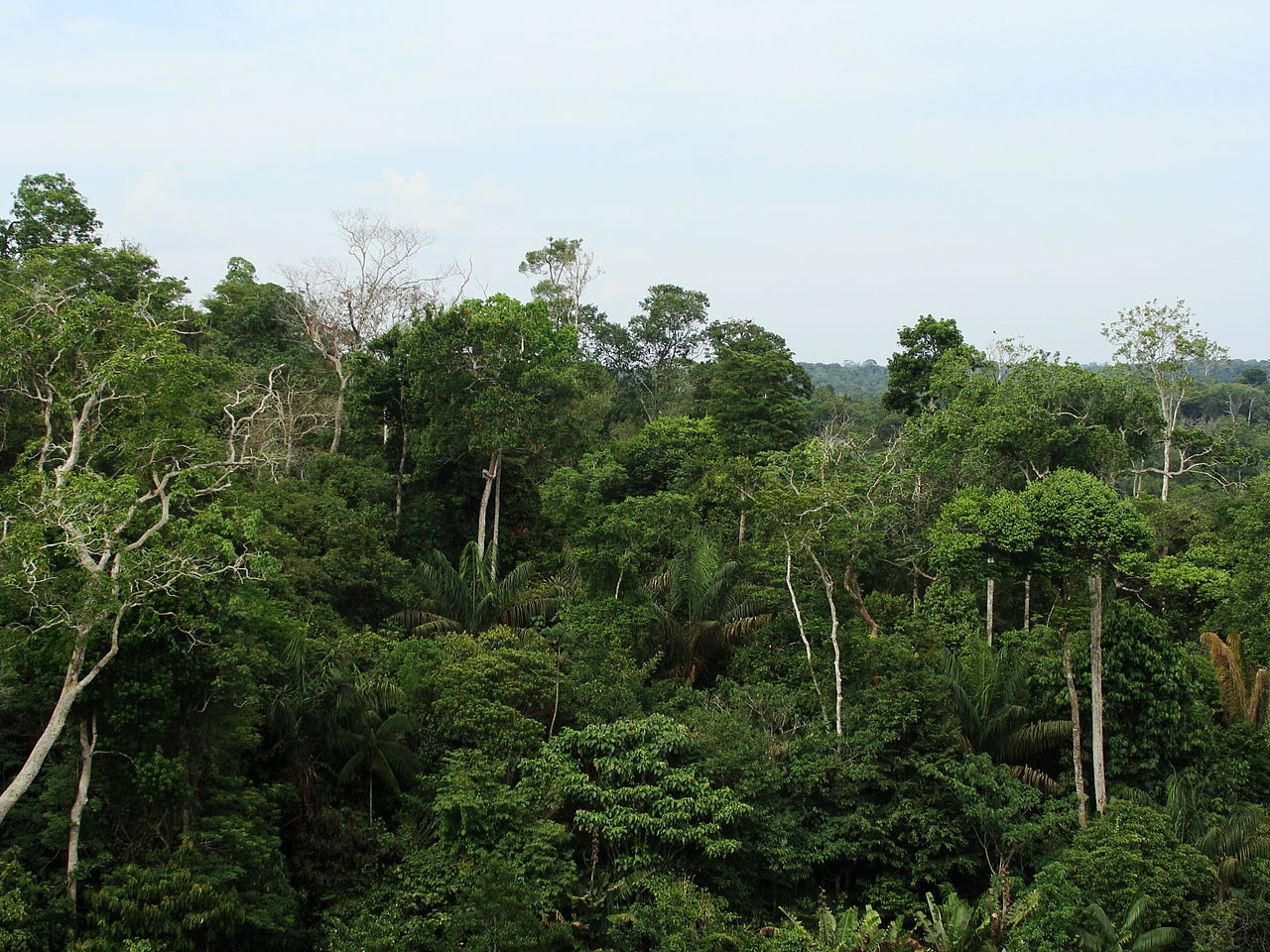
Rainforest canopy in Brazil
Temperament
quiet and unobtrusive; perches conspicuously
Flight Pattern
short rapid wingbeats between canopy crowns
Social Behavior
Usually solitary or in pairs but may gather loosely at fruiting trees. Spends much time perched high in the canopy scanning for fruit. Nests are placed high and are relatively simple open cups; breeding biology remains poorly documented. Displays are mostly vocal, with males advertising from exposed perches.
Migratory Pattern
Resident
Song Description
Male gives powerful, ringing whistles and clear, carrying notes that can be heard over long distances. Phrases are often given in spaced series and may descend slightly in pitch. When foraging, it may utter softer chips and contact notes.
Plumage
Male is glossy black above with a bold white wing stripe, white-edged tertials, and a crisp white belly; the throat is a rich, velvety purple. Female is dark brown with pale buff margins above and buffy-cinnamon underparts barred with black; throat often rufous. Both sexes have a short, broad bill suited to fruit and a neat, compact silhouette.
Diet
Primarily consumes small to medium-sized fruits from canopy trees such as figs, laurels, and melastomes, often swallowing them whole and later regurgitating seeds. Will occasionally sally for aerial insects or pick arthropods from foliage, especially when fruit is scarce. Plays a role in seed dispersal across riverine and edge habitats.
Preferred Environment
Feeds high in the canopy and along forest edges, especially at emergent or fruiting trees. Frequently uses river margins, oxbow lakes, and natural gaps where fruiting resources are concentrated.


