

Prevost's ground sparrow, also known as the white-faced ground sparrow, is an American sparrow.
Region
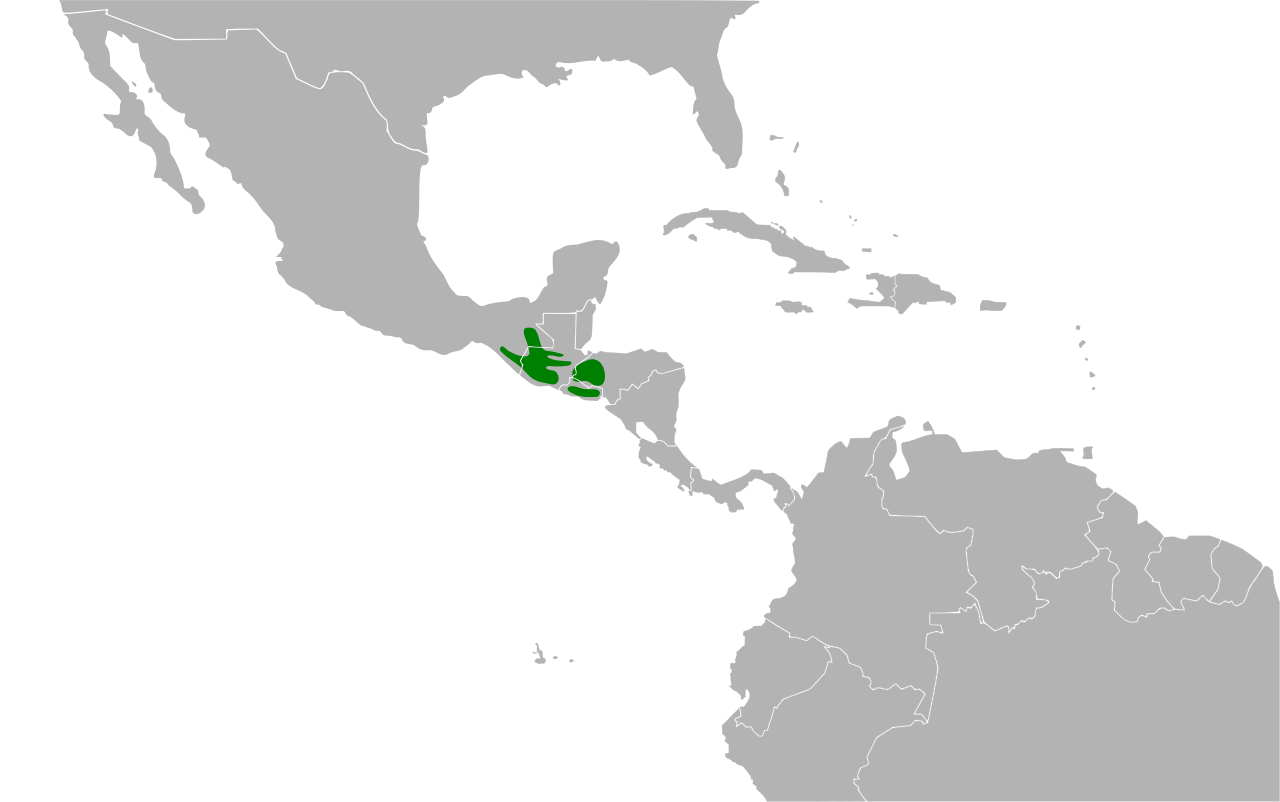
Southern Mexico and Central America
Typical Environment
Occurs from southern Mexico through Guatemala, El Salvador, Honduras, and Nicaragua into adjacent parts of Costa Rica. It favors dense understory in second-growth, forest edges, brushy ravines, and shaded agroforestry like coffee plantations. Birds keep close to the ground and use tangles and hedgerows for cover. The species is largely sedentary within territories year-round. Local presence depends on availability of low, dense shrub layers and leaf-litter for foraging.
Altitude Range
300–2000 m
Climate Zone
Tropical
Ease of Keeping
Beginner friendly: 2/5
Prevost's ground sparrow, often called the white-faced ground sparrow, is a skulking towhee-like sparrow of thickets and coffee plantations. Its scientific epithet biarcuata refers to the two bold black arcs framing the bright white face. It was formerly placed in the genus Aimophila and has had taxonomic reshuffling with closely related ground-sparrows in Costa Rica and Panama. It typically keeps low to the ground, scratching through leaf litter for food.

Temperament
shy and skulking
Flight Pattern
short rapid wingbeats, low to the ground
Social Behavior
Usually in pairs or small family groups, maintaining territories in dense brush. Nests are placed low in shrubs or in thick ground cover, with both parents involved in care. Courtship includes quiet contact calls and short chases through understory.
Migratory Pattern
Resident
Song Description
Song is a clear series of thin whistles and tinkling notes delivered from a low perch within cover. Calls include sharp tsip or tik notes, often given while foraging and when flushed.
Plumage
Olive-brown upperparts with gray tones on the nape and breast, clean white face bordered by bold black arcs, and warm rufous on the crown or auricular area. Underparts are gray to buff-gray with warmer buffy flanks; wings and tail are dusky-brown. The overall look is a sharply patterned face set against a subdued brown-gray body.
Diet
Feeds mainly on seeds and small fruits supplemented by insects and other arthropods, especially during breeding season. It forages by scratching in leaf litter and probing among fallen leaves. Beetles, ants, and small caterpillars are commonly taken, along with grass and weed seeds.
Preferred Environment
Forages on or near the ground in dense thickets, hedgerows, coffee plantations, and brushy forest edges. Often uses shaded, humid microhabitats with ample leaf litter.


