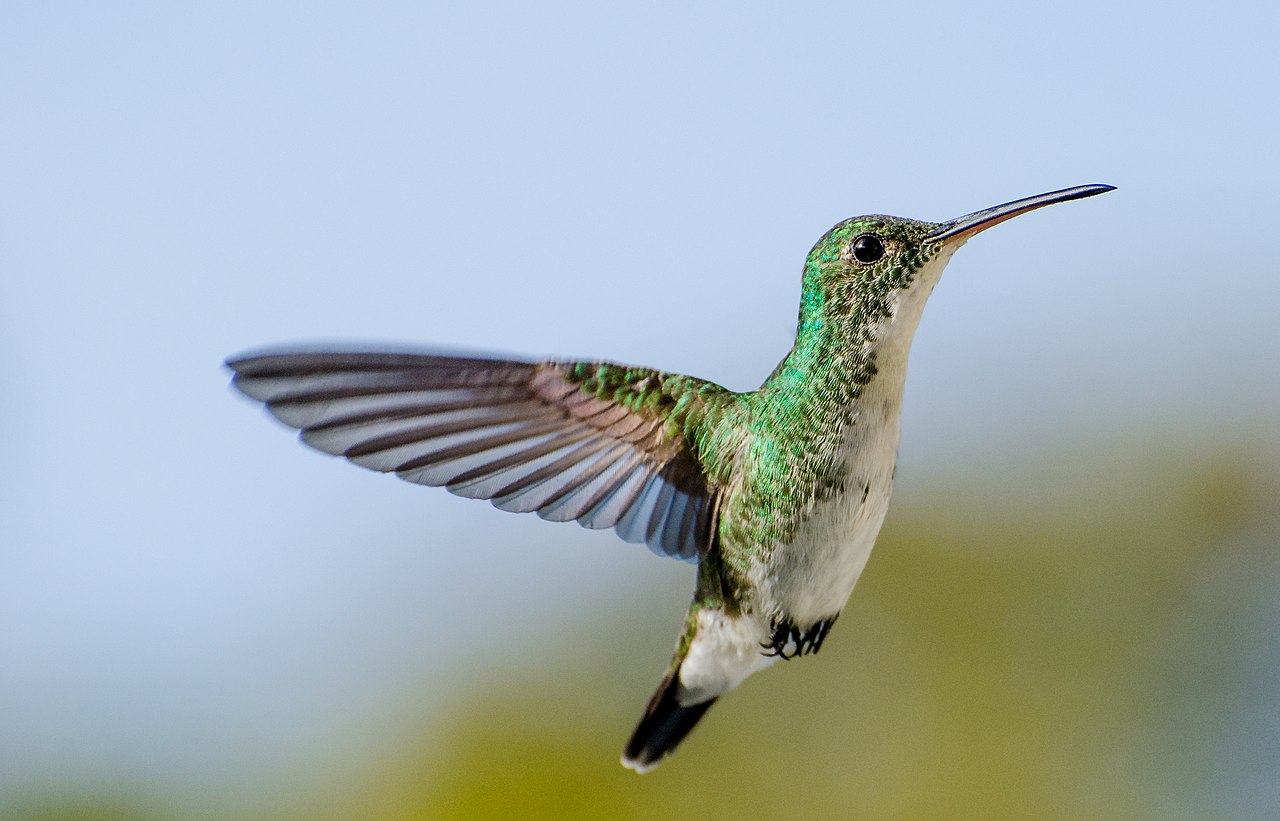
The plain-backed sunbird, also known as blue-throated sunbird is a sunbird. The sunbirds are a group of very small Old World passerine birds which feed largely on nectar, although they will also take insects, especially when feeding young. Flight is fast and direct on their short wings. Most species can take nectar by hovering like a hummingbird, but usually perch to feed most of the time.
Region
East African coast
Typical Environment
Occurs in coastal and lowland forests, forest edges, and dense thickets along the East African seaboard. It frequents secondary growth, scrub, mangroves, and wooded gardens where nectar-bearing flowers are abundant. The species often follows seasonal flowering of trees and shrubs. It is typically local and patchy, tracking suitable coastal forest and thicket habitats.
Altitude Range
Sea level to 1000 m
Climate Zone
Tropical
Ease of Keeping
Beginner friendly: 1/5
The plain-backed sunbird is a small East African nectar specialist that also snaps up insects, especially when feeding young. Males often show a subtle metallic blue or bluish throat sheen, giving rise to the alternative name 'blue-throated sunbird' in some local guides. Like other sunbirds, it can hover briefly but typically perches to feed from flowers. Its purse-shaped nest is woven from plant fibers and spider silk and hung from a protected branch.

Temperament
social and active
Flight Pattern
short rapid wingbeats with brief hovering
Social Behavior
Usually seen singly, in pairs, or small family groups, and may join mixed-species flocks at flowering trees. Pairs are territorial around rich nectar sources. The nest is a hanging, purse-like structure made from fibers and spider webs with a side entrance. Both parents typically attend the young.
Migratory Pattern
Resident
Song Description
Calls are high, thin, and tsee-tsee notes interspersed with rapid twitters. The song is a quick, tinkling series of high-pitched phrases delivered from a perch near flowering trees.
Plumage
Generally plain olive-brown upperparts with cleaner, paler underparts; plumage lacks strong streaking. Males may show a subtle glossy bluish throat or gorget; females are duller with a paler throat and more uniform underparts.
Diet
Feeds primarily on nectar from a variety of flowering trees, shrubs, and vines, probing with its curved bill and brush-tipped tongue. It also takes small insects and spiders, gleaned from foliage or caught in short sallies. Insect prey becomes especially important during breeding. It may follow flowering phenology and exploit gardens with ornamental blooms.
Preferred Environment
Commonly forages in the canopy and mid-story of coastal forest edges, thickets, and mangroves. It also visits cultivated areas and gardens with abundant flowers. Birds often return repeatedly to productive nectar sources.