
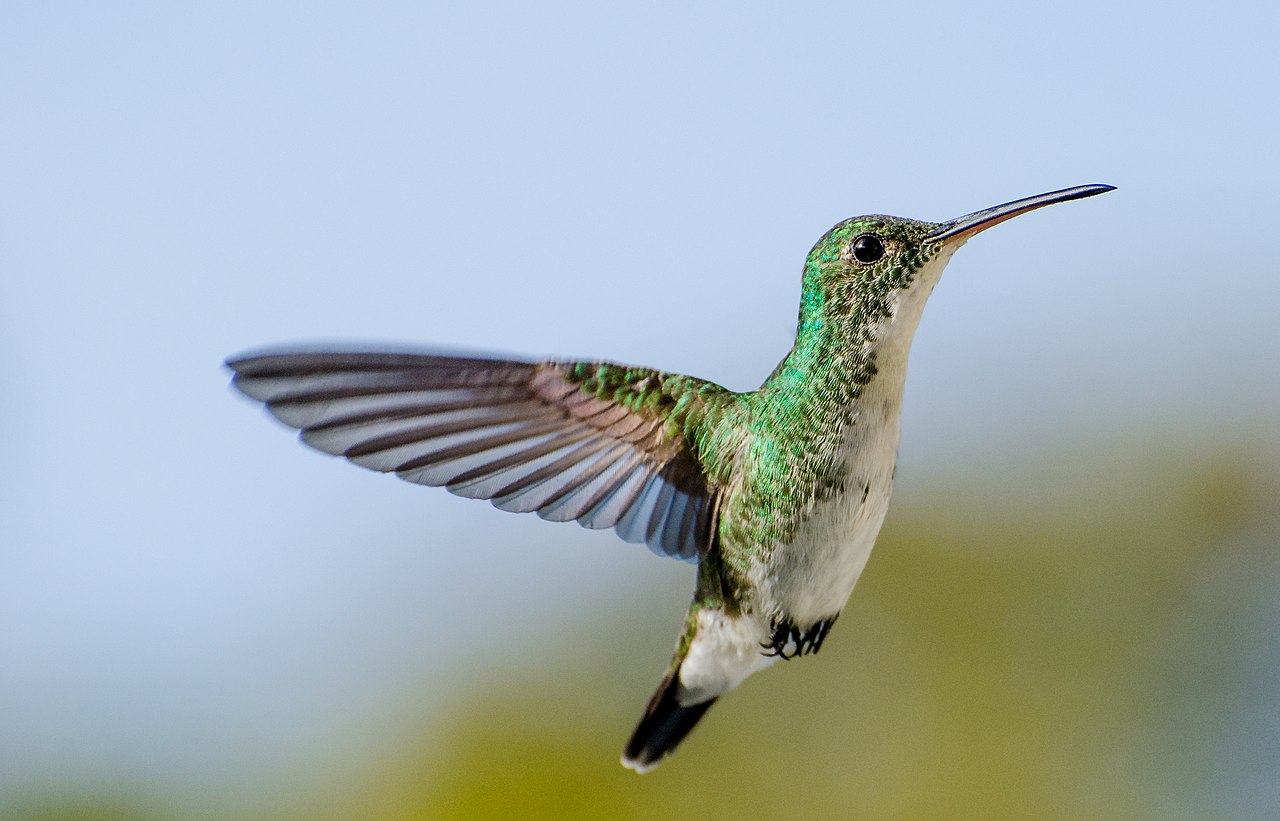
The plain-bellied emerald is a species of hummingbird in the "emeralds", tribe Trochilini of subfamily Trochilinae. It is found in Brazil, the Guianas, and Venezuela.
Region
Northern and Eastern South America
Typical Environment
Occurs from eastern Venezuela through the Guianas and much of northern and eastern Brazil, including coastal zones. It frequents mangroves, river islands, seasonally flooded (várzea) forest edges, gallery forests, and scrubby second growth. The species also uses open woodlands, savanna patches with scattered trees, and urban gardens with flowering shrubs. It is primarily a lowland bird and is often most common along waterways and coastal fringes.
Altitude Range
Sea level to 1200 m
Climate Zone
Tropical
Ease of Keeping
Beginner friendly: 1/5
This small hummingbird of the emerald tribe thrives in coastal mangroves and riverine edges, often venturing into gardens and parks. Males defend rich nectar sources aggressively, chasing other hummingbirds. The female builds a tiny cup nest from plant down bound with spider silk and typically lays two eggs. It adapts well to secondary growth, which helps keep its populations stable.


Temperament
territorial and active
Flight Pattern
short rapid wingbeats with agile hovering
Social Behavior
Generally solitary outside of breeding and foraging hotspots, but multiple birds may gather at rich flowering trees. Males defend feeding territories vigorously. The female alone constructs a small cup nest on a horizontal branch and incubates two eggs.
Migratory Pattern
Resident
Song Description
Calls are thin, high-pitched tseet and tzip notes, with brief buzzy trills. During chases it gives rapid chatters, and the wing hum is audible at close range.
Plumage
Glossy green upperparts with a clean, unmarked whitish to pale gray belly and lower breast; texture sleek and iridescent on the head and back. Tail slightly forked with green to bronzy tones. Overall appearance is of a bright emerald-backed hummingbird with a plainly colored underside.
Diet
Takes nectar from a wide array of tubular and brushy flowers, including shrubs, trees, and ornamental garden plants. Also hawks tiny insects and glean small arthropods from foliage to obtain protein. Will visit flowering trees seasonally and may return repeatedly to productive blooms.
Preferred Environment
Feeds along forest edges, riverbanks, mangroves, and in secondary growth where flowering plants are abundant. Common at garden feeders and hedges in towns within its range.


