
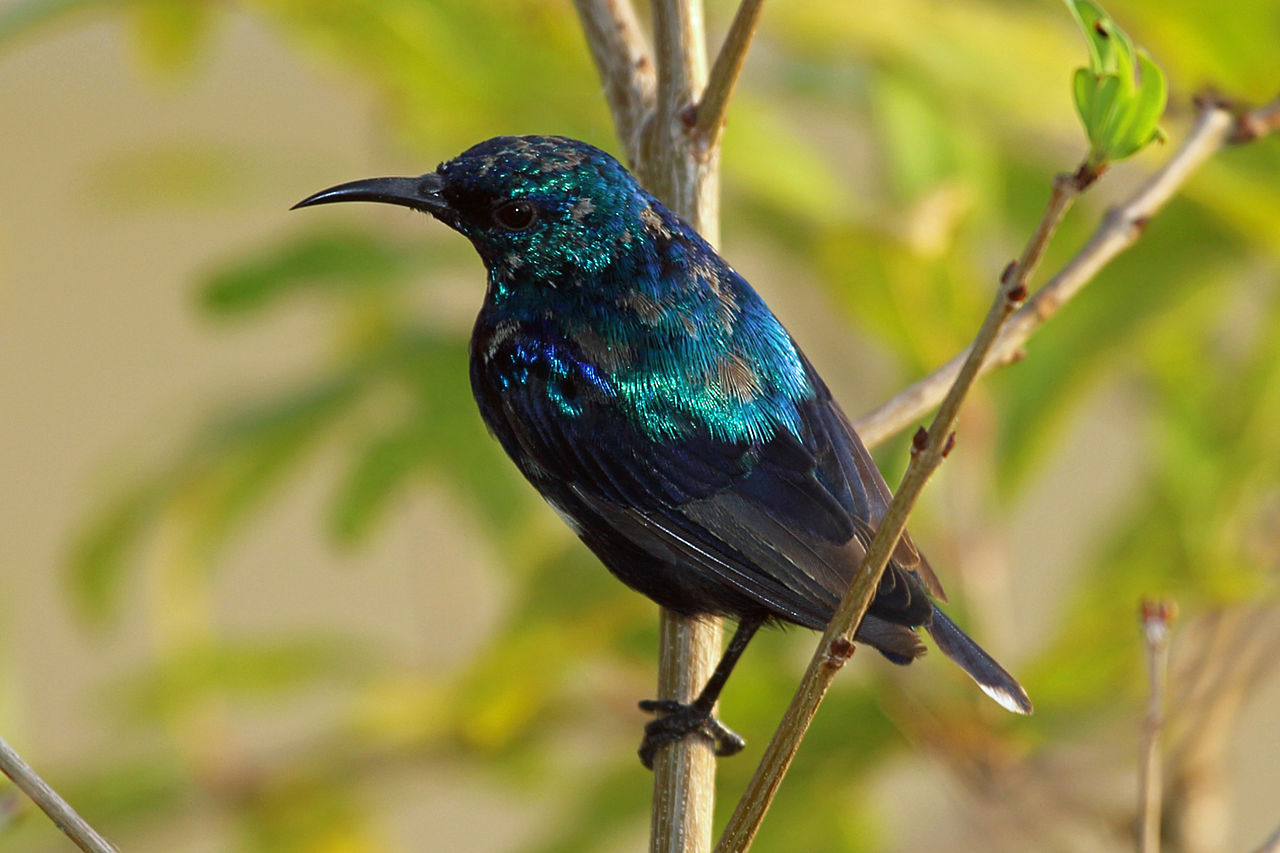
The Pemba sunbird is a species of bird in the sunbird family. It is endemic to Pemba Island, Tanzania.
Region
Zanzibar Archipelago
Typical Environment
Confined to Pemba Island off the Tanzanian coast, where it occupies coastal thickets, mangroves, open woodland, plantations, and village gardens. It adapts well to human-altered landscapes and is frequently seen around flowering shrubs and trees. The species uses edges and clearings more than dense interior forest. It forages from understory to canopy, following seasonal blooms.
Altitude Range
Sea level to 100 m
Climate Zone
Tropical
Ease of Keeping
Beginner friendly: 1/5
Often called the Old World counterpart to hummingbirds, sunbirds hover briefly but usually perch while feeding. On Pemba, this species is an important pollinator of native coastal plants and cultivated trees such as cloves. Its long, decurved bill and brush-tipped tongue are specialized for nectar feeding, but it also takes small insects for protein.


Temperament
active and territorial
Flight Pattern
short rapid wingbeats with brief hovering at flowers
Social Behavior
Usually seen singly or in pairs, with males defending rich flowering patches. The nest is a small, pendant, purse-shaped structure of plant fibers and spider silk suspended from vegetation. Breeding pairs show strong site fidelity to productive feeding areas.
Migratory Pattern
Resident
Song Description
Thin, rapid, high-pitched twittering interspersed with sharp tsip notes. Calls accelerate during territorial disputes and when foraging among flowering trees.
Plumage
Male shows glossy, iridescent green head and throat with a narrow maroon breast band and dark wings; underparts yellow-olive. Female is duller, olive-brown above with yellowish underparts and faint streaking. Both sexes have a slender, decurved bill suited to nectar feeding.
Diet
Feeds primarily on nectar from a variety of native and cultivated flowers, including mangrove blossoms and clove trees. Supplements its diet with small insects, spiders, and other arthropods, especially during breeding. Often probes tubular flowers with its brush-tipped tongue and occasionally hawks small insects in short sallies.
Preferred Environment
Forages in flowering shrubs, coastal trees, mangroves, plantations, and garden ornamentals. Uses perches near blossom clusters and moves methodically through foliage from mid-levels to canopy edges.


