

The peregrine falcon, also known simply as the peregrine, is a cosmopolitan bird of prey (raptor) in the family Falconidae renowned for its speed. A large, crow-sized falcon, it has a blue-grey back, barred white underparts and a black head. As is typical for bird-eating (avivore) raptors, peregrine falcons are sexually dimorphic, with females being considerably larger than males. Historically, the bird has also been known as the "black-cheeked falcon" in Australia, and the "duck hawk" in North America.
Region
Global (nearly worldwide)
Typical Environment
Found on every continent except Antarctica, occupying coasts, open countryside, mountains, and cities. Prefers cliffs and ledges for nesting but readily uses tall buildings and bridges in urban areas. Occurs along shorelines, wetlands, grasslands, and open woodlands where flying bird prey is abundant. Absent only from the most extreme polar regions and the densest tropical forests.
Altitude Range
Sea level to 4500 m
Climate Zone
Other
Ease of Keeping
Beginner friendly: 1/5
The peregrine falcon is the fastest animal on Earth, reaching over 320 km/h (200 mph) in a hunting stoop. It rebounded dramatically in many regions after the banning of DDT and widespread conservation and reintroduction efforts. Urban pairs commonly nest on skyscrapers and bridges, preying on city pigeons and other birds.


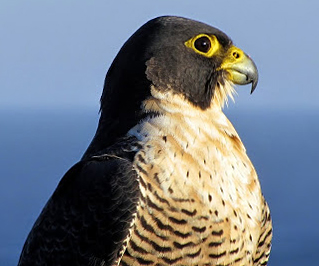
Falco peregrinus. Royal National Park, New South Wales, Australia

The appearance of a peregrine falcon in flight
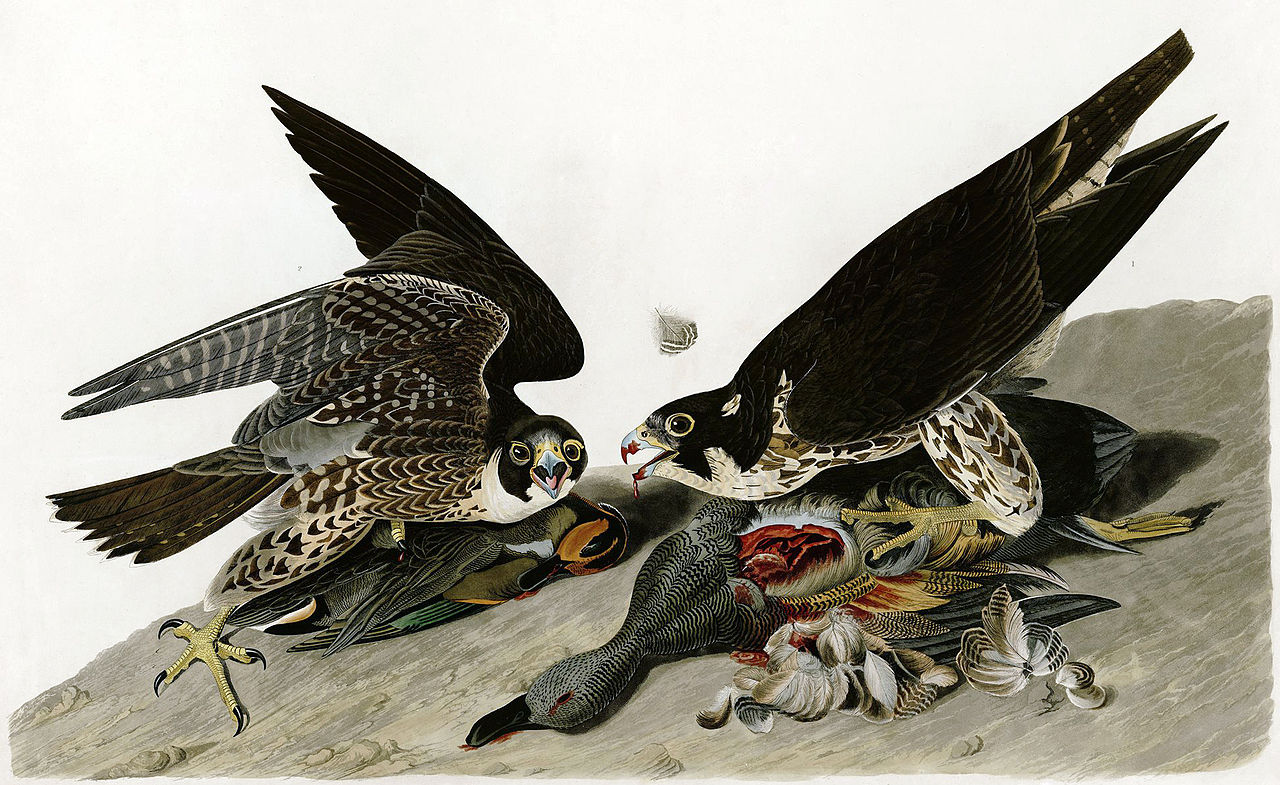
A pair of peregrines eating ducks. Illustration by John James Audubon

Breeding ranges of the 19 subspecies

Illustration of the subspecies babylonicus by John Gould

A male Red-naped shaheen by its nest in Kerman, Kerman province, Iran

A juvenile of the subspecies ernesti in Mount Mahawu, North Sulawesi, Indonesia

An adult of either the subspecies pealei or tundrius by its nest in Alaska

F. p. submelanogenys at Herdsman Lake, near Perth, Western Australia

Illustration of the subspecies F. p. minor by Keulemans, 1874
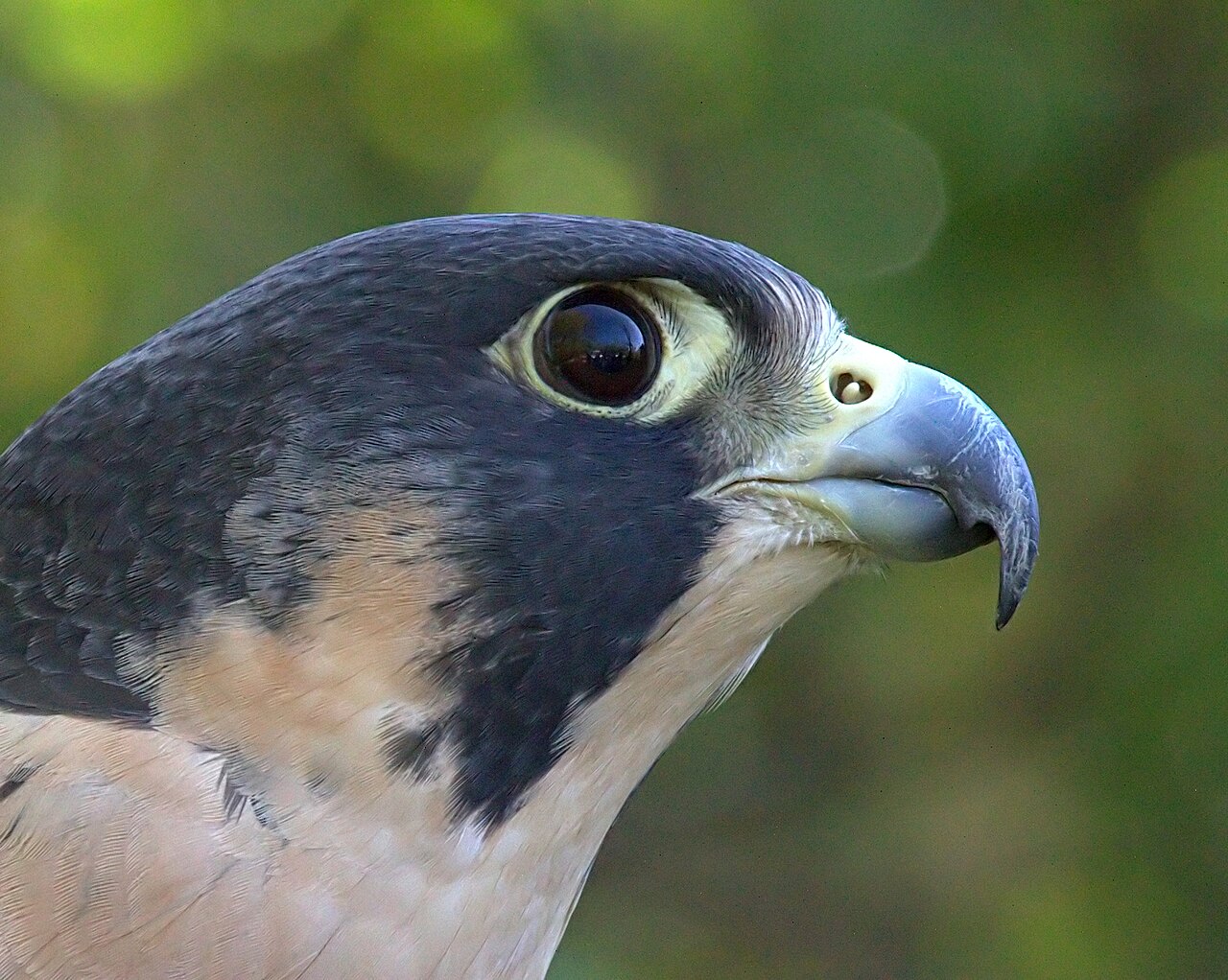
Closeup of head showing nostril tubercle

Silhouette in normal flight (left) and at the start of a stoop (right)

In its habitat in the Rann of Kutch, Gujarat, India

An immature peregrine falcon eating its prey on the deck of a ship

An adult peregrine (F. p. calidus) consuming a common teal in Little Rann of Kutch, Gujarat, India

Diving on a flock of common starling in Rome

At nest, France

Egg, Museum Wiesbaden

Tame peregrine striking a red grouse, by Louis Agassiz Fuertes (1920)
Temperament
solitary and territorial
Flight Pattern
powerful flier with rapid wingbeats; spectacular high-speed stooping dives
Social Behavior
Typically forms long-term monogamous pairs that defend nesting territories centered on a cliff or tall structure. Courtship includes aerial displays and food exchanges. Nests are simple scrapes on ledges, often reused for many years, with 2–4 eggs laid annually.
Migratory Pattern
Partial migrant
Song Description
Vocalizations are sharp, harsh calls, often a repeated kek-kek-kek used in alarm or near the nest. Also gives chattering and wailing notes during courtship and territorial encounters.
Plumage
Slate-blue to blue-grey upperparts with pale edging, clean white to buffy underparts densely barred dark. Head shows a dark hood with a bold black moustachial stripe. Juveniles are browner above with streaked, not barred, underparts.
Diet
Primarily hunts medium-sized birds such as pigeons, shorebirds, and passerines. Takes prey in mid-air using surprise stoops from height or rapid level pursuit. Occasionally captures bats and small mammals and rarely takes insects. Plucks prey on a perch or in a secluded plucking site.
Preferred Environment
Hunts over open landscapes, along coasts and wetlands, and above cityscapes where aerial prey is abundant. Uses high perches or soaring altitude to gain advantage before stooping on passing birds.


