

The pale-browed tinamou is a type of tinamou found in tropical dry forests in Peru and Ecuador.
Region
Tumbesian region
Typical Environment
Occurs in tropical dry and semi-deciduous forests, thorn scrub, and wooded ravines on the Pacific slope of western Ecuador and northwestern Peru. Prefers dense understory with leaf litter for cover and foraging, including secondary growth and edges. Often uses gallery woodlands and patches of semi-humid forest within otherwise arid landscapes. Tends to remain on or near the ground, moving between cover and small openings to feed.
Altitude Range
Sea level to 1300 m
Climate Zone
Tropical
Ease of Keeping
Beginner friendly: 1/5
This elusive ground-dweller is confined to the Tumbesian dry forests of western Ecuador and northwestern Peru. Like other tinamous, males incubate and raise the brood, often from a clutch laid by multiple females. Its low, mournful whistles carry far through dry woodland at dawn and dusk. Ongoing habitat loss in dry forests has made the species of conservation concern.


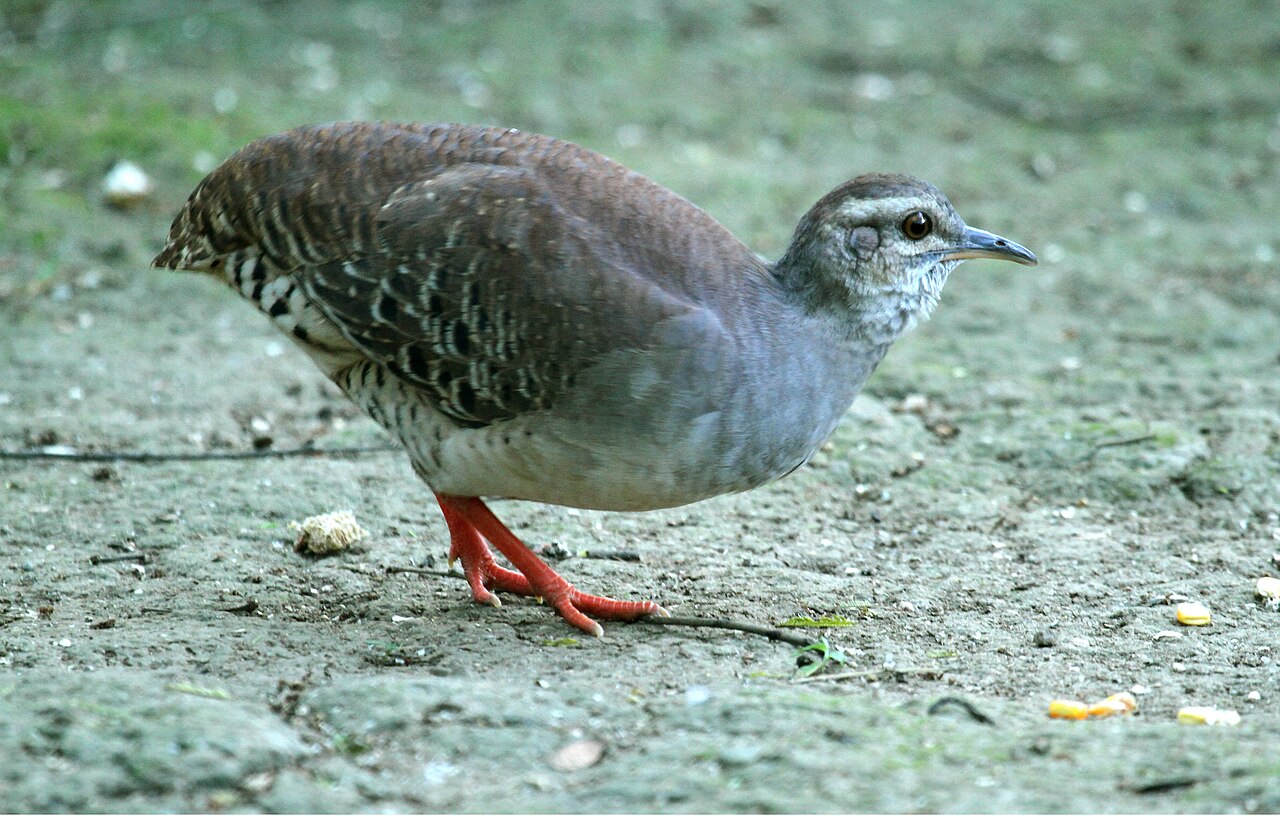
Jorupe Preserve - Ecuador

Egg, Collection Museum Wiesbaden
Temperament
shy and secretive
Flight Pattern
short rapid wingbeats with explosive flush, prefers running
Social Behavior
Usually solitary or in pairs; forms small family groups when a male accompanies chicks. Nests are simple ground scrapes concealed in dense cover. Males incubate and care for the chicks, which are precocial and follow the adult soon after hatching.
Migratory Pattern
Resident
Song Description
Gives a low, mournful, whistled hoo-oo or oo-oo series, often repeated at measured intervals. Calls carry over long distances in still morning or evening air. Vocalizations are most frequent at dawn and dusk.
Plumage
Warm brown upperparts with fine dark barring and mottling; paler, buffy underparts with subtle dusky barring on flanks. Crown and nape grayish-brown contrasting with a clear pale buff supercilium and throat. Feathers are dense and smooth, aiding camouflage against leaf litter.
Diet
Omnivorous, taking fallen fruits, berries, and seeds, along with insects, spiders, and other small invertebrates. Will also nip tender shoots and buds when available. Forages by walking and gleaning quietly through leaf litter, occasionally scratching to uncover prey.
Preferred Environment
Feeds on the forest floor of dry and semi-deciduous woodland, thorn scrub, and ecotones. Uses dense understory for cover, emerging into small clearings or trails to pick fallen fruit.


